Best STEM Toys UK 2026: Our Top Picks by Age and Budget
Researched shortlist of the best STEM toys for UK kids in 2026. Coding robots, science kits and electronics, with prices checked 22 September 2026.
Affiliate disclosure: As an Amazon Associate, AIToys.co.uk earns from qualifying purchases. When you buy through our links, we may earn a commission at no extra cost to you.
Prices and stock below are from Amazon UK on 22 September 2026. Check the live listing before you buy.
If you are looking for STEM toys you can buy in the UK, this is a researched shortlist. We select coding robots, science kits and electronics sets from manufacturer information and live Amazon UK listings, then check that each buy link was actually available.
STEM toys build real skills: logical thinking, problem-solving, perseverance and creativity. They also make that practice feel like play.
Whether you are shopping for a beginner coder, a child who likes building, or a teenager ready for real electronics, there is a pick here across ages and budgets.
Table of Contents
- Our Top Pick: Botley 2.0 Coding Robot
- Best for Electronics Beginners: Snap Circuits JR. Plus
- Best for Learning Real Programming: BBC micro:bit V2
- Best Affordable Coding Robot: Sphero Mini Golf
- Best for Creative Building: Apitor Robot J
- Best for Advanced Coders: Sphero BOLT
- Best coding games for tablet users: Osmo Coding Family Bundle
- Best for Teens and Adult Beginners: Arduino Starter Kit
- How to Choose the Right STEM Toy
- FAQ
Our Selection Criteria
Our full selection and verification process, including what we do not do, is on the how we choose page.
Every toy on this list has been researched, cross-referenced with Amazon UK availability on 22 September 2026, and assessed for:
- Educational value: does it teach real skills?
- Age appropriateness: is the challenge level actually right for the stated age?
- Build quality: will it survive children?
- Value for money: does the price match what you get?
- UK availability: can you buy it here, in stock, on the listing we link?
1. Botley 2.0 Coding Robot: Best Screen-Free Pick for Young Kids {#botley-2}
Ages: 5+ | Price: £72.85 | ASIN: B083T58PKM
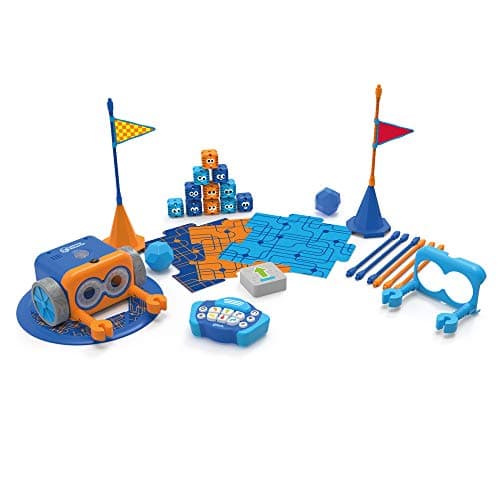
If you are buying a first coding toy for a child aged five and up, Botley 2.0 is our top pick. The live listing is Learning Resources Botley 2.0, ages 5+. It is screen-free: children programme the robot by pressing buttons on a remote, sending it around sequences, obstacle courses and simple challenges.
There is no app to set up, no screen time and no subscription. You get the robot and a set of obstacle tiles that make coding something a child can see.
Why it's on the list:
- Screen-free programming, so a first coding toy does not add screen time
- Sequencing, loops and conditionals through physical play
- Includes 77 accessories: obstacle sets, coding tiles and more
- Built for rough handling
What to know:
- Requires AA batteries
- The coding system is simple enough that many children around 8 and up outgrow it
- Sold as Learning Resources in the UK
- In stock on the 22 September 2026 check
£72.85 (price correct as of 22 September 2026). In stock. 🛒 Check Price on Amazon UKAs an Amazon Associate, AIToys.co.uk earns from qualifying purchases.
🏬 Also available on the high street: Browse STEM toys and science kits at The Entertainer
See our full Botley 2.0 review for a deeper dive.
2. Snap Circuits JR. Plus SC-110: Best Electronics Starter Kit {#snap-circuits}
Ages: 5-12 | Price: £46.95 | ASIN: B07VPDWXST
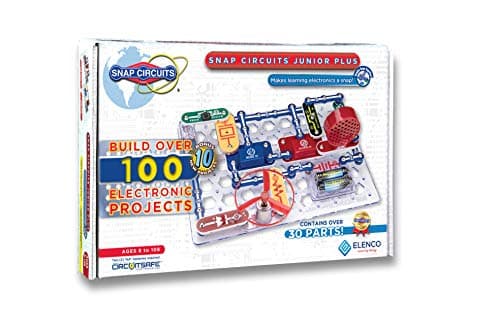
For children who are more fascinated by how things work than by coding, Snap Circuits JR. Plus is the starter kit on this list. It uses colour-coded snap-together electronic parts (no soldering, no tools, no loose wires) to show real circuit ideas.
Children build circuits that light lamps, sound buzzers and spin fans. The project booklet runs to over 110 projects, from simple series circuits to larger combinations.
Why it's on the list:
- Real electronics learning, with parts a child can snap together
- Over 110 projects, with an illustrated guide
- Low voltage, no soldering, durable components
- Other Snap Circuits sets can extend it later
- A finished circuit does something straight away: light, sound or motion
What to know:
- This set teaches circuits. Programming sits on the coding toys elsewhere in this list
- Some parts are small and easy to lose: keep the box organised
- Pair it with a coding toy if you want both sides of STEM
- In stock on the 22 September 2026 check, sold by Cyntech
£46.95 (price correct as of 22 September 2026). In stock. 🛒 Check Price on Amazon UK
Read our full Snap Circuits JR. Plus review for the complete verdict.
3. BBC micro:bit V2: Best for Learning Real Programming {#bbc-microbit}
Ages: 8-16 | Price: £27.13 | ASIN: B08NGKK3XW
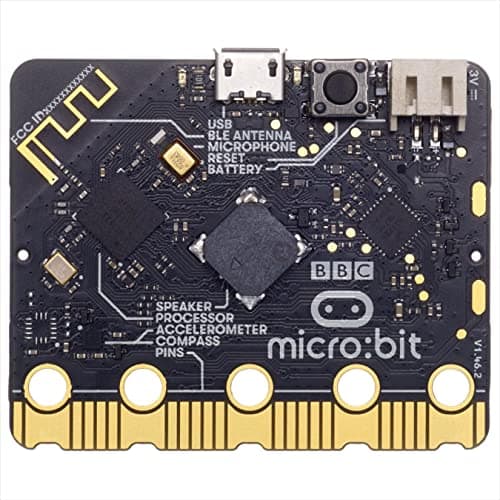
The BBC micro:bit is one of the strongest-value STEM boards you can buy in the UK. At £27.13 on this check, it is a pocket-sized programmable computer. The browser editor starts in blocks, and the same board can move on to Python and JavaScript.
UK schools use the micro:bit in the computing curriculum. It has a large free library of projects, which is why it suits a motivated child who will stick with it.
Why it's on the list:
- Block coding first, then Python and JavaScript
- On-board sensors: accelerometer, compass, temperature, microphone and speaker on the V2
- A large free project library
- Familiar to many UK school classes
- £27.13 on this check, still under £30
What to know:
- Needs a computer or tablet to programme (the editor runs in a browser)
- Less toy-like than a robot: it suits a child who wants projects
- The board on its own is a blank slate: it needs a project to become interesting
- In stock on the 22 September 2026 check
£27.13 (price correct as of 22 September 2026). In stock. 🛒 Check Price on Amazon UK
See our full BBC micro:bit V2 review for project ideas and learning pathways.
4. Sphero Mini Golf: Best Affordable Coding Robot {#sphero-mini}
Ages: 8+ | Price: £49.99 | ASIN: B086Z4MQP2
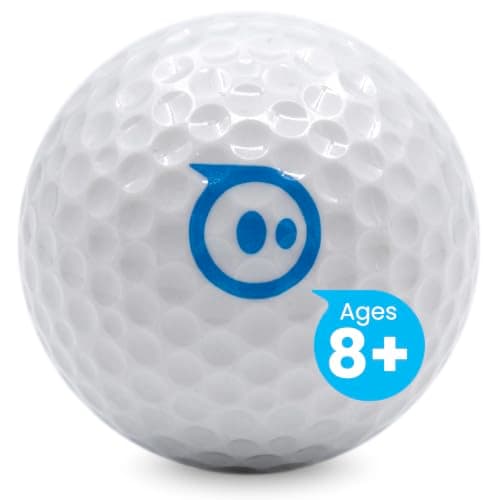
This section is about Sphero Mini in general: a small app-controlled ball on the same Sphero Edu ladder as the larger BOLT. The Amazon UK buy link is Sphero Mini Golf. The listing title is a coding robot ball for ages 8+, described as tabletop friendly. It is the Mini that was available to buy on 22 September 2026.
Children drive it first, then move into block coding and later JavaScript in the free Sphero Edu app. It is the lower-priced Sphero on this page.
Why it's on the list:
- A lower-priced way into Sphero's block and text coding path
- Drive, code and play in the free Sphero Edu app
- Small enough for a table and a travel bag
- Rechargeable, so there are no disposable batteries
- Listing age is 8+
What to know:
- Needs a Bluetooth phone or tablet, and a Sphero account you set up yourself
- No LED matrix: that display is on the BOLT
- Only 4 left in stock on the 22 September 2026 check
- This button is Mini Golf. It is the Sphero Mini, in the Golf edition
The Sphero Mini review covers the Mini idea. The buy button on this page is the Golf listing.
£49.99 (price correct as of 22 September 2026). Only 4 left in stock. 🛒 Check Price on Amazon UK
5. Apitor Robot J: Best for Creative Builders {#apitor-robot-j}
Ages: 8-12 | Price: £69.99 | ASIN: B083B82JZ7
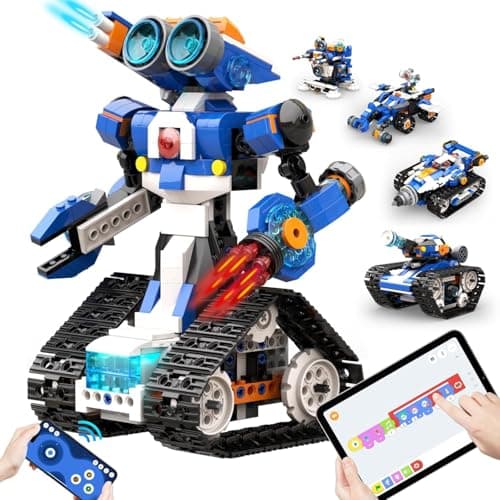
If your child likes building as much as coding, the Apitor Robot J is the construction kit on this list. The listing is a coding robot building set for ages 8-12. It builds into 12 motorised models (a scorpion, a plotter, a robotic dog and more) from over 500 pieces that work with LEGO Technic bricks.
Once built, each model moves through a free drag-and-drop coding app. Children programme motors and a sensor, so the set runs from assembly through to simple programming logic.
Why it's on the list:
- 12 buildable models from one box
- Compatible with LEGO Technic pieces
- A free app for block coding of motors and a distance sensor
- A rechargeable battery box, so you are not buying AAs every week
- In stock at £69.99 on this check
What to know:
- Needs a compatible tablet or phone for the coding app
- The builds suit a patient child: some models take an hour or more
- Younger builders may need help with the fiddlier steps
- The price on this check is £69.99, above older guides that quoted a mid-£50s figure
£69.99 (price correct as of 22 September 2026). In stock. 🛒 Check Price on Amazon UK
Also see our best coding robots under £100 guide for more options around this budget.
6. Sphero BOLT: Best Premium Coding Robot {#sphero-bolt}
Ages: 8-14 | Price: £186.00 | ASIN: B07DLM5DL7
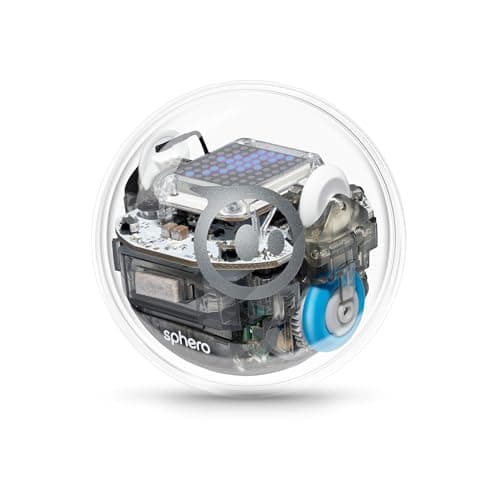
The Sphero BOLT is the premium ball on this list: an app-enabled robot with a programmable LED matrix, for STEM coding at home or in a club. It is the most visual robot here, and the Sphero Edu path goes from blocks to JavaScript.
Children programme it with Scratch-style blocks or JavaScript, work through challenges, and make their own light patterns. The matrix, infrared sensor and gyroscope give it more to programme than Mini Golf.
Why it's on the list:
- A clear shell and an LED matrix, so programmes are visible
- Room to grow from block coding to JavaScript
- On-board sensors for programmes that react to the room
- A maintained Sphero Edu app
- A sealed, tough ball
What to know:
- £186.00 on this check: a better fit when the child will use the coding ladder
- Needs a Bluetooth tablet or phone
- Younger children may prefer driving it to programming it
- Only 10 left in stock on the 22 September 2026 check
£186.00 (price correct as of 22 September 2026). Only 10 left in stock. 🛒 Check Price on Amazon UK
7. Osmo Coding Family Bundle: coding games for tablet users {#osmo-coding}
Ages: 5-10+ | Price: £79.99 | ASIN: B085NX59LL
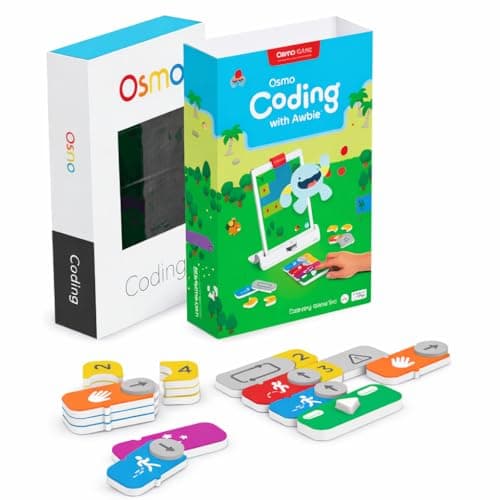
The coding set we link in the Osmo range is the Coding Family Bundle for iPad and Fire Tablet. The listing is three games: Coding Jam, Coding Awbie and Coding Duo, for ages 5-10+. An Osmo base is required, and this bundle does not include one.
Buy it when you already have a compatible Osmo base, or when you are ready to add a base separately. The listing is a games pack, and the base is a separate purchase.
Those three titles are Osmo's coding games. They are played with the base and a tablet, so commands are built with pieces in front of the screen rather than typed.
Why it's on the list:
- Three coding games in one bundle: Coding Jam, Coding Awbie and Coding Duo
- Listed for iPad and Fire Tablet, ages 5-10+
- A coding add-on for a home that already owns an Osmo base
- Pieces in front of the tablet, which suits a child who is not ready for a text editor
What to know:
- The Osmo base is required and is not in this box
- You need a compatible iPad or Fire Tablet
- Play still uses the tablet screen
- Only 10 left in stock on this check, with more on the way
- If you need a kit with the iPad base in the box, that is a different product: the Osmo Genius Starter Kit was £74.25 and in stock on this check. Its five games cover maths, spelling and creativity. The coding titles (Coding Jam, Coding Awbie and Coding Duo) are the Family Bundle above
£79.99 (price correct as of 22 September 2026). Only 10 left in stock (more on the way). 🛒 Check Price on Amazon UK
8. Arduino Starter Kit: Best for Teens and Adult Beginners {#arduino}
Ages: 12+ | Price: £99.31 | ASIN: B009UKZV0A
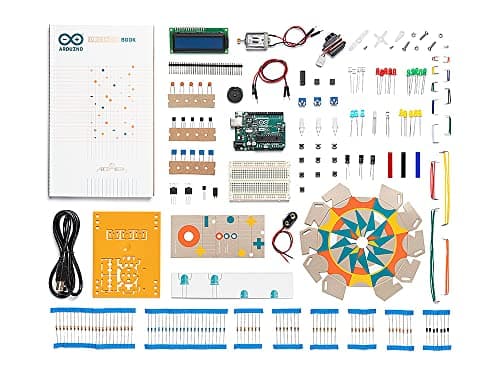
For older children, teenagers and adults who want real electronics and programming, the official Arduino Starter Kit (K000007) is the serious option on this list. It is a beginner electronics set with guided projects that cover circuits, sensors, motors and Arduino code.
Students and hobbyists use Arduino boards for years. Starting with the official kit means the board, the parts and the project book come from ARDUINO, which is the seller on this check.
Why it's on the list:
- Skills that carry on to further study and hobby projects
- 15 guided projects in the official book
- Parts for those projects are in the box
- A huge public library of later projects
- Sold by ARDUINO on the 22 September 2026 listing
What to know:
- A steep first evening for a complete beginner
- Needs a PC or Mac with the Arduino IDE
- A poor match under 12: this is for a motivated teenager or adult
- Projects need careful step-by-step work
- In stock at £99.31 on this check
£99.31 (price correct as of 22 September 2026). In stock. 🛒 Check Price on Amazon UK
See our full Arduino Starter Kit review for a breakdown of the projects.
Quick Comparison Table
Prices and stock are from Amazon UK on 22 September 2026.
| Product | Age Range | Price | Stock on this check | Best For | Screen-Free? |
|---|---|---|---|---|---|
| Botley 2.0 | 5+ | £72.85 | In stock | First coding toy | Yes |
| Snap Circuits JR. Plus | 5-12 | £46.95 | In stock | Electronics beginners | Yes |
| BBC micro:bit V2 | 8-16 | £27.13 | In stock | Real coding skills | No (needs a computer or tablet) |
| Sphero Mini Golf | 8+ | £49.99 | Only 4 left | Affordable coding robot | No (app required) |
| Apitor Robot J | 8-12 | £69.99 | In stock | Creative builders | No (app required) |
| Sphero BOLT | 8-14 | £186.00 | Only 10 left | Premium coding ball | No (app required) |
| Osmo Coding Family Bundle | 5-10+ | £79.99 | Only 10 left (more on the way) | Coding games; base required | No (iPad or Fire Tablet) |
| Arduino Starter Kit | 12+ | £99.31 | In stock | Teens and real programming | No (PC required) |
How to Choose the Right STEM Toy for Your Child {#how-to-choose}
A long list is only useful if it matches the child. These are the questions worth asking:
1. What age is the child, really?
Box ages are a starting point. The Botley listing says ages 5+. Sphero Mini Golf says ages 8+. Think about attention span and fine motor control as well as the number on the box.
2. Do they want to build or to code?
Some children want to assemble something (Apitor Robot J, Arduino). Others want a robot moving quickly (Botley 2.0, Sphero Mini Golf). Matching that instinct matters.
3. Screen-free or app-based?
If you are already limiting screen time, Botley 2.0 and Snap Circuits stay off the tablet. If a tablet is already part of play, Sphero Edu and Osmo open a wider set of activities.
4. What is the budget, and how long will it last?
A micro:bit at £27.13 can keep a motivated 10-year-old busy for a long time. Sphero BOLT at £186.00 earns its place when the child will use the coding ladder. Longevity matters more than the sticker.
5. Does it connect to school?
The BBC micro:bit, and robots that use Scratch-style blocks, sit close to what many UK schools already teach. That overlap helps some children start faster.
Our Top Picks by Age
Ages 5+: Botley 2.0 (screen-free, listing age 5+, builds sequencing)
Ages 5-12: Snap Circuits JR. Plus (hands-on circuits, in stock at £46.95)
Ages 5-10+: Osmo Coding Family Bundle (Coding Jam, Coding Awbie and Coding Duo; Osmo base required separately)
Ages 8-16: BBC micro:bit V2 (£27.13, teaches real skills, used in UK schools)
Ages 8-12: Apitor Robot J (builders who want to code what they make)
Ages 8+: Sphero Mini Golf (£49.99, tabletop Mini; only 4 left on this check)
Ages 8-14: Sphero BOLT (premium ball, £186.00, only 10 left on this check)
Ages 12+: Arduino Starter Kit (official kit, £99.31, genuine electronics and code)
FAQ {#faq}
What age should kids start with STEM toys?
Simple making and building can start around age three. Coding toys on this page start at the listing ages: Botley 2.0 from 5+, and screen-free play is the easiest first step.
Are STEM toys actually educational, or are they just expensive toys?
The stronger sets practise logical thinking, problem-solving, patience and, for the coding toys, programming basics. Match the set to the child's stage. A set that is too easy teaches little. A set that is too hard gets abandoned.
What's the difference between a coding toy and a STEM toy?
STEM (science, technology, engineering, maths) is the wide label. Coding toys are the subset about programming. Snap Circuits is electronics. Apitor and Arduino lean into building. Botley, Sphero and the Osmo coding games lean into programming.
Do my children need an existing interest in technology?
No. A physical robot or a circuit that lights up is often easier to start than a coding website. The Botley remote and a Snap Circuits buzzer are there for children who would not open a laptop tutorial.
Which STEM toy do you recommend as a first buy?
For most families, Botley 2.0 (ages 5+, screen-free) or the BBC micro:bit V2 (ages 8+, £27.13) are the first buys we would shortlist. Botley has no app to install. The micro:bit is the strongest educational value on this page.
Final Thoughts
Choose the child first. A BBC micro:bit at £27.13 is enough when they will actually programme it. Sphero BOLT at £186.00 belongs on the list when they want that longer coding ladder, and it was down to 10 units on this check.
A maths alternative: if numeracy is the gap, the PlayShifu Plugo Count turns arithmetic into a tactile game for ages 4-10. PlayShifu's maths kit is sold at The Entertainer as Mission Maths.
Browse our coding robot and AI toy reviews for longer write-ups, and the age 6-8 guide if you want a narrower list.
Read next
Best STEM Kits Under £100 UK 2026-9 Top Picks for Every Age
Nine STEM kits under £100 for UK families, plus a hydraulic hand and a scarce LEGO Technic moon rover. Updated September 2026.
Best Screen-Free Coding Toys UK 2026-9 Top Picks for Device-Free Learning
The best screen-free coding toys for kids in the UK: no tablet, no smartphone required. Expert picks for every age from 3 to 14, with honest pros and cons.
Best Coding Robots Under £100 UK 2026-10 Top Picks for Every Age
The 10 best coding robots under £100 in the UK for 2026: expert picks for ages 3 to 14. In-stock products, honest reviews, and where to buy.