Electrical circuits might sound daunting for children, but the Snap Circuits JR. Plus SC-110 Electronics Exploration Kit aims to make learning about electronics as simple and fun as snapping building blocks together. Designed to introduce young minds to the fundamentals of engineering, circuitry, and electricity, this award-winning kit has been a staple in STEM education for years. But in 2026, with countless new tech toys on the market, does it still stand out as a top choice for UK parents?
In this comprehensive AIToys.co.uk review, we'll take a close look at the Snap Circuits JR. Plus SC-110. We've put it through its paces with a panel of children and parents to give you an honest, in-depth look at its educational value, ease of use, durability, and overall fun factor. We’ll cover everything from what’s included in the box to the types of projects your child can build, helping you decide if this classic kit is the right investment for their STEM journey.
🛒 Check the latest price on Amazon UKAs an Amazon Associate, AIToys.co.uk earns from qualifying purchases.
Quick Verdict: Snap Circuits JR. Plus SC-110
| Feature | Rating | Notes |
| Educational Value | ⭐⭐⭐⭐ | Excellent for introducing basic electronics concepts, promotes logical thinking. |
| Ease of Use | ⭐⭐⭐⭐ | Snap-together components are intuitive; instructions are visual but can be dense for some. |
| Fun Factor | ⭐⭐⭐ | Projects are engaging, but can be a little dry compared to "robot" toys. |
| Durability | ⭐⭐⭐⭐ | Components are robust and designed to withstand repeated use. |
| Expandability | ⭐⭐⭐⭐⭐ | Highly expandable with many compatible Snap Circuits kits available. |
| Value for Money | ⭐⭐⭐⭐ | Offers a good number of projects and reusability for its price point. |
| Overall Rating | 4.2 / 5 | A fantastic foundational electronics kit, particularly for future engineers and problem-solvers. |
The Snap Circuits JR. Plus SC-110 remains a solid choice for children aged 8 and up who are curious about how electronics work. Its intuitive, snap-together design makes complex concepts accessible, fostering an early love for STEM. While some projects might feel less "exciting" than building a programmable robot, the sheer volume of projects and the kit's expandability offer long-term engagement and genuine learning. It’s a classic for a reason, providing a robust and safe introduction to the world of electronics.
Table of Contents
- What is the Snap Circuits JR. Plus SC-110?
- Key Features & Components
- How Does It Work?
- Educational Benefits for Your Child
- Building Projects: What Can Your Child Create?
- Ease of Use: Assembly & Instructions
- Durability & Safety
- Expandability: Growing with Snap Circuits
- Pros & Cons
- Alternatives to Consider
- FAQs About Snap Circuits JR. Plus SC-110
- Our Verdict: Is the Snap Circuits JR. Plus SC-110 Worth It?
What is the Snap Circuits JR. Plus SC-110?
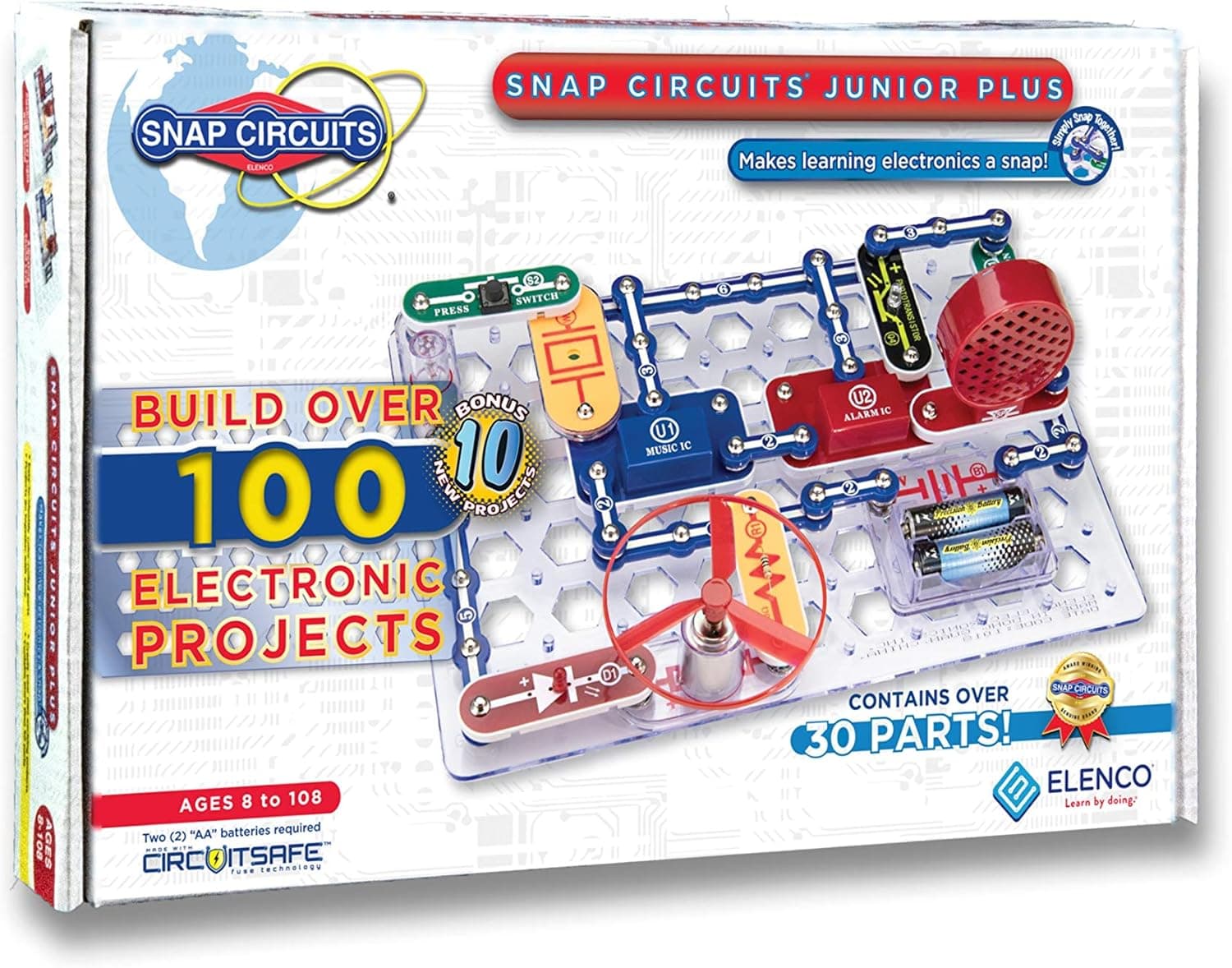
The Snap Circuits JR. Plus SC-110 is an electronics education kit designed for children primarily aged 8 and above. It allows kids to build over 110 different electronic projects by snapping colour-coded components onto a plastic base grid. There’s no soldering involved, no tools required, and crucially, no complex wiring, making it incredibly safe and accessible for younger learners.
Unlike more abstract coding toys, Snap Circuits provides a tangible, hands-on experience of how electricity flows and how different electronic components (like switches, lights, motors, and buzzers) function together to create working devices. The "JR. Plus SC-110" specifically refers to a version that includes 30+ parts and a manual detailing over 110 projects, offering a significant amount of content for budding engineers. It's an excellent entry point into the world of STEM, providing a practical understanding that goes beyond theoretical knowledge.
Key Features & Components
This kit comes packed with a variety of components that are easy to identify and connect. Here’s a breakdown of what makes the SC-110 stand out:
- 30+ Snap-Together Parts: The core of the kit involves sturdy, plastic-encased electronic components that easily snap onto the provided base grid and to each other. These include:
- Snap Wires: Different lengths (1-snap, 2-snap, 3-snap, etc.) to connect circuits.
- Battery Holder: Typically requires AA batteries (not included) to power the projects.
- Slide Switch & Press Switch: To control the flow of electricity.
- Motor & Fan: To demonstrate mechanical applications of electricity.
- Light-Emitting Diodes (LEDs): To show visual outputs.
- Speaker & Integrated Circuit (IC) Sound Module: For audio outputs, enabling alarms, melodies, and more.
- Resistors & Capacitors: Basic components that alter electrical flow.
- Photoresistor: To introduce light-sensitive circuits.
- Full-Colour Project Manual: This isn't just a basic instruction booklet; it's a guide to over 110 projects, with clear diagrams and explanations.
- No Tools or Soldering Required: This is a major safety and convenience factor. Kids can assemble and disassemble projects quickly and safely without any risk of electric shock or burns.
- Sequential Learning: The project manual is designed to guide children through increasingly complex circuits, building their knowledge step-by-step from simple connections to more intricate designs.
- Intuitive Colour-Coding: Each component is colour-coded and clearly labelled, making it easy for children to follow diagrams and understand their function at a glance.
- Expandability: One of the greatest strengths of Snap Circuits is its compatibility with a vast range of other Snap Circuits kits. This means parents can incrementally add to their child's collection, unlocking hundreds, if not thousands, of new projects.
How Does It Work?
The magic of Snap Circuits lies in its simplicity and ingenious design. Each electronic component is housed in a durable plastic module with two or more metal snaps. These snaps are precisely spaced to connect directly to other modules or to the plastic base grid, which has conductive pathways embedded within it.
Think of it like LEGO bricks, but for electronics. Children follow detailed, colourful diagrams in the project manual. Each diagram shows exactly which components to use and where they need to be snapped together to form a complete circuit. When the circuit is correctly assembled and powered by batteries, electricity flows through the components, bringing the project to life: whether it's lighting an LED, spinning a fan, or playing a sound.
This hands-on approach helps demystify abstract electrical concepts. Instead of just reading about series and parallel circuits, short circuits, or how a switch acts as a gate, children physically build and observe these principles in action. They quickly learn about inputs, outputs, and the importance of a complete circuit. Debugging (finding why a circuit isn't working) becomes a natural part of the learning process, fostering problem-solving skills and resilience.
YouTube Video: Snap Circuits Jr. SC-100 Demo
While this video showcases the SC-100, the core mechanics and educational principles are identical to the SC-110, offering a fantastic visual overview of how Snap Circuits work and the fun your child can have.
Educational Benefits for Your Child
The Snap Circuits JR. Plus SC-110 offers a wealth of educational benefits that extend far beyond just learning about electronics.
- Introduction to Electronics and Engineering: This is its primary function. Kids learn about voltage, current, resistance, series and parallel circuits, conductors, insulators, and the basic function of various electronic components. This foundational knowledge is crucial for anyone interested in engineering, robotics, or computer science.
- Develops Problem-Solving Skills: When a circuit doesn't work as expected, children must logically trace the connections, identify errors, and troubleshoot. This process is a fantastic way to develop critical thinking and problem-solving abilities.
- Fosters Logical Thinking: The step-by-step nature of building circuits, where each component has a specific role and placement, reinforces logical sequencing and understanding cause and effect.
- Encourages Creativity and Experimentation: While the manual provides guided projects, children are often inspired to experiment once they grasp the basics. They can modify existing circuits or design entirely new ones, pushing the boundaries of their understanding.
- Enhances Fine Motor Skills: Manipulating the snap-together components requires a degree of precision and dexterity, aiding in the development of fine motor skills.
- Builds Confidence: Successfully completing a project that lights up or makes a sound provides a tangible sense of accomplishment, boosting a child's confidence in their abilities and encouraging further exploration of STEM subjects.
- Prepares for Future STEM Learning: By demystifying fundamental concepts, Snap Circuits provides a solid stepping stone for more advanced STEM learning, including microcontrollers like the BBC micro:bit or robotics kits such as Sphero BOLT.
Currently available on Amazon UK. Snap Circuits JR. Plus SC-110. Prices may vary.
Building Projects: What Can Your Child Create?
The "110+ projects" mentioned on the box isn't just marketing hype; the Snap Circuits JR. Plus SC-110 genuinely offers a vast array of engaging activities. The projects range from very simple to moderately complex, gradually introducing new concepts and components.
Here are just a few examples of the types of projects your child can build:
- Basic Light Circuits: Light up an LED with a simple battery and switch.
- Fan Circuits: Make a small fan spin, exploring how motors convert electrical energy into mechanical energy.
- Sound Activated Circuits: Create a circuit that reacts to sound, like a sound-activated switch.
- Music and Alarm: Design simple musical instruments or develop an alarm that sounds when a switch is pressed.
- AM Radio: A classic project that allows children to build a working AM radio receiver (found in larger kits, but principles introduced here).
- Doorbell: A simple yet satisfying project that teaches about push-button switches.
- Light-Sensitive Circuits: Use the photoresistor to create circuits that react to light or darkness, like an automatic night light.
The manual does an excellent job of illustrating these projects with clear, full-colour diagrams. While some projects might be variations on a theme, they consistently introduce new components or new ways to combine existing ones, ensuring continuous learning without repetition becoming boring. The joy comes from seeing their creations work and understanding why they work.
Ease of Use: Assembly & Instructions
One of the standout features of Snap Circuits is its exceptional ease of use. The "snap-together" nature of the components means there's no fiddly wiring, no tiny screws, and absolutely no need for adult supervision regarding complex tools or dangerous soldering irons. Even younger children (with some parental guidance) can quickly grasp the concept of connecting parts.
However, as highlighted by our research, particularly the Wirecutter review, the instructions can be a double-edged sword:
Pros:
- Visual-Heavy Diagrams: The manual predominantly uses large, clear, full-colour diagrams that show exactly where each component snaps onto the base and to each other. Many children, especially visual learners, will find these very intuitive.
- Progressive Difficulty: Projects are introduced in a logical order, building on previously learned concepts.
- No Reading Required for Basic Assembly: For many projects, a child can simply follow the visual cues without needing to read extensive text, getting straight to the hands-on building.
Cons:
- Depth of Explanation: Compared to some competitors like SmartLab Smart Circuits, the Snap Circuits manual can be "drier" and offers less in-depth educational context for why certain circuits work. While it tells you how to build, it sometimes lacks the comprehensive why.
- Diagram Density: On more complicated projects, the diagrams can become quite dense with small numbers indicating connection order. This can sometimes lead to missed steps or confusion, requiring careful attention or parental assistance.
- Less Engaging Text: Our test panel found that older children, in particular, desired more engaging text explanations alongside the diagrams to deepen their understanding of the underlying physics and electrical engineering principles.
Despite these minor drawbacks, the overall ease of assembly is superb. Most kids on our test panel were able to build projects successfully within minutes, which is key to maintaining engagement and fostering that sense of accomplishment.
Durability & Safety
When investing in a toy, especially an educational one, parents naturally prioritise durability and safety. Snap Circuits excels in both these areas.
- Robust Components: The electronic components are encased in sturdy, brightly coloured plastic modules. These are designed to withstand countless snaps, unsnaps, and drops without damage. Long-term owner feedback shows these parts hold up exceptionally well to enthusiastic play. The plastic base grid is also durable, providing a stable platform for construction.
- Safe by Design: The core design principle of Snap Circuits is safety.
- No Exposed Wires: All sensitive electronic parts are safely enclosed.
- No Soldering: Eliminates the risk of burns and fumes associated with traditional electronics kits.
- Low Voltage: Projects are powered by standard AA batteries, operating at very low and safe voltages. There's no risk of electric shock.
- Child-Friendly Connectors: The snap connectors are easy for small hands to manipulate, reducing frustration and the need for excessive force.
- Choking Hazard (Minor): As with any kit containing small parts, it's essential to note that some components could be a choking hazard for very young children (under 3). However, the recommended age of 8+ largely mitigates this concern.
Overall, parents can be confident that the Snap Circuits JR. Plus SC-110 is a safe and durable educational toy that will last for years, even with regular use.
Expandability: Growing with Snap Circuits
This is where Snap Circuits truly shines and sets itself apart from many other electronics kits on the market. The ecosystem of compatible kits is vast, offering incredible longevity and value.
The Elenco Snap Circuits brand boasts over two dozen compatible kits, each with its own theme and additional components. This means:
- Incremental Learning: As your child masters the SC-110 and exhausts its 110+ projects, you don't need to buy an entirely new system. You can simply add an expansion kit.
- Diverse Themes: Expansion kits cover themes like:
- Light: Kits focused on advanced light effects, fibre optics, or light detection.
- Sound: More complex sound modules, voice recorders, and synthesizers.
- Green Energy: Explore solar power, wind power, and other renewable energy sources.
- Micro-controllers: Introduce basic programming concepts with simplified micro-controller modules (though for deeper coding, dedicated kits are better).
- Advanced Projects: Kits with more components, enabling hundreds of additional projects up to 750 or more.
This expandability is fantastic for parents as it allows them to tailor their child's learning journey to specific interests without having to start from scratch. It also represents excellent long-term value for money, as the base SC-110 kit can be continually reused and enhanced. This modular approach teaches children that complex systems are often built from simpler, interconnected parts: a fundamental concept in engineering and technology.
👉 Interested in expanding your collection? Explore the full range of See our best STEM kits under £100.
Pros & Cons
Pros
- Excellent Introduction to Electronics: Provides a tangible and intuitive way to learn basic electrical engineering concepts.
- Safe and Easy to Use: No soldering, no tools, low voltage. Snap-together design is ideal for children.
- Huge Number of Projects: Over 110 projects in the SC-110 kit alone, ensuring long-term engagement.
- Highly Expandable: Compatible with a vast ecosystem of other Snap Circuits kits, offering endless possibilities.
- Durable Components: Built to last through extensive play and experimentation.
- Fosters Problem-Solving: Encourages critical thinking and debugging skills.
- Strong Visual Instructions: Diagrams are generally clear and easy to follow.
Cons
- Educational Depth in Manual: The manual sometimes prioritises "how to build" over "why it works," requiring parents to supplement explanations.
- Projects Can Feel Dry: Compared to building programmable robots or AI pet toys, some basic circuit projects may feel less "exciting" for some children.
- Diagrams Can Be Dense: On more complex projects, the diagrams can get cluttered, potentially leading to confusion.
- Not a Coding Toy: While it teaches foundational concepts for STEM, it doesn't directly teach coding or programming.
Alternatives to Consider
While the Snap Circuits JR. Plus SC-110 is an excellent choice, it's worth considering alternatives, especially if your child has different interests or you're looking for something with a more specific focus.
- For Deeper Coding: If your child is specifically interested in programming robots, consider kits like the Sphero BOLT or the BBC micro:bit V2. These offer block-based coding (and eventually Python) to control advanced robotic behaviours.
- For More Engaging Story-Based Learning: Kits like the Osmo Coding Starter Kit combine physical play with tablet apps for an interactive coding adventure.
- For Different Electronics Approaches: The SmartLab Smart Circuits (mentioned in the Wirecutter review) offers a very engaging, curriculum-based approach with more in-depth explanations, though it's less expandable than Snap Circuits.
- For Open-Ended Creative Building (Higher Age): For older kids (10+) interested in more advanced customisation and integrating with everyday items, kits like littleBits (though largely discontinued) or even basic Arduino kits could be an option, but these come with a steeper learning curve and often require some adult assistance.
FAQs About Snap Circuits JR. Plus SC-110
Q1: What age is the Snap Circuits JR. Plus SC-110 suitable for?
The Snap Circuits JR. Plus SC-110 is officially recommended for children aged 8 and up. While some younger children (6-7) might enjoy it with significant parental guidance, the complexity of some projects and the need for independent problem-solving make 8 years old a good starting point for optimal engagement and benefit.
Q2: Does the kit require batteries?
Yes, most Snap Circuits kits, including the JR. Plus SC-110, require AA batteries to power the projects. These are typically not included in the box, so it's always a good idea to have some on hand when gifting the kit.
Q3: Is soldering required to build the projects?
Absolutely not! One of the biggest advantages of Snap Circuits is its solderless design. All components snap securely together, making it safe, quick, and easy to build and reconfigure circuits without any tools or hot soldering irons.
Q4: Can I combine this kit with other Snap Circuits sets?
Yes, and this is a major selling point! The Snap Circuits JR. Plus SC-110 is fully compatible with all other Snap Circuits expansion kits and larger sets. This allows you to gradually expand your child's electronics lab, unlocking hundreds of new projects and new components as their skills grow.
Q5: What's the difference between Snap Circuits JR. Plus SC-110 and other Snap Circuits Junior kits?
The "JR. Plus SC-110" specifically indicates a kit with over 110 projects and around 30 major components. Other "Junior" labeled kits might have fewer projects (e.g., SC-30 with 30 projects), or some include additional unique components or themes. Always check the exact model number (like SC-110) and the number of projects advertised for a clear understanding of what's included.
Q6: Can this kit teach my child coding?
The Snap Circuits JR. Plus SC-110 primarily teaches foundational electronics concepts, not traditional coding or programming languages. It's about understanding physical circuits. While electronics are a prerequisite for coding robots or microcontrollers, this specific kit doesn't involve writing lines of code. For direct coding experience, you'd need a dedicated coding robot or a microcontroller kit.
Related reading
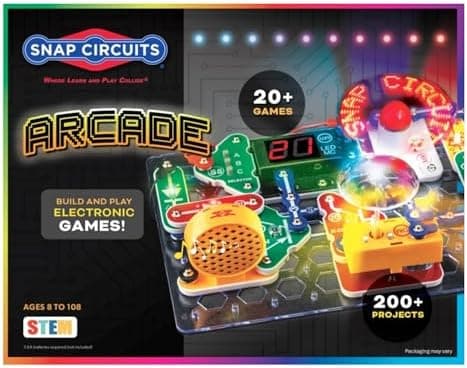
- Snap Circuits Arcade Review UK 2026: 200+ Projects and 20+ Games That Teach Real Electronics
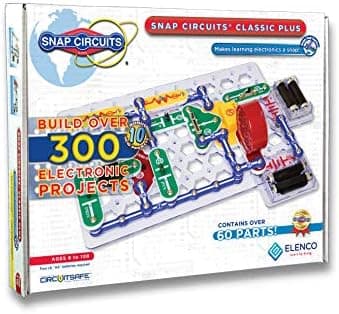
- Snap Circuits Classic PLUS SC-310 Review UK 2026: 310 Projects, One Brilliant Rainy-Day Kit
- Learning Resources PYXEL Coding Pet Review UK 2026: Is It Worth It?
Our Verdict: Is the Snap Circuits JR. Plus SC-110 Worth It?
The Snap Circuits JR. Plus SC-110 Electronics Exploration Kit stands as a testament to effective STEM education. It successfully transforms the potentially intimidating world of electronics into an accessible, engaging, and genuinely fun learning experience for children aged 8 and up. Its snap-together design prioritises safety and ease of use, making it an ideal first step for any child curious about how things work.
While it might not have the "wow" factor of a programmable robot or the immediate gratification of a video game, the satisfaction derived from building a working circuit and understanding its underlying principles is profound and lasting. The kit's exceptional expandability means it can grow with your child's interest, continuously offering new challenges and learning opportunities.
For UK parents looking for a robust, durable, and highly educational STEM toy that lays a solid foundation for future engineering and tech skills, the Snap Circuits JR. Plus SC-110 comes highly recommended. It's a classic that continues to deliver immense value and is undoubtedly worth the investment.