Disclosure: This article contains affiliate links. As an Amazon Associate, AIToys.co.uk earns from qualifying purchases. If you buy through our links, we may earn a small commission at no extra cost to you. It never changes the price you pay, and it never changes our verdict.
Robosen Interstellar Scout K1 Review UK 2026: The Programmable Humanoid Robot That Walks, Talks and Codes
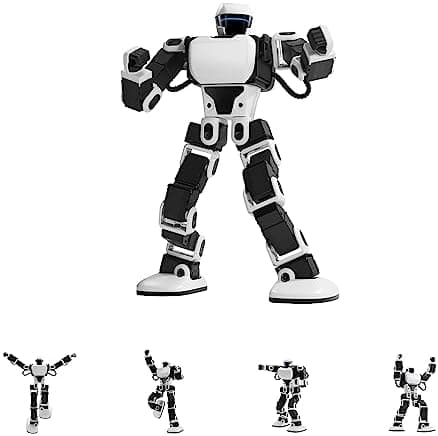
Most "robots" marketed to children are robots in name only: a wheeled ball, a coding buggy, or a plastic pet that trundles about. The Robosen Interstellar Scout K1 is a different animal entirely. It is a true bipedal humanoid that stands up, balances on two feet, walks, dances and strikes poses, and it responds both to your voice and to programs your child builds themselves. Robosen made its name with eye-wateringly expensive auto-converting Transformers robots; the K1 takes that same servo engineering and packages it as a family robot you can actually justify buying.
That puts it in interesting company. It is far more mechanically ambitious than a coding robot like the Makeblock mBot2 or the AI-driven MatataStudio VinciBot, and it sits at the premium end of the market we map out in our best AI robots for kids roundup. So is a walking humanoid worth the step up in price? Here is our honest, hands-on take.
👉 Short on time? Check the latest price on AmazonAs an Amazon Associate, AIToys.co.uk earns from qualifying purchases..
Quick Verdict: Robosen Interstellar Scout K1
The Interstellar Scout K1 earns a strong 4.2 out of 5. As a piece of engineering it is genuinely special: a properly balanced, walking humanoid with high-precision servos and an aluminium-alloy frame that feels nothing like the plastic toys it shares a shelf with. The clever part is how it bridges ages. A five- or six-year-old can command it by voice on day one, while an older child can pose it, record those movements, and graduate to block-based coding that teaches real sequencing and logic. The only serious catch is the price: this is a premium, investment-level robot, not a stocking filler. If your child is robot-obsessed and you want something that will still impress in three years, it is worth every penny. If you just want a first taste of coding, cheaper robots do that job.
Pros
- A real walking humanoid: it balances, walks and poses: the "wow" is immediate.
- Voice control out of the box: 80+ commands mean instant play with no setup for younger kids.
- Two genuine coding routes: hands-on manual posing plus block-based programming in the app.
- Premium build: aluminium-alloy frame and precision servos feel built to last.
- Grows with the child: voice play first, serious robotics later.
Cons
- Premium price: an investment buy, well above mainstream coding robots.
- Learning curve: manual programming and balance take some adult help at first.
- Confusing model names: K1 versus the dearer K1 Pro needs checking before you buy.
- Quiet room needed: voice recognition struggles with background noise.
- Not a knockabout toy: it's a showpiece that wants a little care.
Key Features
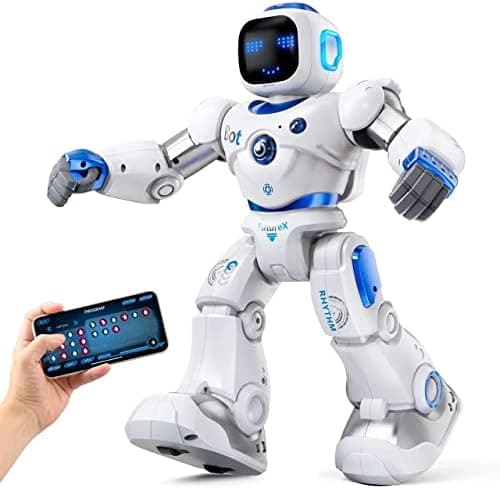
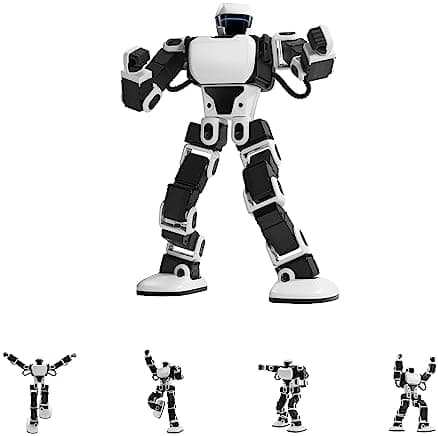
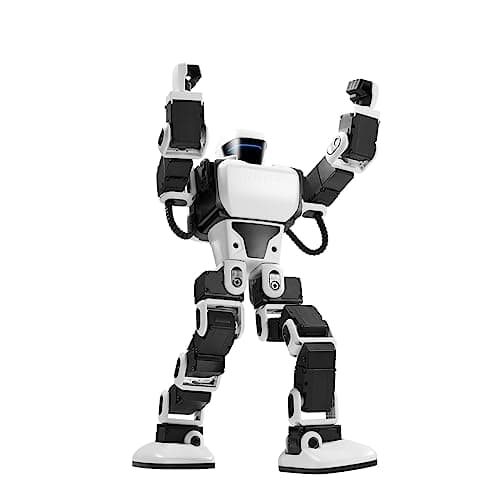
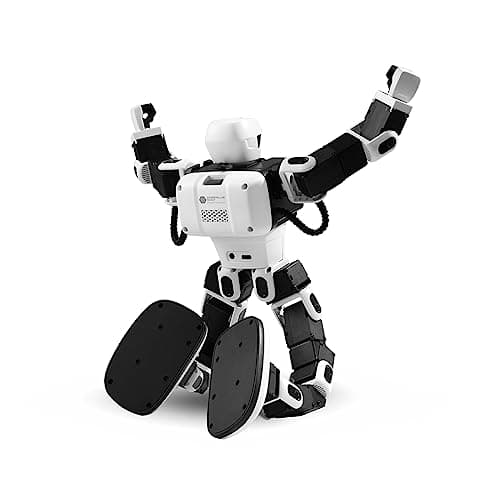
The headline is the form factor. The K1 is a bipedal humanoid: it stands and moves on two legs, driven by a cluster of high-precision servo motors that Robosen has carried over from its flagship Transformers robots. Those servos, combined with adaptive control algorithms for gait stabilisation, are what let it walk and balance rather than simply shuffle. The frame is aluminium alloy in a clean, minimalist pure-white finish, and despite the metal it is light enough to pick up and move from room to room.
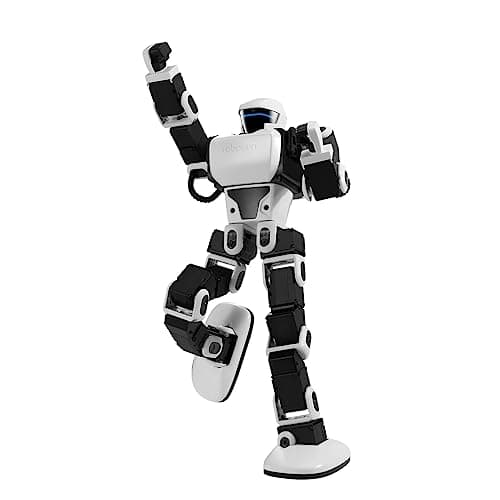
Three things make it more than an expensive ornament:
- Voice control: the robot recognises 80+ pre-installed voice commands, so a child can tell it to walk, turn, dance or strike a pose without touching a screen.
- Manual programming: you physically move the robot's limbs into a sequence of poses, and it records them, which is a brilliantly tactile introduction to the idea that a program is just a saved sequence of steps.
- Block-based programming: the companion app offers drag-and-drop coding, the same Scratch-style approach schools use, so children can build longer, more sophisticated routines and animations.
That spread is the whole point. The voice commands give instant gratification; the manual posing makes programming physical and intuitive; and the block coding is where the real STEM learning lives.
How the coding actually works
It is worth being precise, because "programmable" means very different things across toys. With the K1, your child can start by simply talking to it. When they want more control, they open the app and drag blocks together to choreograph movements, sounds and poses: sequencing, loops and order of operations, all learned through play. And the manual mode, where you pose the robot by hand and it remembers, is the cleverest bridge of all: it makes the abstract idea of "recording a sequence" something a six-year-old can do with their hands before they can read a line of code. That progression from voice, to posing, to blocks is exactly the on-ramp younger coders need.
What We Like
It genuinely impresses. This is the make-or-break test for any premium robot, and the K1 passes it the moment it stands up and walks across the table. Wheeled coding robots are useful, but they don't produce the gasp that a balancing humanoid does. That sense of wonder matters, because it is what makes a child keep coming back to it.
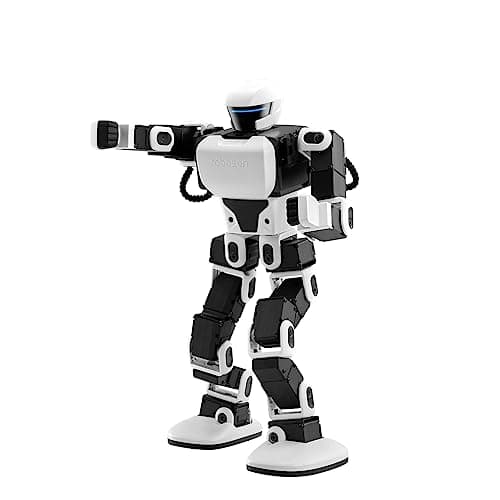
The build quality is in a different league. The aluminium-alloy frame and precision servos feel like a serious robotics platform rather than a toy. For families who have been disappointed by flimsy plastic robots that break within a month, the K1's engineering is reassuring, and it is a big part of what justifies the price.
It teaches real skills, three ways. Few robots give children this many genuine on-ramps to programming. Voice control hooks them, manual posing demystifies sequencing, and block-based coding builds the logical thinking that transfers straight to Scratch and beyond. It is a coding toy disguised as the coolest robot in the room.
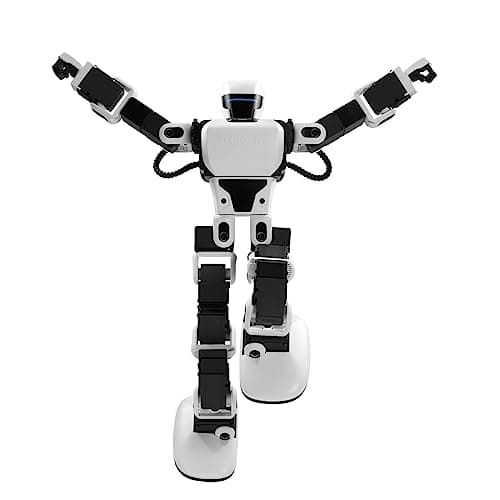
It grows with the child. The same robot that a six-year-old commands by voice will still challenge them at ten, when they are choreographing multi-step routines in the app. That longevity is rare and is what makes the investment easier to swallow.
What Could Be Better
We promised an honest review, so here are the limitations worth knowing before you buy.
The price is the headline caveat. The Interstellar Scout K1 sits firmly at the premium end of the robot market. This is an investment buy, not an impulse one. You are paying for genuine humanoid engineering, and it shows, but it is comfortably more than mainstream coding robots cost. If budget is the priority, a wheeled coding robot will teach the same programming basics for far less.
There is a learning curve. Getting the most out of manual programming, and keeping a bipedal robot walking smoothly, takes a little patience and, early on, a parent alongside. This is not a fault so much as the nature of a real humanoid, but go in expecting to learn together rather than hand it over and walk away.
The model naming is muddled. Robosen sells both the K1 and a pricier K1 Pro under the "Interstellar Scout K1 Series" banner, and it is easy to add the wrong one to your basket. Check the exact model and what is included before you check out.
Voice control likes a quiet room. As with most voice-activated gadgets, a noisy lounge with the telly on will trip it up. In a reasonably calm room it responds well.
Who Is It For?
The K1 is at its best for a robot-mad child of roughly 8 and up, though younger children of five or six will happily command it by voice with a grown-up nearby. The sweet spot is the eight-to-twelve coder who has perhaps outgrown a first wheeled robot and wants something genuinely impressive to programme. Teenagers and even adult enthusiasts will enjoy it too. This is one of the few "kids' robots" that doesn't feel childish.
It makes a spectacular flagship gift for the right child: the kind of present that becomes the talking point of the birthday. It is also a strong pick for families who want one robot that will last for years rather than a drawer full of cheaper ones.
It is not the right choice if you simply want an affordable introduction to coding, if you need something rugged for a younger or rougher child, or if a screen-free, no-app toy is a hard requirement. For those, a budget-friendly coding robot from our best coding robots for beginners guide makes far more sense.
How Does It Compare?
Against a coding robot like the MatataStudio VinciBot or the Makeblock mBot2, the K1 competes on a completely different level of mechanical ambition. Those are excellent, affordable wheeled robots that teach coding superbly, but they roll. The K1 walks, balances and poses, and that humanoid form is the entire reason to pay the premium. If your goal is purely to learn to code at the lowest sensible price, the wheeled robots win on value; if the goal is a jaw-dropping robot that also teaches code, the K1 stands alone.
Against a companion robot like the Eilik, the difference is purpose. Eilik is an emotional desk buddy that reacts and emotes; the K1 is a programmable performer your child directs. One is about personality, the other about control and creation. Plenty of robot-loving households would happily own both, because they do very different jobs.
Value for Money
There is no getting around it: the Interstellar Scout K1 is a premium robot, and prices on Amazon move around, so we never quote a fixed figure or promise a particular saving. The honest way to judge value here is by what you actually get for the money.
On that measure it stacks up better than the price tag first suggests. You are buying real humanoid robotics (precision servos, an aluminium frame, balanced bipedal walking) plus three genuine routes into programming and a robot that will still impress years from now. That is a very different proposition from a £30 plastic toy, and for a child who is serious about robots it represents fair value for a piece of kit that should last. Just go in knowing it is an investment, not an impulse buy.
👉 Check the latest price on Amazon before you decide.
Prefer to buy from a UK toy shop? The Interstellar Scout K1 is also stocked at The Entertainer. Check availability at The Entertainer here.
Safety, Screen Time and Setup
Robosen pitches the K1 at older children, and we'd agree the manual programming and care it needs suit ages 8 and up; younger children are best supervised, both to protect small fingers around the moving joints and to protect the robot. As always, check the packaging for the manufacturer's specific age guidance and any small-parts warnings.
On screen time, the K1 strikes a nice balance. Thanks to the 80+ voice commands, a great deal of the play is entirely screen-free. Your child is talking to a robot moving in the real world, not staring at a tablet. The app only comes into play for the deeper block-based coding, and even then the output is a physical robot performing in front of them rather than an on-screen game. That "screen as a tool, robot as the toy" balance is exactly what you want from a STEM gadget. Setup is straightforward: charge the robot, install the companion app, and you can be issuing voice commands within minutes, leaving the coding to explore at your child's own pace.
Related reading
Frequently Asked Questions
Does the Robosen K1 really walk on two legs? Yes. It is a true bipedal humanoid with high-precision servos and gait-stabilisation algorithms, so it stands, balances and walks rather than rolling on wheels.
Do you need a phone or tablet to use it? Not for the basics. The robot ships with 80+ voice commands you can use straight away with no device. You only need the companion app for the deeper block-based programming and to record custom actions.
What age is it best for? Robosen aims it at older children, and we found 8 and up is the sweet spot. Five- to seven-year-olds can enjoy voice control with a grown-up helping, while the coding features suit eight-to-twelves and beyond. Including teens and adult enthusiasts.
What's the difference between the K1 and the K1 Pro? They are two models in the same Interstellar Scout K1 Series, with the Pro sitting at a higher price point. Check the exact model and its included features carefully before buying, as the listings sit side by side.
Is it just a toy, or does it actually teach coding? It genuinely teaches coding. Manual posing introduces the idea of recording a sequence, and the block-based app teaches sequencing, loops and logic (the same concepts behind Scratch) through directing a real robot.
The Verdict
The Robosen Interstellar Scout K1 is the rare children's robot that lives up to the word "robot". It walks, balances, talks and poses, it is built like a serious piece of engineering, and it teaches real programming through three thoughtfully layered routes: voice, manual posing and block coding. For a robot-obsessed child, it delivers a sense of wonder that no wheeled coding buggy can match, and it has the longevity to keep earning its place for years.
Its limitations are about budget and expectations rather than the robot itself. It is a premium, investment-level purchase, it has a gentle learning curve, and it wants a little care and a quiet room. Go in understanding that (and choosing the right model for your child) and you get one of the most genuinely impressive STEM toys on the market in 2026.
It earns a confident 4.2 out of 5 and a place on our shortlist of the best premium robots for UK families.
👉 Ready to meet your child's new robot? Check the latest price on Amazon.
As an Amazon Associate, AIToys.co.uk earns from qualifying purchases. Prices and availability are accurate as of the date of publication but can change. We only ever recommend products we believe will genuinely help UK families.