Disclosure: This article contains affiliate links. As an Amazon Associate, AIToys.co.uk earns from qualifying purchases. If you buy through our links, we may earn a small commission at no extra cost to you. It never changes the price you pay, and it never changes our verdict.
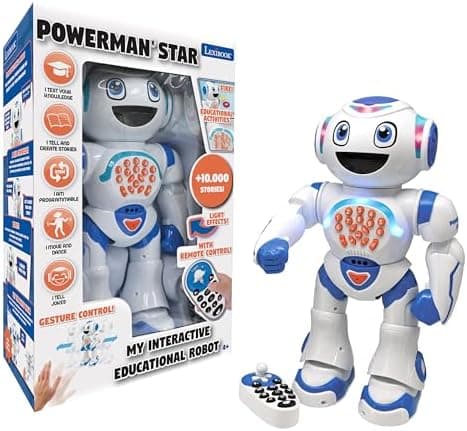
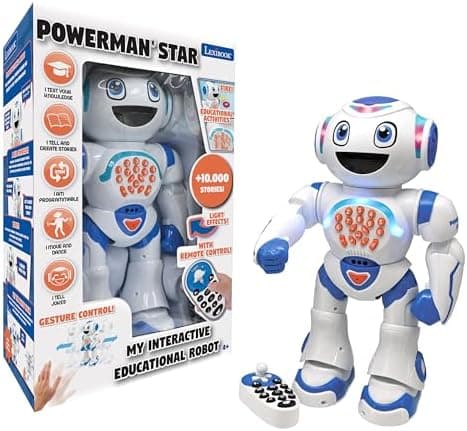
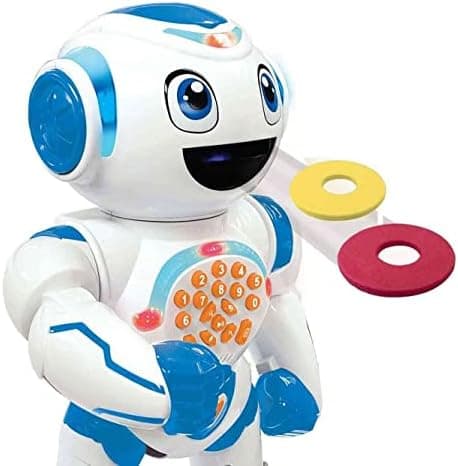
Walk down the robot aisle of any UK toy shop and you will meet two very different price tags. At one end sit the app-connected AI companions that cost as much as a games console. At the other, around the £30 mark, sits the Lexibook Powerman range, and the Powerman Star (model ROB85EN) is the most fully featured version of the lot. It walks, it talks, it dances, it fires foam discs and it will happily quiz your child on animals and numbers until the AA batteries give out. The question this review answers is a simple one: at this price, is Powerman Star a small miracle or a false economy?
We have spent time with Powerman Star to find out what it actually delivers day to day, where the corners have been cut, and which children will get the most out of it. If you are weighing it against pricier options, we will point you towards our guide to choosing a first coding robot and a few alternatives further down. First, the short version.
👉 Short on time? Check the latest price on AmazonAs an Amazon Associate, AIToys.co.uk earns from qualifying purchases..
Quick Verdict: Lexibook Powerman Star
The Powerman Star earns a solid 4.1 out of 5. Judged as a £30 toy rather than a £200 robot, it is remarkable value: you get a walking, talking, dancing, joke-telling, quiz-hosting, disc-shooting robot with a genuine (if simple) programming mode, all in one box. It is the sort of present that produces a real gasp on a birthday morning and then keeps a four-to-eight-year-old busy for weeks.
The honest caveats are about expectations. This is a "smart" toy, not artificial intelligence: its answers are pre-recorded, it does not learn, and it will not hold a conversation the way a voice assistant does. You will also need to supply seven AA batteries, and the foam-disc launcher adds small parts to keep track of. Manage those expectations, and Powerman Star is one of the best-value interactive robots you can buy in 2026.
Pros
- Brilliant value: a genuinely packed feature list for around £30.
- Does plenty out of the box: talking, dancing, jokes, music and gesture control from the first play.
- Real learning content: 300-plus quiz questions across six topics.
- Gentle first coding: programme up to 40 actions to teach sequencing.
- Long play life: Story Maker and voice recording keep it interesting.
Cons
- Batteries not included: you need seven AAs before it does anything.
- Not true AI: responses are pre-set, not a real conversation.
- Small parts: the foam discs are easy to lose and mean supervised play.
- Robotic voice: youngest children may need help understanding it at first.
- Limited coding ceiling: confident over-eights will outgrow the programming.
Key Features
Lexibook has thrown a lot into Powerman Star, which is exactly why it stands out at this price. Here is what you are actually getting.
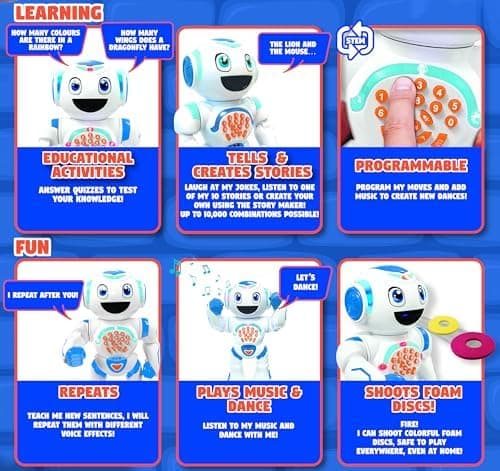
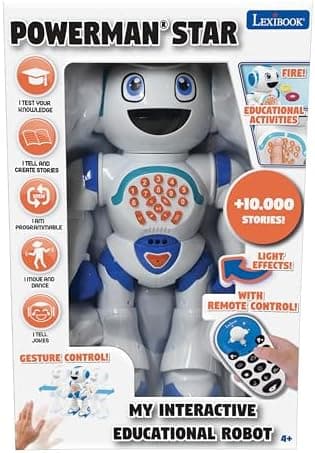
- Fully interactive personality: the robot speaks in English, tells jokes, plays music and performs light-and-sound routines. It is designed to feel like a character rather than a remote-control car.
- Six educational activities with 300-plus quiz questions: covering numbers, animals, daily life, musical instruments and more, so there is a genuine learning layer rather than just play.
- Story Maker: children combine phrases to build their own stories (Lexibook claims up to 10,000 combinations) and there are 10 of Aesop's fables built in for bedtime.
- Programmable movement: a simple coding mode lets children queue up to 40 actions in sequence, then watch Powerman carry them out. You can even add music to build a saved dance routine.
- Gesture sensor: wave your hand and the robot follows (forward, back, left and right) which is a big hit with younger children who find the remote fiddly.
- Record and repeat: Powerman plays back what you say in its own robot voice and can store phrases to reuse later.
- Foam-disc launcher: it fires soft foam discs, which is either the best or the most divisive feature depending on your living room.
- Remote control: drive it in any direction using the included handset.
How the programming actually works
It is worth being clear about what "programmable" means here, because the word does a lot of heavy lifting on toy packaging. Powerman Star uses on-body and remote-based programming: your child chooses a sequence of moves and actions (forward, turn, dance, speak) up to 40 steps, then presses go and the robot performs the lot in order. That is real, valuable computational thinking: children learn that a program is a list of instructions carried out in sequence, and that if the robot does the wrong thing, the fix is in their instructions rather than the machine.
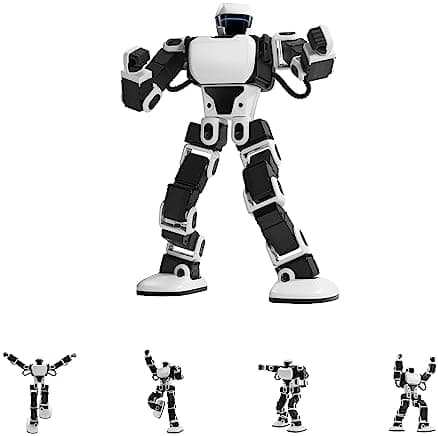
What it is not is a coding language or an app-based visual editor. There is no Blockly, no Scratch, no Python. For a four-to-seven-year-old that is completely fine and arguably better, because it keeps things screen-free and immediate. For a coding-mad nine-year-old, it will feel limited quite quickly, which is where a dedicated STEM robot such as the Robosen Interstellar Scout K1 or an app-connected model earns its higher price.
What We Like
The headline is value, and it is not a small thing. For roughly the cost of a couple of boxed board games you get a robot that does more or less everything a young child imagines a robot should do. That breadth matters: children who might tire of a single-trick toy keep coming back because Powerman can switch from quizmaster to DJ to storyteller to dance partner.
The gesture sensor deserves special mention. Remote controls can frustrate three- and four-year-olds, but waving a hand to make the robot follow you is intuitive and delightful, and it gives younger children a quick win that keeps them engaged. The quiz content is also better than we expected at this price. With 300-plus questions across six topics, it has real replay value and sneaks a bit of learning into what feels like play.
Finally, the out-of-the-box factor is excellent. Beyond loading the batteries, there is no app to download, no account to create and no firmware to update. For grandparents buying a gift, or parents who have had their fill of connected toys and data-privacy small print, that simplicity is a genuine feature rather than a compromise.
What Could Be Better
The single most common frustration is batteries. Powerman Star needs five AA batteries for the robot and two more for the remote, and none are supplied. If you are wrapping this as a present, buy a multipack of AAs at the same time. There are few things sadder than a robot that cannot move on Christmas morning. A rechargeable option at this price would have been the icing on the cake.
Second, be clear-eyed about the intelligence on offer. Powerman is marketed as "smart", and in the everyday sense it is, but its speech and reactions are pre-programmed. It does not understand what you say, it does not learn your child's name, and it will not answer open questions the way a voice assistant does. If your child is expecting a robot they can chat with, a true AI companion such as the Miko 4 is a very different (and much pricier) proposition. We think it is important to set that expectation before purchase so nobody is disappointed.
The foam-disc launcher divides opinion. Plenty of children love it, but the discs are small, easy to lose down the back of the sofa, and turn any robot into a projectile toy. Worth a thought if you have a younger sibling crawling around. The robotic voice, while charming, can also be hard for the youngest children to make out until their ear tunes in. None of these are dealbreakers at the price, but they are the trade-offs Lexibook has made to hit £30.
Who Is It For?
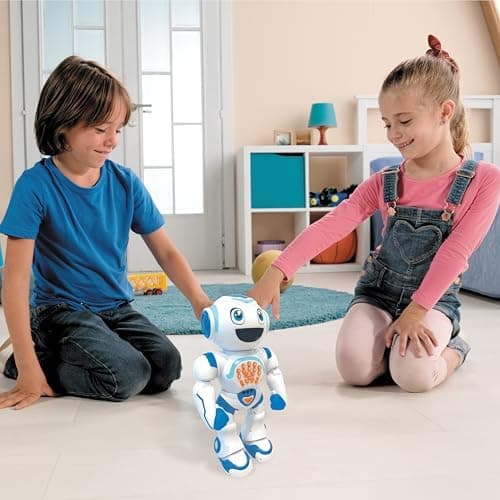
Powerman Star hits a sweet spot for children roughly aged four to eight. Younger children in that band lean on the gesture sensor, the dancing and the stories; older ones enjoy the quizzes and experimenting with the programming mode. It makes an ideal first robot and a superb gift when you want maximum "wow" for a modest budget.
It is less of a fit for two groups. Toddlers under three are below the recommended age and the foam discs are a small-parts concern, so it is not the toy for them: a chunky, screen-free early-years option suits that age far better. And committed young coders who have already mastered a beginner robot will find the 40-action ceiling limiting; they are ready for a device that teaches an actual coding language. For everyone in between, though, Powerman Star delivers.
How Does It Compare?
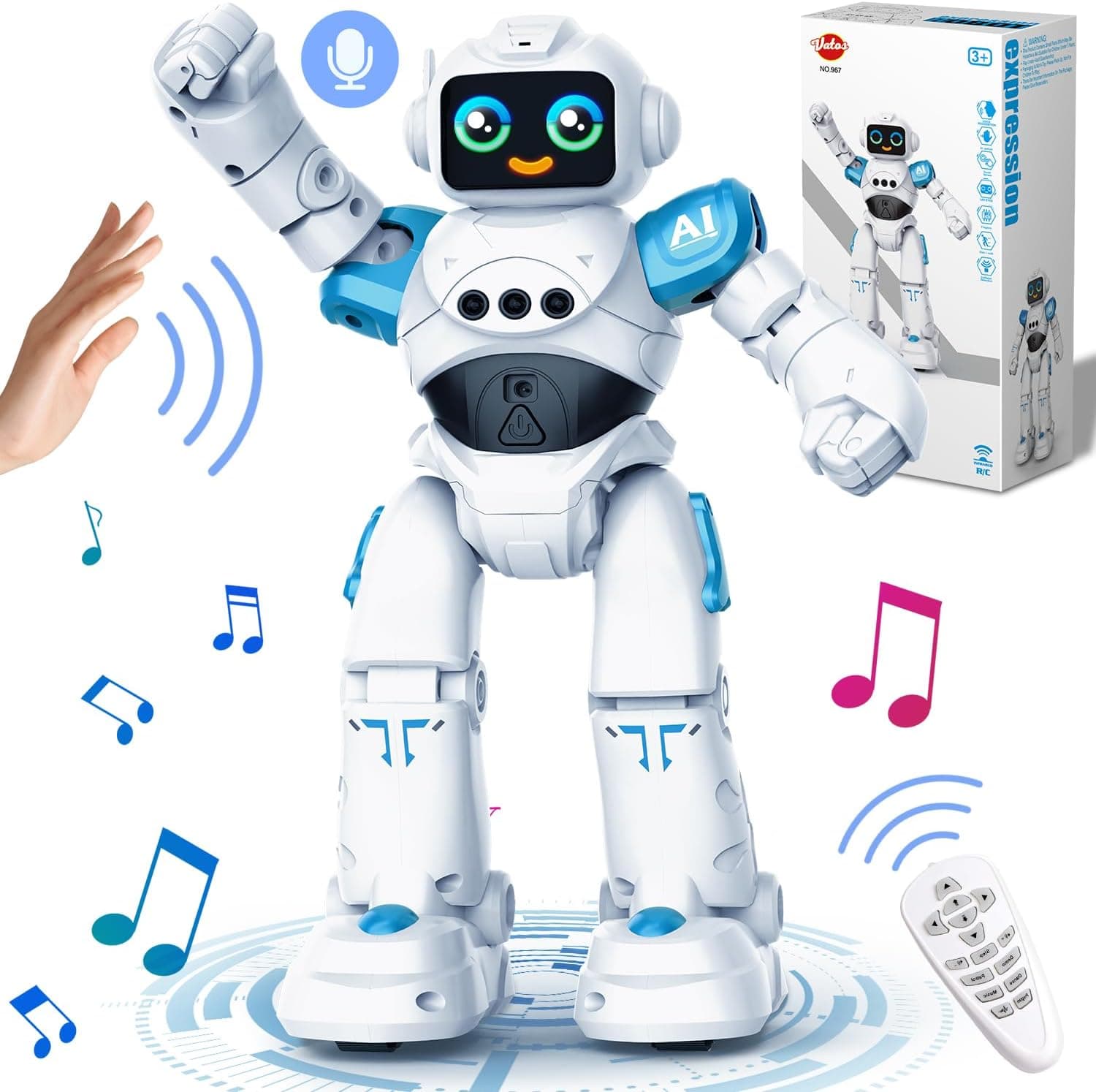
Against the budget field, Powerman Star is one of the most feature-complete robots you can buy for around £30, and it comfortably out-features simpler remote-control robots like the Vatos RC robot on sheer breadth of activities. Where it cannot compete is on genuine intelligence and coding depth: an app-connected companion such as the Miko 4 offers real conversation and adaptive learning, and a programmable STEM robot like the Robosen Interstellar Scout K1 offers far deeper coding, but both cost several times as much.
The honest way to frame it is this: if your budget is around £30 and you want a robot that does the most things, Powerman Star wins. If your priority is deep coding education or a robot your child can genuinely talk to, spend more. For more help weighing those trade-offs, our 2026 AI toys gift guide lays out options across every budget.
👉 Check the latest price on Amazon before you decide.
Value for Money
At around £30 (price correct as of 20 July 2026, though it does move with the seasons), Powerman Star is one of the strongest value propositions in the whole robot-toy category. You are not paying for app subscriptions, cloud services or premium branding; you are paying for a lot of self-contained fun in one box. Factor in the AA batteries you will need to buy separately, and the real-world cost is a few pounds higher, but even then it undercuts almost everything with a comparable feature list.
The value case rests on longevity, and here Powerman does better than most cheap robots. Because it has so many modes (quiz, story, dance, programming, gesture play) children rotate through them rather than exhausting a single gimmick in an afternoon. That breadth is what turns a £30 impulse buy into a toy that survives past the first week.
Safety, Screen Time and Setup
Setup is refreshingly simple: fit five AA batteries in the robot and two in the remote, switch on and play. There is no app, no pairing and no account, which also means no data collection to worry about: a welcome change from connected toys. Because it is entirely screen-free, Powerman Star sidesteps the screen-time debate altogether, making it an easy toy to feel comfortable about.
On physical safety, the robot is recommended for older children rather than toddlers, and the foam discs are small parts, so it is best kept away from under-threes and supervised during launcher play. Always check the age guidance and safety marks on the current Amazon listing and packaging before buying, as manufacturers occasionally revise them. The discs are soft foam and designed to be safe indoors, but as with any projectile toy, a house rule about not aiming at faces is sensible.
Related reading
Frequently Asked Questions
Is the Lexibook Powerman Star a real AI robot? Not in the strict sense. It is an interactive, programmable toy with pre-recorded speech and reactions rather than genuine artificial intelligence. It does not understand or learn from what you say. For real conversation and adaptive learning you would need an app-connected AI companion, which costs considerably more.
What age is Powerman Star for? It suits children roughly aged four to eight best. Younger children enjoy the gestures, dancing and stories; older ones get more from the quizzes and programming. Always confirm the exact age rating on the current listing before buying.
Are batteries included? No. You need five AA batteries for the robot and two AA batteries for the remote (seven in total) and none come in the box. Buy a multipack at the same time so it works straight away.
Can it really be programmed? Yes, in a simple, screen-free way. You can queue up to 40 actions in sequence and the robot performs them in order, which teaches the basics of coding logic. It is not a full coding language and there is no app-based editor.
Does it need Wi-Fi or an app? No. Powerman Star works entirely on its own with no app, no account and no internet connection, which keeps setup easy and avoids any data-privacy concerns.
Is it noisy? It can be. Powerman plays music, talks and makes sound effects, and there is no headphone option, so expect a lively toy. Most children love this, but it is worth knowing before it lands under the tree.
The Verdict
The Lexibook Powerman Star does exactly what a great budget robot should: it delivers far more than its price tag suggests and creates real delight without demanding an app, an account or a small fortune. Talking, dancing, quizzing, storytelling, gesture control and a genuine first taste of programming (all for around £30) add up to a toy that earns its place in the box and keeps children coming back.
Go in with clear eyes about the limits. It is smart rather than truly intelligent, you will need to supply seven AA batteries, and dedicated young coders will eventually want something deeper. But for a first robot, a crowd-pleasing gift, or simply the most fun per pound in the category, Powerman Star is an easy recommendation for 2026. It scores a well-earned 4.1 out of 5.
👉 Ready to meet Powerman? Check the latest price on Amazon.