Disclosure: This article contains affiliate links. As an Amazon Associate, AIToys.co.uk earns from qualifying purchases. If you buy through our links, we may earn a small commission at no extra cost to you. It never changes the price you pay, and it never changes our verdict.
PlayShifu Orboot Earth Review UK 2026: The AR Globe That Makes Geography Magic
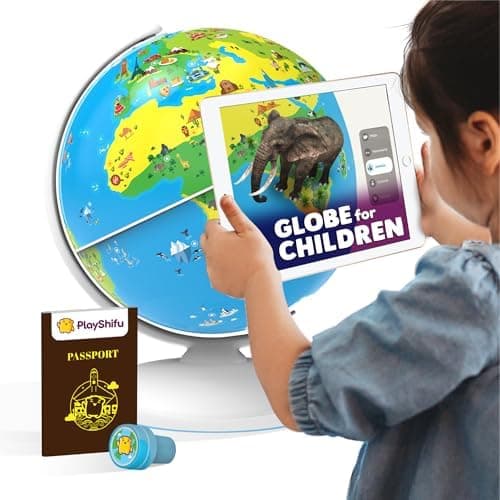
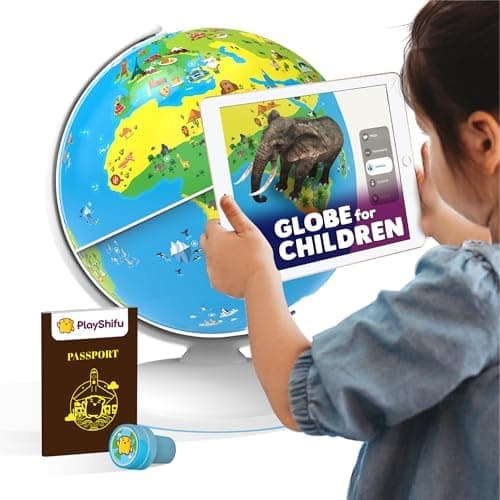
A traditional globe is a beautiful object, but let's be honest about what most children do with one: they give it a spin, find the country they live in, and move on. The PlayShifu Orboot Earth sets out to fix that. At first glance it is a charming 10-inch globe covered in friendly illustrations, but point a tablet or phone at it through the free Orboot app and animals leap up from the continents, monuments rise out of the map, and a quiz pops up asking your child what they have just discovered. It is part globe, part augmented-reality game, and the whole idea is to turn passive geography into something a child actively explores.
Orboot sits in the same augmented-reality family as the Merge Cube AR we reviewed, but where the Merge Cube is an open-ended AR object, Orboot is built around one clear subject: the world and everything in it. It is also the natural rival to a screen-in-the-stand option like the LeapFrog Magic Adventures Globe. Here is our honest, hands-on take on whether Orboot Earth earns its place, and which children it genuinely suits.
👉 Short on time? Check the latest price on AmazonAs an Amazon Associate, AIToys.co.uk earns from qualifying purchases..
Quick Verdict: PlayShifu Orboot Earth
The Orboot Earth earns a strong 4.3 out of 5. It does the hardest thing an educational toy can do: it makes a child want to keep learning. The augmented-reality app is genuinely well made (colourful, calm, ad-free and packed with real facts rather than filler) and the borderless globe is a clever, future-proof design choice. The catch is entirely practical. Orboot is only as good as the device you point at it, you do need to supply that device yourself, and Amazon Fire tablets are unsupported. Treat those as the price of entry and you get one of the most engaging geography toys available to UK families in 2026, especially for the four-to-eight age group.
Pros
- Genuinely engaging AR: animals, landmarks and stories spring to life and hold attention.
- Real educational depth: six categories, 400+ wonders and 1,000+ facts, not just gimmicks.
- No subscription, no ads: the app is a free, one-time companion with nothing to upsell.
- Works offline: once downloaded, play needs no internet connection.
- Future-proof design: the borderless, name-free globe focuses on discovery.
Cons
- You bring the device: a compatible tablet or phone is essential, and Fire tablets won't work.
- Device-dependent: older or low-RAM hardware can lag.
- No labels: the blank globe isn't a traditional reference tool.
- Lighting matters: dim rooms make scanning fiddly.
- Still screen time: it blends physical and digital, but a screen is involved.
Key Features
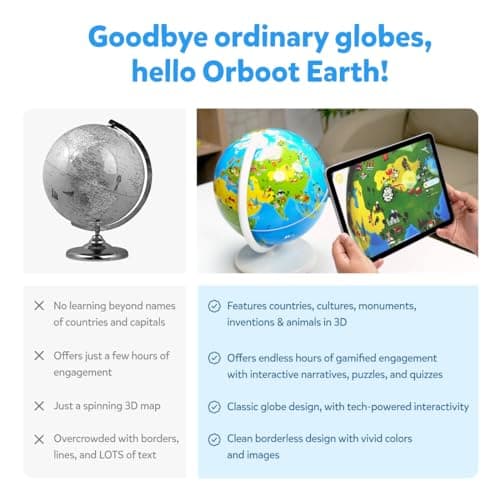
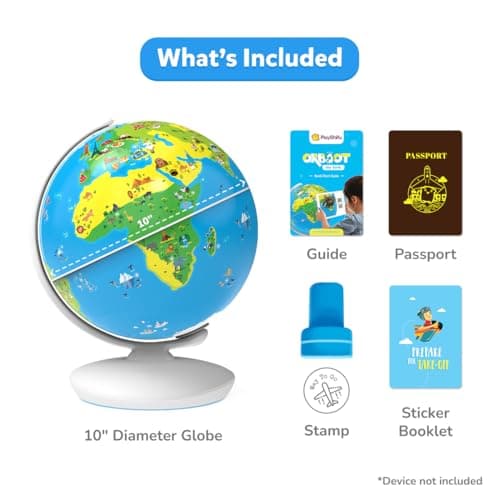
Out of the box, Orboot Earth is a complete little exploration kit rather than just a globe. Inside you get the 10-inch globe and stand, a child's "passport", a set of stamps, country flag stickers and a help guide. The globe itself is the part that surprises people: it is deliberately borderless and carries no country names, just cheerful illustrations of animals, foods, landmarks and inventions scattered across the continents. That is not an oversight. It is the point, and we'll come back to why it works.
The learning is organised into six categories that cover a genuinely broad curriculum:
- Animals and wildlife: where different species live and how they survive.
- Landmarks and monuments: famous structures and why they matter.
- Cultures: traditions, festivals and ways of life around the world.
- Cuisines: what people eat in different regions and where dishes come from.
- Inventions: discoveries and the places that produced them.
- Maps: the geography layer that ties everything together.
Across those categories sit more than 400 "wonders" and over 1,000 facts, which is enough to keep a curious child returning for months rather than an afternoon. Crucially, the companion app is free, has no in-app purchases and shows no advertising, and once it is downloaded it works entirely offline, so a long car journey or a flight is fair game.
How the AR actually works
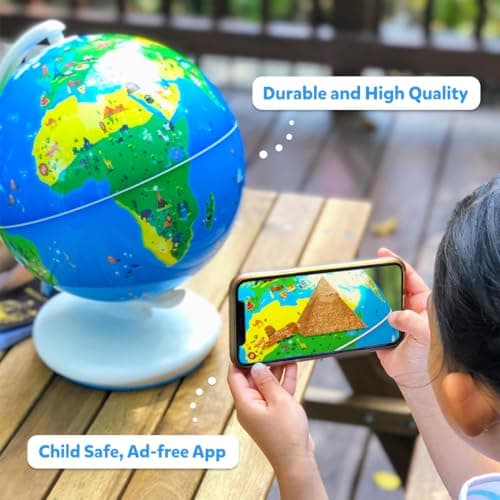
It is worth being precise about what "augmented reality" means here, because the term gets thrown around loosely. Your child opens the free Orboot Earth app on a tablet or phone and points the camera at the globe. The app recognises the illustrations on the surface and overlays 3D models, animations and information on top of the live camera view. Tap the elephant near Africa and a 3D elephant appears, with facts and a short narrated story; spin the globe to Asia and the content changes to match. There is no internet lookup happening (all of it is built into the app) so the experience is fast and private, with no accounts to create and nothing tracking your child.
The Five Modes of Play
Orboot is not a single activity but a small suite of game modes, which is a big part of why it has replay value. Younger children gravitate to the open Explore mode, simply roaming the globe and tapping whatever catches their eye, while older ones enjoy the more structured challenges.
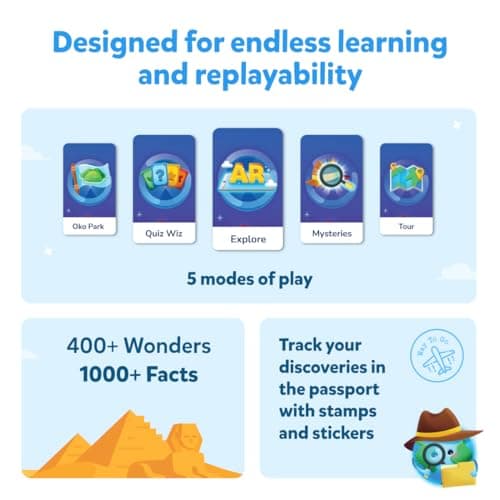
The mix of free exploration, quizzes, guided tours and "mystery" puzzles means the toy can flex to a child's mood and age. A four-year-old can potter happily in Explore, pointing at animals; a seven- or eight-year-old can test themselves with Quiz Wiz or work through Mysteries that send them hunting across continents for clues. The passport, stamps and stickers add a lovely analogue layer on top: children collect a stamp for each place they "visit", which turns digital discovery into a physical record they can be proud of. It is a smart bit of design that nudges children back to the globe again and again.
What We Like
The augmented reality genuinely delights. This is the make-or-break test for any AR toy, and Orboot passes it. The first time a child sees a 3D animal stand up off the globe and hears its story, there is a real moment of wonder, and unlike many novelty AR apps, the magic doesn't wear off after five minutes, because there is so much to find. It rewards curiosity instead of exhausting it.
It teaches the right things. Orboot leans away from rote facts like capital cities and towards the more valuable stuff: where animals live, why landmarks matter, what people eat and celebrate, and how the world fits together. That focus on cultures and cuisines quietly builds cross-cultural empathy, which is a rare and welcome thing in a geography toy. Parents repeatedly single this out as the reason they bought it.
No subscription and no ads. In an age where so many "educational" apps are a thin wrapper around a monthly fee, Orboot's one-time purchase is refreshing. The app is free, contains no advertising and never asks a child to spend money. For screen-conscious parents, an ad-free, purchase-free, offline app is about as safe a digital environment as you can hope for.
The borderless globe is genuinely clever. Leaving names and borders off the globe sounds like a downside until you see it in action. It keeps young children focused on discovery rather than text they cannot yet read, it sidesteps the awkwardness of borders that change over time, and it pushes all the labelling into the app where it can be interactive. It also means the globe simply looks lovely on a shelf.
What Could Be Better
We promised an honest review, so here are the limitations worth knowing before you buy.
You have to supply the device, and not just any device. Orboot needs a reasonably modern tablet or phone, and this is the single biggest gotcha: Amazon Fire tablets are not supported at all. PlayShifu lists iPhone 6 and above, most recent iPads, and Android phones and tablets with 3GB of RAM or more. If your child's "tablet" is a budget Fire, Orboot is a non-starter, so check this carefully first. If you are still deciding on a tablet, our guide to the best kids' learning tablets in the UK is a sensible place to start.
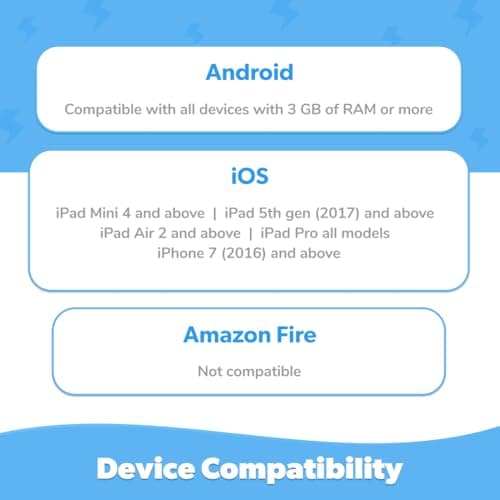
Older hardware can struggle. Even on supported devices, an ageing tablet with limited memory can make the AR tracking stutter or the app freeze. On a current iPad or a recent mid-range Android it runs smoothly, but if you are dusting off a five-year-old hand-me-down, temper your expectations.
It needs decent light. Because the app uses the camera to recognise the globe, scanning in a dim bedroom can be frustrating. A normally lit room is fine; a gloomy corner at bedtime is not.
It is not a traditional reference globe, and it is not screen-free. If you wanted a classic labelled globe your child can consult for homework, the blank surface will disappoint. Orboot is a discovery toy, not a reference tool. And while it blends physical and digital cleverly, there is still a screen involved, so it does not avoid screen time the way a button-driven robot like the MatataStudio Tale-Bot Pro does.
Who Is It For?
Orboot Earth is at its best for a curious child aged roughly 4 to 8, with the sweet spot around five to seven. That is the age where the wonder of AR lands hardest and the facts are pitched just right. Younger fours will love the Explore mode with a grown-up alongside; eights and above can take on the quizzes and mysteries more independently. PlayShifu rates it for 4-10, and while nine- and ten-year-olds will still learn from it, some will want more depth than it offers.
It makes a particularly good gift, precisely because it looks impressive, teaches something real and suits a wide age band. Useful when you are buying for a child whose interests you don't know inside out. It is also a strong pick for screen-conscious households that have made their peace with some screen time, because the app is such a clean, calm, ad-free environment compared with most.
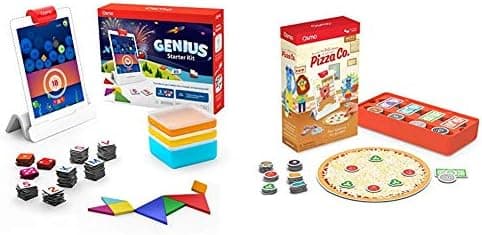
It is not the right choice if you specifically want a screen-free toy, if your only device is an Amazon Fire tablet, or if you need a labelled reference globe for school work. For app-based learning that uses physical pieces in a different way, the Osmo Coding Starter Kit is worth a look, and our roundup of the best STEM toys in the UK puts Orboot in context against the wider field.
How Does It Compare?
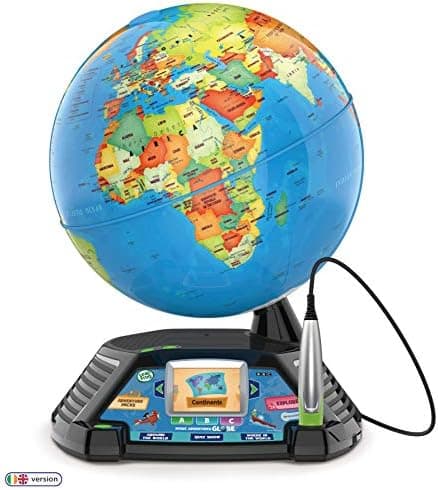
The most direct rival is the LeapFrog Magic Adventures Globe, and the two take opposite approaches. The LeapFrog globe has its own built-in screen and streams BBC video clips, so it needs no separate device and works straight out of the box, but it is a closed system and the screen is small. Orboot needs your tablet but, in return, gives you full-size AR, more categories and a far bigger content library. If you do not want to hand over a tablet, LeapFrog wins on convenience; if you want the richest experience and already own a suitable device, Orboot is the more ambitious toy.
Against the Merge Cube AR, the difference is focus. Merge Cube is an open AR platform that does a bit of everything (science, space, anatomy) whereas Orboot does one subject thoroughly. For a child who loves geography, animals and the wider world, Orboot's depth is the better fit; for a child who wants to dip into lots of different topics, Merge Cube spreads wider.
And next to a coding toy like the Osmo Coding Starter Kit, the choice comes down to subject: Orboot teaches the world, Osmo teaches the logic of programming. Many families happily own one of each, because they scratch very different itches.
Value for Money
Orboot Earth sits at the affordable end of the AR-learning market, and there is no subscription to worry about afterwards: the app is free and stays free. Prices on Amazon move around, so we never quote a fixed figure or promise a particular saving; the fair way to judge value here is by what you actually get for the money.
On that measure it stacks up well: a well-made globe, a genuinely deep app with six categories and over a thousand facts, five game modes, and the passport-and-stamps system that keeps children coming back: all with no ongoing cost and no ads. For a toy that can hold a child's interest across several years of development, that represents strong value, with the one honest proviso that you need a suitable device to use it at all.
👉 Check the latest price on Amazon before you decide.
Safety, Screen Time and Setup
PlayShifu recommends Orboot Earth for ages 4 and over. As always at this age, check the packaging for small-parts guidance. The stamps, stickers and passport are best kept away from younger siblings who still put things in their mouths. The globe is robust and designed to survive normal play and the occasional knock off a table.
On screen time, Orboot is a thoughtful middle path rather than a screen-free toy. The play is built around a physical globe a child holds and spins, so they are not slumped staring at a tablet. They are moving around an object in the real world, using the screen as a window onto it. The app is ad-free, has no in-app purchases and works offline, which removes most of the usual digital worries. Setup is quick: download the free Orboot Earth app, allow camera access so it can see the globe, and you are exploring within a couple of minutes. The only practical tip is to play in a well-lit room so the camera can recognise the globe reliably.
Frequently Asked Questions
Do I need a tablet or phone to use Orboot Earth? Yes. The globe does nothing on its own: the magic comes from the free Orboot Earth app on a separate device. It supports iPhone 6 and above, most recent iPads, and Android devices with 3GB of RAM or more. Amazon Fire tablets are not supported.
Is there a subscription or any in-app purchases? No. The app is a free, one-time companion with no subscription, no in-app purchases and no advertising.
Does it need an internet connection? Only to download the app the first time. After that, all the content is stored on the device, so it works fully offline: handy for travel.
What age is Orboot Earth best for? PlayShifu rates it 4-10, and we found the sweet spot is around 4 to 8. Younger children enjoy free exploration with a grown-up; older ones take on the quizzes and mystery challenges.
Why doesn't the globe have country names or borders? By design. Keeping the surface blank focuses young children on discovery, avoids borders that date over time, and moves all the labelling into the interactive app. It does mean it is not a traditional reference globe.
The Verdict
The PlayShifu Orboot Earth is one of the most engaging geography toys you can give a four-to-eight-year-old in 2026. It takes a subject that can feel dry (maps and countries) and turns it into something a child actively wants to explore, with genuinely deep content, a clean ad-free app and a clever borderless design that ages well. The cross-cultural focus on animals, cultures and cuisines is exactly the kind of learning worth encouraging.
Its limits are practical rather than fundamental. You must provide a compatible device, Amazon Fire tablets are out, older hardware can lag, and it is screen-based play rather than screen-free. Go in aware of those caveats (and pair it with a tablet that meets the spec) and you get a beautifully made, genuinely educational toy that earns its shelf space.
It earns a confident 4.3 out of 5 and a place on our shortlist of the best AR and smart learning toys for UK families.
👉 Ready to explore the world? Check the latest price on Amazon.
As an Amazon Associate, AIToys.co.uk earns from qualifying purchases. Prices and availability are accurate as of the date of publication but can change. We only ever recommend products we believe will genuinely help UK families.