Quick Verdict: LEGO Boost Creative Toolbox
The LEGO Boost Creative Toolbox, priced at £129.99, stands as a brilliant bridge between traditional LEGO building and the exciting world of robotics and coding. For children who love the hands-on creativity of LEGO, this set provides a seamless and intuitive entry into STEM education. It allows kids to construct five diverse, programmable robot models, each with its own unique personality and functions, using classic LEGO bricks combined with advanced tech elements. Our experience with Boost was overwhelmingly positive; it’s not just about following instructions, but about understanding how physical mechanics translate into code and vice-versa. The app-driven block coding is accessible and engaging, making complex concepts digestible for young minds. While the initial building can be time-consuming, the reward of seeing a creation come to life through code is immensely satisfying and educational.
Pros:
- Combines the beloved LEGO building experience with practical coding.
- Teaches both mechanical engineering and computational thinking.
- Includes five versatile robot models to build and program.
- Intuitive, icon-based drag-and-drop coding interface.
- Encourages creativity and problem-solving through iterative design.
- Robust and familiar LEGO ecosystem ensures compatibility with existing bricks.
Cons:
- Building the initial models can be time-consuming, requiring significant parental patience or involvement for younger children.
- Requires a compatible tablet or smartphone to operate.
- Relatively high price point for a toy.
- The coding is exclusively visual block-based, with no direct transition to text-based languages.
Price: £129.99 (RRP)
Video Review
👉 Interested? Check the latest price for the LEGO Boost on Amazon UK
🏬 Also available on the high street: Browse LEGO at The Entertainer →
Design: The Best of Both Worlds: Bricks and Bytes
Currently available on LEGO Boost. Amazon UK. Prices may vary.
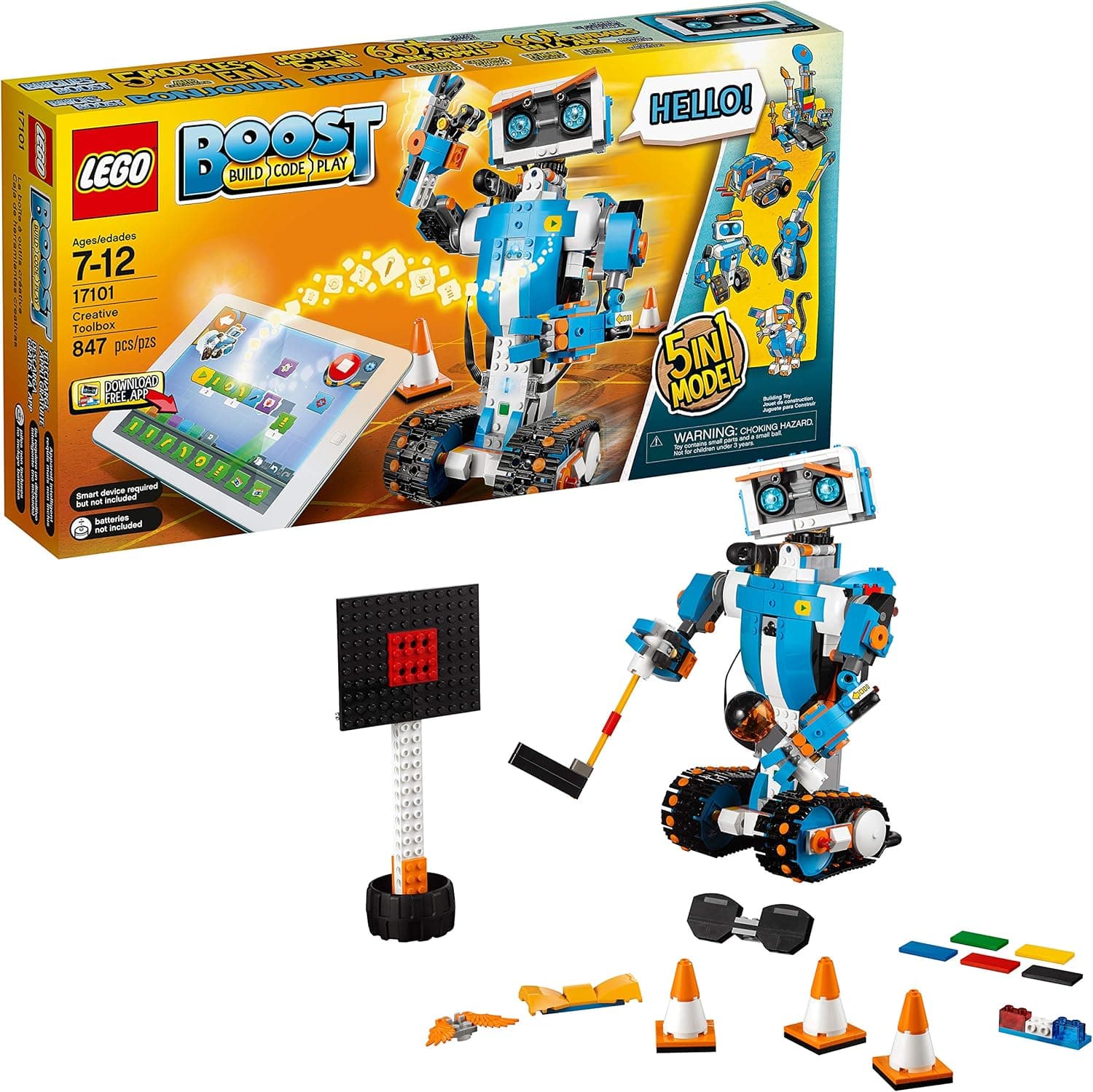
The LEGO Boost Creative Toolbox is a masterclass in integrating physical construction with technological innovation. At its core, the set consists of 847 classic LEGO pieces, carefully selected to allow for the creation of five distinct models, plus a central 'Move Hub,' an interactive motor, and a colour & distance sensor. This blend provides a familiar, tactile building experience that LEGO enthusiasts adore, simultaneously introducing them to the foundational elements of robotics.
The iconic plastic bricks are instantly recognisable, ensuring that children can easily integrate Boost pieces with their existing LEGO collections, fostering even more expansive creative projects. The instruction manuals are digital, housed within the companion app, providing interactive, 3D building guides that can be rotated and zoomed: a massive step up from static paper manuals, especially for complex builds.
Central to the Boost system is the Move Hub. This unassuming brick is the brain of every Boost creation. It contains a tilt sensor, two encoded motors, and Bluetooth Low Energy connectivity, allowing it to communicate wirelessly with the app. It's powered by six AAA batteries, nestled securely within its casing. The clever part is how seamlessly this technology is hidden within the LEGO structure, maintaining the aesthetic integrity of the builds while providing powerful functionality.
The Interactive Motor is a key component, identical in functionality to the internal motors of the Move Hub, but offering external placement options for driving wheels, gears, or other mechanical parts. The Colour & Distance Sensor adds another layer of interaction, enabling Boost creations to detect colours, objects, and even gestures, bringing them to life in dynamic ways. These sensors broaden the scope of programmable behaviours immensely.
What truly sets Boost apart in terms of design is the focus on reconfigurability. Children build Vernie the Robot, play with it, then dismantle it to build Frankie the Cat or the Guitar4000. This iterative process of building, programming, and rebuilding is fundamentally educational, teaching not just how to follow instructions, but how to conceive, deconstruct, and innovate with physical components. The design is robust, colourful, and immediately inviting, promising hours of engaging construction and playful exploration.
Features: A Universe of Programmable Possibilities
The LEGO Boost Creative Toolbox isn't just a collection of bricks; it's a gateway to understanding engineering, programming, and imaginative functional design. Its features are centred around its modular nature and the intuitive companion app.
The Five Core Models: Versatility in Construction
Unlike many conventional robot kits, Boost offers blueprints for five distinct, fully functional models, each showcasing different aspects of robotics and mechanical engineering:
- Vernie the Robot: The flagship model, a talking, walking, dancing robot. Vernie teaches sequential movements, object detection, voice recording, and even how to make a robot express emotions. Its expressive eyebrows and moving head make it a truly animated companion.
- Frankie the Cat: An interactive pet robot that can play, purr, and express various moods. This build highlights mechanical movements for realistic animal behaviours and teaches how sensors can create responsive interactions, such as stroking its head.
- Guitar4000: A fully playable musical instrument that allows kids to compose and perform songs. This model brilliantly combines mechanics with musicality, introducing sound programming and rhythm.
- Multi-Tool Rover 4 (M.T.R.4): A robust, all-terrain rover with various attachments including a spring-loaded shooter. M.T.R.4 focuses on vehicle dynamics, interchangeable tool functionalities, and navigation challenges.
- Autobuilder: A fascinating automated production line that can build miniature LEGO models. This advanced build covers automation, precision movement, and the concept of a robotic assembly line.
Each model provides unique building and coding challenges, ensuring long-term engagement and diverse learning opportunities. The beauty is the children learn that the same core components (Move Hub, Motor, Sensor) can be repurposed to create vastly different machines.
The LEGO Boost App: Icon-Based Coding Genius
The free LEGO Boost app is the interactive brain behind the whole operation. It provides an intuitive, icon-based drag-and-drop coding environment that is incredibly accessible for young children. Instead of complex text, children connect visual command blocks, creating sequences of actions that control their LEGO creations.
Key coding concepts introduced include:
- Sequencing: Arranging commands in a specific order for a desired outcome.
- Loops: Repeating a series of actions.
- Conditionals: Making decisions based on sensor input (e.g., if a certain colour is detected, turn left).
- Events: Triggering actions based on external events (e.g., if the robot is tilted, play a sound).
- Variables: Though not explicitly named as such, the app allows for simple customisation and parameters for movements or sounds.
The app also features engaging, step-by-step 3D building instructions, eliminating the need for bulky paper manuals. It acts as an interactive guide, offering challenges and mini-games that encourage experimentation and deeper understanding of how the code influences the physical model. There are also creative canvas modes where children can invent their own code sequences without specific guidance, fostering open-ended play and innovation.
Integrated Sensors and Motors: Bringing Creations to Life
- Move Hub: Contains the brain with Bluetooth connectivity, a tilt sensor (to detect movement and orientation), and two built-in motors capable of driving wheels or other mechanisms.
- External Interactive Motor: Provides additional power and precise control to intricate mechanical assemblies.
- Colour & Distance Sensor: This versatile sensor can detect proximity to objects and recognise various colours. This enables creations to navigate mazes, respond to hand gestures, sort coloured bricks, or even play different musical notes depending on the colour it 'sees.'
The interplay between these physical components and the digital programming logic is what makes LEGO Boost so powerful. Children don't just build; they engineer and program their creations to interact with the world around them.
Age Appropriateness: Building Foundations with Fun
LEGO Boost is officially recommended for ages 7-12, a range that we found to be spot on for maximizing both engagement and educational benefit. The genius of Boost lies in how it caters to the developmental stages within this age group, smoothly blending hands-on building with introductory coding concepts.
For children at the younger end of the spectrum (7-8 years old), the initial building phase can be quite immersive. While some sections might require a bit of parental assistance (especially with aligning pins or understanding complex sub-assemblies), the interactive 3D instructions in the app make the process manageable and fun. The icon-based coding interface is perfectly suited for this age, as it removes the barrier of reading text and allows them to grasp fundamental programming logic through visual sequencing. They immediately see their code bring their physical creations to life, providing powerful, positive reinforcement.
As children progress into the 9-12 age range, they can tackle the building challenges more independently and go further into the coding functionalities. This is where they start to truly experiment with the sensors and motors, crafting more intricate programs that respond to environmental cues or perform complex sequences. The various challenges and open-ended play within the app encourage them to problem-solve, debug their code, and even invent their own LEGO-powered machines.
The absence of text-based coding might seem like a limitation for older children who are ready for more advanced programming. However, the block-based system of Boost is a fantastic stepping stone. It instils crucial computational thinking skills (decomposition, pattern recognition, abstraction, and algorithms) in a fun and accessible way. These skills are highly transferable and will serve as a solid foundation if they choose to transition to text-based languages like Python or JavaScript later on.
Ultimately, LEGO Boost excels at making STEM learning feel like creative play, rather than a dry academic exercise. It nurtures spatial reasoning, fine motor skills (through building), and logical thought, all within the familiar and beloved world of LEGO.
Value for Money: A Constructive Investment
At £129.99, the LEGO Boost Creative Toolbox represents a mid-to-high-end investment in a children's toy. However, its value proposition extends far beyond mere playtime, positioning it as a highly worthwhile acquisition for families keen on fostering STEM skills.
Firstly, consider the inherent value of LEGO itself. As a durable, timeless toy, LEGO sets often hold their value and are designed for longevity. The Boost components, integrated with standard LEGO bricks, inherit this robustness. This isn't a toy that will break after a few uses; it's built for repeated construction, deconstruction, and reconfiguration, offering years of potential play and learning.
The true economic value, however, lies in its educational content. Unlike many toys that offer ephemeral entertainment, Boost provides a foundational understanding of robotics, mechanical engineering, and computational thinking. Children learn through direct, hands-on experience how physical mechanisms work, how sensors collect data, and how code translates into real-world actions. This practical application of theoretical concepts is incredibly powerful and beneficial.
The ability to build five distinct models from one set, each offering different skills and programming challenges, significantly extends the play value. Rather than a single-purpose robot, Boost is a versatile toolbox for endless creative invention. The interactive, app-driven instructions and challenges also ensure consistent engagement and continued learning without the need for additional purchases (beyond potential batteries).
When juxtaposed against other educational robotics kits, Boost offers the unique advantage of leveraging the universal appeal and creative freedom of LEGO. This familiar entry point lowers the barrier for children who might otherwise be intimidated by pure robotics kits. For what it teaches in mechanical design, problem-solving, and foundational coding, all within a high-quality, reconfigurable system, the LEGO Boost Creative Toolbox delivers exceptional educational return on investment. It's an encouragement for future innovators, designers, and engineers.
Competitor Mentions: Where Boost Builds its Strength
The educational robotics field is rich with options, but the LEGO Boost Creative Toolbox distinguishes itself through its unique integration of physical building and digital coding. Let's compare it to some notable alternatives.
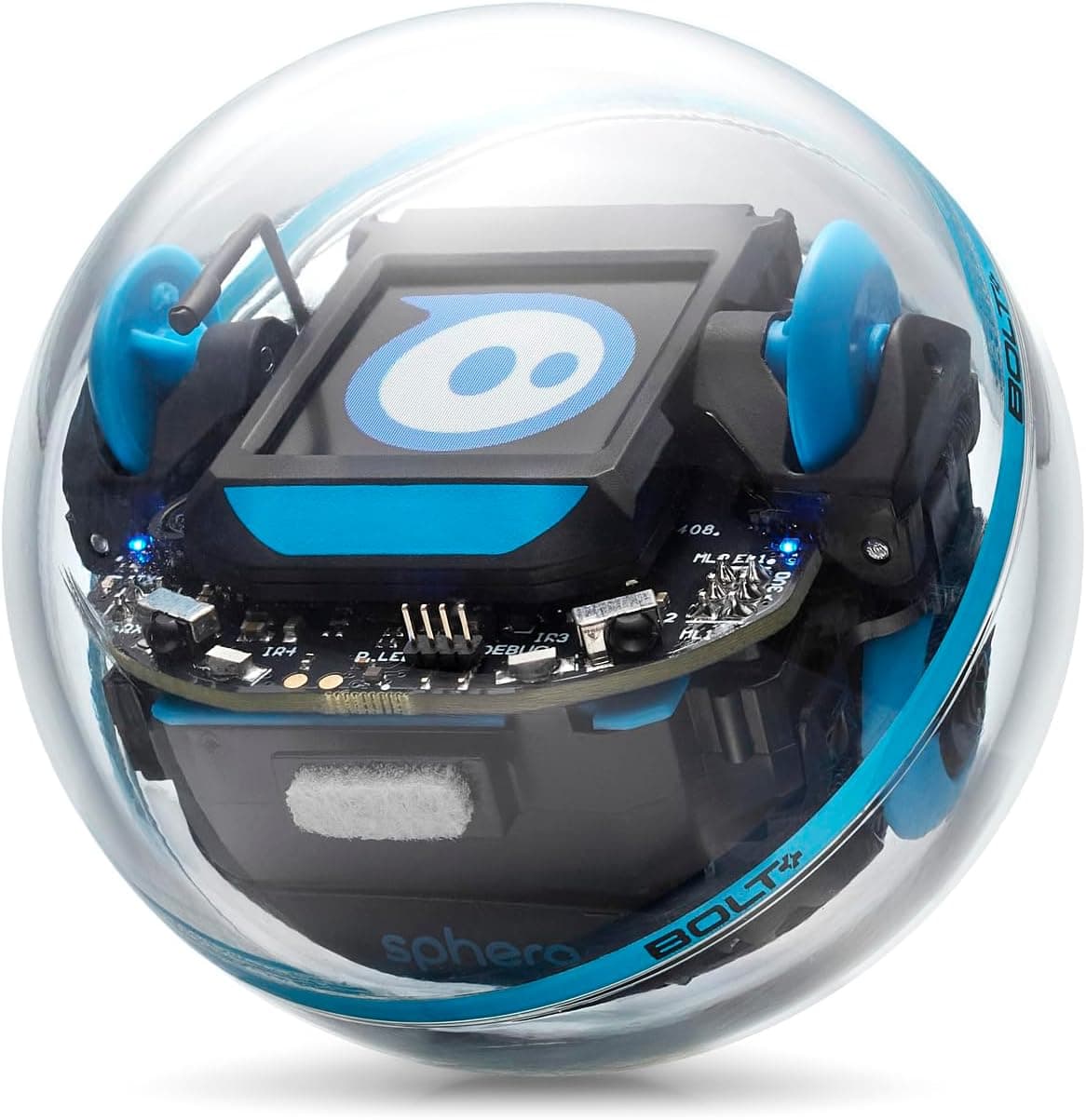
Vs. Sphero BOLT: Sphero BOLT (£149.99) is a pre-assembled coding robot ball, focusing on movement, sensors, and a clear progression to JavaScript coding. While BOLT offers a fantastic platform for pure coding logic and data interaction, Boost provides the crucial hands-on experience of building the robot first. Boost teaches mechanical engineering principles (how gears work, how motors drive movements) alongside coding, something BOLT doesn't directly address. For children who enjoy both construction and coding, Boost offers a more holistic learning experience.
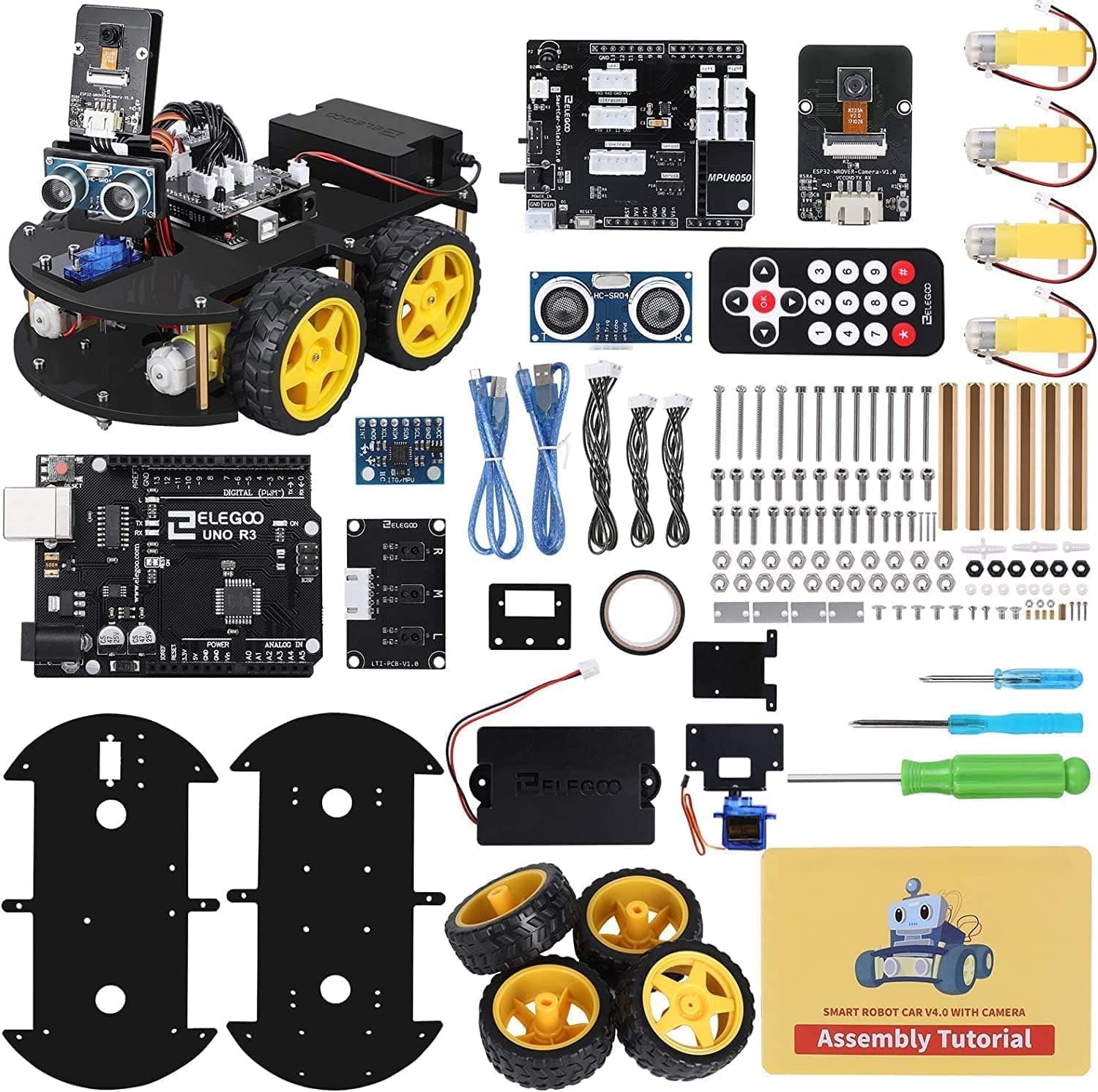
Vs. Makeblock mBot: Makeblock mBot (£169.99) is another pre-built robot that excels in bringing personality and approachable block coding to younger children. Dash's anthropomorphic design and multiple apps make it incredibly engaging. Similar to Sphero BOLT, Dash lacks the physical construction element that defines Boost. Boost is ideal for children who thrive on building from scratch and understanding the internal mechanisms, whereas Dash is perfect for immediate play and programming without the building prerequisite.
Vs. Sphero BOLT: Sphero BOLT (£229.99) is more of an AI personality and companion robot, with coding as a secondary feature primarily for customising its behaviour. Its focus is on emotional interaction and an evolving personality. LEGO Boost, in contrast, is fundamentally an educational robotics kit. While Cozmo offers some block coding, Boost provides a deeper dive into actual robotics and engineering principles through its buildable models and structured coding challenges. They cater to very different play motivations.
Vs. Osmo Coding Starter Kit: Osmo Coding Starter Kit (£79.99) offers a unique screen-based coding experience using physical blocks on a tablet. While ingenious for teaching coding concepts in a tactile way, Osmo doesn't involve building a physical robot that moves independently in the real world. LEGO Boost offers a more immersive, three-dimensional learning environment where children build and program their creations to interact with their physical surroundings, making the coded outcomes very tangible.
LEGO Boost stands out by offering the unparalleled creative freedom of LEGO building combined with a sophisticated yet accessible coding platform. It's the ultimate choice for children who want to understand how things work by building them themselves, and then bringing those creations to life through code.
Related reading
FAQ: Your LEGO Boost Questions Answered
Q1: What ages is LEGO Boost suitable for?
A: LEGO Boost is recommended for children aged 7-12 years. Younger children (7-8) might need some parental assistance with the more complex building steps, but the icon-based coding is very accessible. Older children will enjoy the challenge of building and programming the various models more independently.
Q2: Do I need special LEGO bricks for Boost?
A: The set comes with 847 special LEGO bricks, including the Move Hub, an interactive motor, and a colour & distance sensor, which are essential for its robotic functions. However, the system is fully compatible with existing classic LEGO bricks, allowing children to expand their creations with pieces they already own.
Q3: What device is needed to use the LEGO Boost Creative Toolbox?
A: You will need a compatible iOS or Android tablet or smartphone to download and run the free LEGO Boost app. This app contains the digital building instructions and the visual coding interface. A full list of compatible devices can usually be found on the LEGO website.
Q4: How long does it take to build a Boost model?
A: Building time varies significantly by model and child's age/experience. Vernie the Robot, the main model, can take anywhere from 3 to 6 hours to build. The other models generally take less time, but all require patience and attention to detail. The app offers a step-by-step 3D building guide to assist.
Q5: Can I only build the five official models, or can I create my own?
A: While the set provides instructions for five official models, the LEGO Boost Creative Toolbox is designed to encourage open-ended creativity. Once children understand how the Move Hub, motor, and sensor work, they are free to design, build, and program their own unique robotic creations using the included bricks and any other LEGO pieces they have.
Final Verdict: Engineering Genius, Brick by Brick
The LEGO Boost Creative Toolbox is a triumph in educational play, offering an unparalleled blend of tangible building and accessible digital coding. It expertly leverages the enduring appeal of LEGO bricks, transforming them from static structures into dynamic, programmable robotic creations. For any child with a love for building, this set provides a natural and immensely rewarding pathway into the foundational principles of robotics, mechanical engineering, and computational thinking.
What truly elevates Boost is its dual approach to learning. Children aren't just coding a pre-built robot; they are actively constructing it, understanding the intricate mechanics of gears, levers, and motors. This hands-on engineering experience, coupled with the intuitive, icon-based drag-and-drop coding app, fosters a deep and holistic understanding of how technology works. The satisfaction of seeing a meticulously built model come alive and respond to their own coded commands is a powerful motivator, sparking curiosity and confidence.
With five distinct models to build and endless possibilities for custom creations, the LEGO Boost kit offers remarkable longevity and replay value. While the initial building steps can be time-consuming, they are part of the learning journey, teaching patience and precision. At £129.99, it is a significant investment, but one that richly repays itself through years of engaging, educational play, providing fundamental skills that are increasingly vital in our technology-driven world.
For UK parents seeking a creative, comprehensive, and genuinely fun way to introduce their children to STEM concepts, the LEGO Boost Creative Toolbox is an absolute winner. It doesn't just teach kids to code; it empowers them to build, innovate, and truly understand the world around them, brick by coded brick.