AI Toys Weekly: New AI Companions, a Regulation Milestone & UNICEF's Wake-Up Call
This week in AI toys: a fresh wave of AI companions, a July regulation milestone, UNICEF's new data on children and AI, and the top in-stock buys for parents now.
Welcome to AI Toys Weekly, our Monday round-up of what is new and what actually matters in the fast-moving world of AI-powered toys. For the week commencing 6 July 2026 there are three stories worth a parent's attention: a fresh wave of AI "companions" arriving in softer, more familiar forms, a regulatory milestone that has just passed on the calendar, and striking new data from UNICEF on how quickly children are taking to artificial intelligence.
As always, we have only featured products we have confirmed are in stock on Amazon UK at the time of writing, and every recommendation comes with the honest caveats as well as the praise.
New on the shelves: companions in softer forms
The clearest product trend this summer is the move away from screens and hard plastic towards emotional companions that slot into play children already know. In mid-June, Haivivi launched BubblePal, a small clip-on device that turns an ordinary soft toy into a talking, screen-free AI companion, with a parent app to follow along. It builds on the dog-like Yonbo shown at CES 2026, which is designed to chat, read stories and even help a child work through frustration. The category is clearly shifting from "robot on the desk" to "friend in the toy box".
One emotional companion pet you can buy in the UK today is the Ropet KAMOMO. It uses sensors and an expressive face to react to touch, feeding and attention, in the spirit of a modern Tamagotchi crossed with a soft robot pet. It is a charming example of the companion trend, but it is also exactly the kind of toy we would ask you to set up thoughtfully, checking what data it collects and keeping an eye on how attached a younger child becomes.
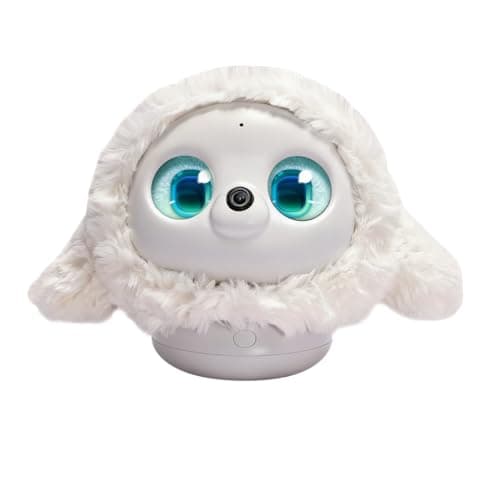
Around £259. Check the price of the Ropet KAMOMO on Amazon UK →
What AI is doing to the toy box
The commercial momentum is unmistakable. The marquee partnership between Mattel and OpenAI is still expected to bring conversational AI to household names, and we unpack what that means for families in our Mattel x OpenAI explainer. But this week the louder story was regulation, and a date has just landed.
In the United States, Maryland's AI Toy Safety Act would give makers of toys already on sale as of 1 July 2026 until January 2027 to complete their first safety assessments: a rare hard deadline in a fast-moving area. It sits alongside a wave of state bills still making their way through the process: California's SB 867 would impose a four-year moratorium on toys containing "companion chatbots", New York's SB 9408 would ban the sale of chatbot toys outright, and Washington's HB 2225 would force AI toys to make clear that a child is talking to a machine. At federal level, Congressman Blake Moore has introduced the AI Children's Toy Safety Act to ban AI chatbots in children's toys altogether, and the consumer group US PIRG has renewed its warning that chatbot toys carry fresh risks.
Here in the UK the framework is already live. The ICO's Age Appropriate Design Code (the Children's Code) and the Online Safety Act 2023, enforced by Ofcom, both apply to connected toys likely to be used by under-18s, and this spring the government's "Growing up in the online world" consultation closed with a dedicated section on AI chatbots and generative AI. The practical takeaway for parents has not changed: favour toys with clear parental controls and transparent data practices, and be cautious about open-ended chatbots aimed at very young children. Our guides on whether AI toys are safe and smart-toy privacy in the UK go deeper.
A good example of "AI-adjacent" play that stays completely transparent is the Clementoni AIRO, a build-your-own robot from Clementoni's Science Museum range: the child assembles it and learns the basics of how a robot senses and responds, rather than simply chatting to a black box. And for families who want zero screens and zero data collection at all, the classic Snap Circuits JR Plus electronics kit remains one of the clearest hands-on introductions to how circuits actually work.
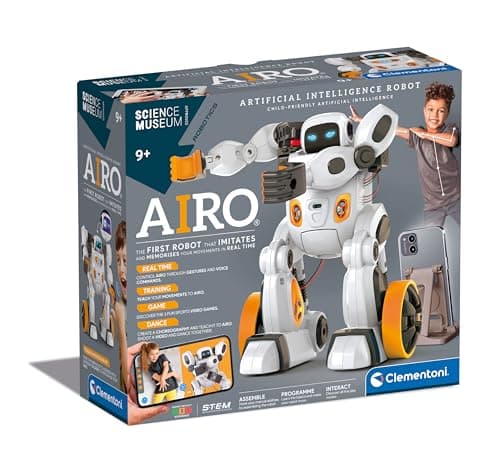
Around £33. Check the price of the Clementoni AIRO on Amazon UK →
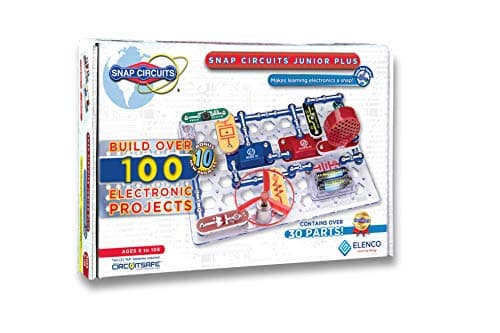
Around £47. Check the price of the Snap Circuits JR Plus on Amazon UK →
If you are weighing screens against screen-free options, our screen-free vs screen-based coding toys guide lays out the trade-offs.
What AI means for how children learn
The headline research this week came from UNICEF, which (drawing on new data from ten countries ahead of the first Global Dialogue on AI Governance) estimated that at least 20 million children have now used AI, and that young people are adopting it more than three times faster than adults. Around 13 million said they use it for schoolwork, and roughly two million (about one in ten) turn to AI for advice about things that worry them. That last figure is the one we would keep an eye on at home.
The "does it actually help?" question is more nuanced than the marketing suggests. Recent reporting on classroom studies found that pupils using general-purpose AI often produced better work, but the advantage faded (and sometimes reversed) once the tool was taken away, for example in a closed-book exam. Producing a good answer with AI, in other words, is not the same as having learned the thing. The Center for Democracy and Technology found that while 85% of teachers and 86% of pupils used AI last year, seven in ten teachers worry it weakens critical thinking, and experts keep returning to the same fix: teach children how the technology actually works.
That is why we steer families towards toys that make children do the thinking rather than outsource it. The Apitor Robot X is a good middle-years example: a 12-in-1 kit that children build themselves and then program with block coding, so the learning is in the making, not the chatting. Our guide on how AI toys are changing education has more.
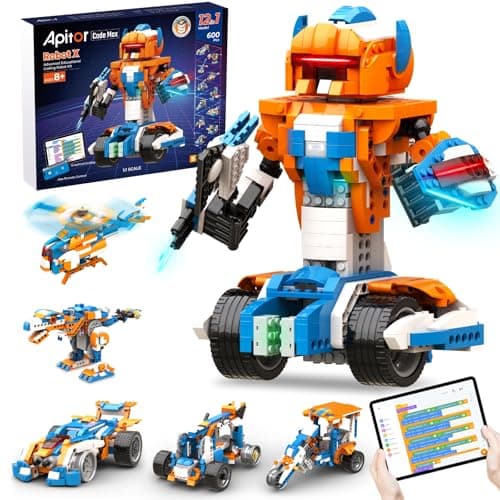
Around £100. Check the price of the Apitor Robot X on Amazon UK →
This week's smart buys (in stock now)
| Toy | Best for | Age | Around |
|---|---|---|---|
| Ropet KAMOMO | An emotional AI companion pet | 6+ | £259 |
| Clementoni AIRO | Building and understanding a first robot | 8+ | £33 |
| Apitor Robot X | Real build-and-code STEM | 8+ | £100 |
| Snap Circuits JR Plus | Screen-free electronics and engineering | 8+ | £47 |
Prices are correct at the time of writing (6 July 2026) and change often, so always check the live figure on Amazon before buying. As an Amazon Associate, AIToys.co.uk earns from qualifying purchases at no extra cost to you.
Frequently asked questions
Are AI companion toys safe for young children?
Most are safe when set up with care, but companion toys deserve extra thought because they are designed to build attachment. Choose ones with genuine parental controls, check what data they collect and where it goes, and keep conversations with very young children supervised. Our full safety guide walks through what to look for.
Will AI chatbot toys be banned?
Possibly, in some places. Several US states are weighing bans or moratoriums on chatbot toys, and a federal bill has been introduced to prohibit AI chatbots in children's toys. In the UK there is no outright ban, but connected toys already fall under the ICO's Children's Code and the Online Safety Act, and the government has been consulting on tighter rules for AI chatbots.
What actually helps children learn: AI or hands-on toys?
The strongest evidence sits with toys that make children do the thinking, such as build-and-code robots and electronics kits, and outcomes are far better when a parent or teacher is involved. An "AI" label on the box is not a guarantee of learning value.
That is your lot for this week. We will be back next Monday with the latest launches, debates and deals. In the meantime, browse our Christmas 2026 AI toy gift guide for more in-depth picks.
Related reading
- AI Toys Weekly: New Companion Robots, the Safety Backlash & Smarter Learning
- AI Toys Weekly: The Screen-Free Companion Boom, a Chatbot Crackdown & Smarter Learning
- AI Toys Weekly: A UK Safety Review, the AI 'Crutch Effect' & New Hands-On Toys
- AI Toys Weekly: Screen-Free Companions, a US Chatbot Ban & the AI 'Crutch Effect'
- AI Toys Weekly: The Clip-On Companion Boom, Maryland's Safety Bill & the AI Homework Gap
More From AIToys
AI Toys Weekly: The Clip-On Companion Boom, Maryland's Safety Bill & the AI Homework Gap
This week in AI toys: the screen-free clip-on companion boom, Maryland's proposed AI toy safety bill, fresh research on AI and learning, and the best in-stock buys.
AI Toys Weekly: The Screen-Free Companion Boom, a Chatbot Crackdown & Smarter Learning
This week in AI toys: the screen-free companion boom, the chatbot-toy crackdown every UK parent should follow, what AI means for learning
AI Toys Weekly: New Companion Robots, the Safety Backlash & Smarter Learning
This week in AI toys: new companion robots, the safety backlash every parent should follow, what AI means for learning, and the best in-stock buys right now.