AI Toys Weekly: New Companion Robots, the Safety Backlash & Smarter Learning
This week in AI toys: new companion robots, the safety backlash every parent should follow, what AI means for learning, and the best in-stock buys right now.
Welcome to AI Toys Weekly, our Monday round-up of what is new and what actually matters in the fast-moving world of AI-powered toys. For the week commencing 15 June 2026 there are three stories worth a parent's attention: a fresh wave of companion robots, a safety debate that is gathering real momentum, and new evidence on what artificial intelligence means for the way children learn.
As ever, we have only featured products we have confirmed are in stock on Amazon UK at the time of writing, and every recommendation comes with the honest caveats as well as the praise.
New on the shelves: companion robots take the lead
If one theme defined the toys unveiled at CES 2026, it was companionship. Rather than pure coding kits, much of this year's crop leans into personality and emotional interaction. Headline debuts included Fuzozo, billed by Tuya Smart and Robopoet as an "AI emotional companion", and Bibo, a pocket-sized companion with a camera that recognises its owner's face and tone of voice, keeps a daily diary, and is designed to develop its own personality over time. Japanese startup Ludens even showed an autonomous robot that trundles after you around the house.
Most of these are still landing with retailers, but one AI pet you can buy in the UK today is the LEOM AI Robot Dog. It mixes voice, app and remote control with more than 30 programmed actions, and it is pitched at children aged 6 and up. As a first "AI pet" it is a gentle way to introduce how sensors, commands and simple programming come together, without the open-ended chat that worries some parents.
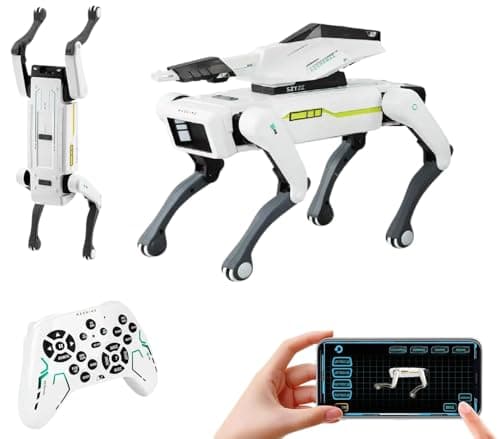
Around £65. Check the price of the LEOM AI Robot Dog on Amazon UK →
What AI is doing to the toy box
The commercial backdrop is striking. Analysts put the smart/AI toy market at roughly USD 18.5 billion in 2025, with forecasts pointing to tens of billions by the mid-2030s. The marquee partnership remains Mattel and OpenAI, which is expected to bring conversational AI to household names such as Barbie. We unpack what that means for families in our Mattel x OpenAI explainer.
But this week the louder story was scrutiny. A 3 June 2026 analysis warned that generative-AI toys can expose children to misinformation and inappropriate content, echoing earlier testing by the US PIRG Education Fund, which found a range of risks across the AI toys it examined. Robot-toy maker Miko has already responded to lawmaker criticism by adding parental controls that let caregivers switch conversational AI on or off. Regulators are circling too, with continued movement on the EU AI Act and tighter UK online-safety rules for under-16s.
The practical takeaway for parents is simple: favour toys with clear parental controls and transparent data practices, and be wary of open-ended chatbots aimed at very young children. A good example of "AI-style" play that stays transparent is the Learning Resources PYXEL Coding Pet: rather than an open chat companion, it is a programmable robot pet that children direct themselves using Blockly or Python, so the child is in charge of what it does.
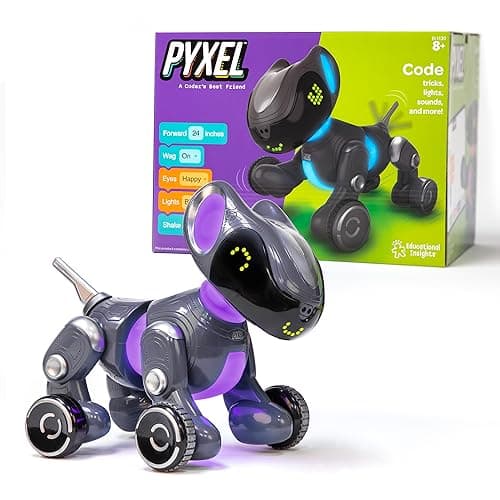
Around £113. Check the price of the PYXEL Coding Pet on Amazon UK →
For more on this, see our guides on whether AI toys are safe for children and smart-toy privacy in the UK.
What AI means for how children learn
There was important news for the "does it actually help?" question too. Instructure's 2026 Evidence Report, produced with the nonprofit InnovateEDU, found that only about 2% of general consumer technology used in classrooms has identifiable, evidence-based proof of impact, compared with roughly 40% of purpose-built education technology. In plain terms: an "AI" label on the box is not the same thing as learning value.
The picture is genuinely encouraging where the design is right. A 2025 Harvard study found pupils using well-built AI tutors learned more than twice as much in less time than peers in traditional active-learning classes. Yet human tutors still read a child's emotional state far more accurately than AI (around 92% versus 68%), and across the research one factor stands out: parental involvement is the single strongest predictor of good outcomes. AI helps most when a grown-up is in the loop, not when it is left to babysit.
That is why we keep steering families towards toys that teach the thinking behind AI rather than just talking at children. The BBC micro:bit V2 lets children write real code, read sensors and even try simple machine-learning projects, while the Edison robot is an affordable, classroom-friendly robot they programme themselves.
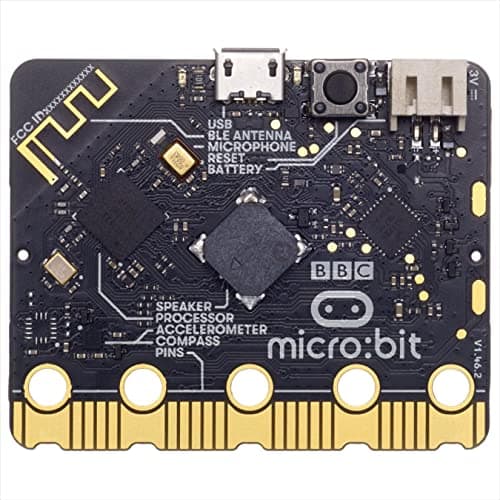
Around £29. Check the price of the BBC micro:bit V2 on Amazon UK →
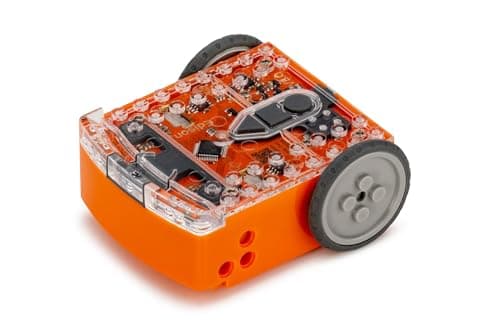
Around £58. Check the price of the Edison robot on Amazon UK →
You can dig deeper in our guide to how AI toys are changing education.
This week's smart buys (in stock now)
| Toy | Best for | Age | Around |
|---|---|---|---|
| LEOM AI Robot Dog | A first AI "pet" companion | 6+ | £65 |
| PYXEL Coding Pet | Transparent, parent-friendly coding | 4+ | £113 |
| BBC micro:bit V2 | Real code and mini machine-learning | 8+ | £29 |
| Edison robot | Affordable classroom robotics | 7+ | £58 |
Prices are correct at the time of writing (18 June 2026) and change often, so always check the live figure on Amazon before buying. As an Amazon Associate we earn from qualifying purchases at no extra cost to you.
Frequently asked questions
Are AI toys safe for children?
Most mainstream AI toys are safe when set up thoughtfully, but the risks are real and worth taking seriously, especially with open-ended chatbots. Choose toys with robust parental controls, check what data is collected, and keep an eye on early use. Our full safety guide walks through what to look for.
Do AI toys actually help children learn?
They can, but the label matters less than the design. The strongest evidence sits with toys that make children do the thinking, such as coding robots and STEM boards, and outcomes are far better when a parent or teacher is involved rather than leaving the toy to do the work.
What is a good age to start?
Screen-free coding pets and simple robots suit children from around four, programmable robots such as Edison work well from seven, and a board like the micro:bit is ideal from eight upwards. Always check the manufacturer's stated age range and any small-parts warnings.
That is your lot for this week. We will be back next Monday with the latest launches, debates and deals. In the meantime, browse our Christmas 2026 AI toy gift guide for more in-depth picks.
Related reading
- AI Toys Weekly: Hasbro's AI Studio, the Chatbot-Toy Crackdown & Smarter Learning
- AI Toys Weekly: The Screen-Free Companion Boom, a Chatbot Crackdown & Smarter Learning
- AI Toys Weekly: New AI Companions, a Regulation Milestone & UNICEF's Wake-Up Call
- AI Toys Weekly: The Clip-On Companion Boom, Maryland's Safety Bill & the AI Homework Gap
More From AIToys
AI Toys Weekly: The Screen-Free Companion Boom, a Chatbot Crackdown & Smarter Learning
This week in AI toys: the screen-free companion boom, the chatbot-toy crackdown every UK parent should follow, what AI means for learning
AI Toys Weekly: The Clip-On Companion Boom, Maryland's Safety Bill & the AI Homework Gap
This week in AI toys: the screen-free clip-on companion boom, Maryland's proposed AI toy safety bill, fresh research on AI and learning, and the best in-stock buys.
AI Toys Weekly: New AI Companions, a Regulation Milestone & UNICEF's Wake-Up Call
This week in AI toys: a fresh wave of AI companions, a July regulation milestone, UNICEF's new data on children and AI, and the top in-stock buys for parents now.