AI Toys Weekly: Hasbro's AI Studio, the Chatbot-Toy Crackdown & Smarter Learning
This week in AI toys: Hasbro's new AI character studio, the regulatory crackdown on chatbot toys, what AI means for learning, and the best in-stock buys right now.
Welcome to AI Toys Weekly, our Monday round-up of what is new and what actually matters in the fast-moving world of AI-powered toys. For the week commencing 22 June 2026 three stories stand out: a major toymaker pushing deeper into artificial intelligence, a fast-moving regulatory crackdown on chatbot toys on both sides of the Atlantic, and fresh research on what AI really means for children's learning.
As ever, we have only featured products we have confirmed are in stock on Amazon UK at the time of writing, and every recommendation comes with the honest caveats as well as the praise.
New on the shelves: Hasbro pushes characters into the AI era
The biggest industry move this fortnight came from Hasbro, which on 3 June 2026 launched Sixth Wall, a new in-house AI studio built to bring its characters into conversational AI, alongside a partnership with the audio-AI company ElevenLabs. Twelve well-known characters, from Optimus Prime and Megatron to Mr Potato Head and the cast of Cluedo, will be voiced by professional actors and made available for interactive experiences, under a new licensing model Hasbro calls "Behavioural Licensing". Chief executive Chris Cocks framed it as a way to let brands enter AI platforms "without losing what makes them authentic".
It is a sign of where the toy box is heading, and, as the CBC noted in its coverage, child-development experts immediately flagged the same worries that follow every talking-AI product: emotional attachment, data collection and in-play advertising. That tension, between novelty and caution, runs through everything below.
If you want an "AI robot" that keeps your child firmly in charge, the MatataStudio VinciBot is a good example. It is a programmable robot for ages 8 to 12 that children code themselves using Scratch or Python, so the intelligence on display is the child's own logic rather than an open-ended chatbot.
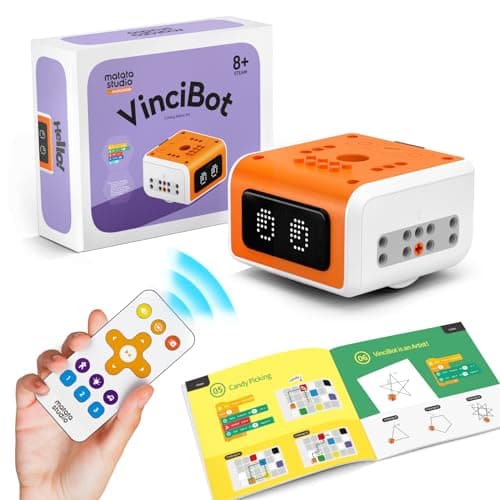
Around £100. Check the price of the MatataStudio VinciBot on Amazon UK →
The AI-in-play debate: regulators move on chatbot toys
If one theme defined the week, it was scrutiny. In the UK, the Prime Minister Sir Keir Starmer warned technology firms on 8 June 2026 that if they did not introduce appropriate protections for children within three months, the Government would "act and change the law", with ministers expected to strengthen the Online Safety Act through secondary legislation. Days earlier, Ofcom published its 2026/27 AI strategy and confirmed it will "examine the implications of so-called 'AI companions' for online safety", citing concern that such products can encourage "unhealthy chatbot-user relationships and create harmful dependencies".
The picture is similar in the United States. Florida's attorney general became the first state to sue OpenAI directly on 1 June, the Federal Trade Commission is investigating seven companies that provide AI companions, and, as the Transparency Coalition reported, lawmakers in New York and California have floated a five-year moratorium on the sale of AI chatbot toys. Underpinning the politics is research: a 4 June analysis by TechRepublic warned that AI toys are reaching homes and classrooms faster than privacy and safety rules can keep up, while a 2 June perspective from JMIR Publications described the field as a largely "unregulated area" with little evidence on how these toys affect early development.
The practical takeaway for parents has not changed: favour toys with clear parental controls and transparent data practices, and be wary of open-ended chatbots aimed at very young children. A reassuringly simple, screen-free alternative is the Learning Resources Code & Go Robot Mouse. There is no microphone, camera or cloud account, just a colourful mouse that children aged four and up direct with a sequence of buttons, learning the logic behind programming without any data leaving the living room.
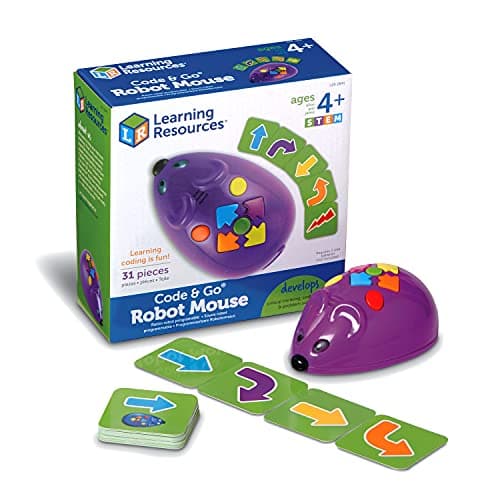
Around £34. Check the price of the Code & Go Robot Mouse on Amazon UK →
For more on this, see our guides on whether AI toys are safe for children, smart-toy privacy in the UK and what the Mattel and OpenAI partnership means for families.
What AI means for how children learn
There was plenty for the "does it actually help?" question too. A new NPR/Ipsos poll of US teachers, published on 5 June, found that nearly three in four believe AI will have a bigger impact on education than the internet or computers did, and almost eight in ten think schools should be teaching responsible AI use, even though most say pupils are not yet using it much in class. In the UK, research from Oxford University Press with around 4,000 teenagers found young people genuinely unsure where the line sits, with only 15% saying they had been given enough guidance on using AI in their schoolwork.
The deeper warning came from the World Economic Forum, whose 2026 report on the future of learning cautioned that when a tool does all the reasoning, it can deprive children of "the struggle through which understanding is built", and noted that solid evidence on AI in primary and secondary classrooms remains thin. Writing for the Brookings Institution on 9 June, education researcher Brad Olsen made the complementary point that AI cannot replace teachers and that reforms must be judged on their real impact on learning, not the label on the box.
The thread tying this together is familiar to regular readers: children learn most when a toy makes them do the thinking, and when a grown-up stays involved. Two strong picks this week sit squarely in that camp. The Makeblock mBot is a classroom favourite that children programme with Scratch, building real coding skills as they teach it to follow lines and dodge obstacles.
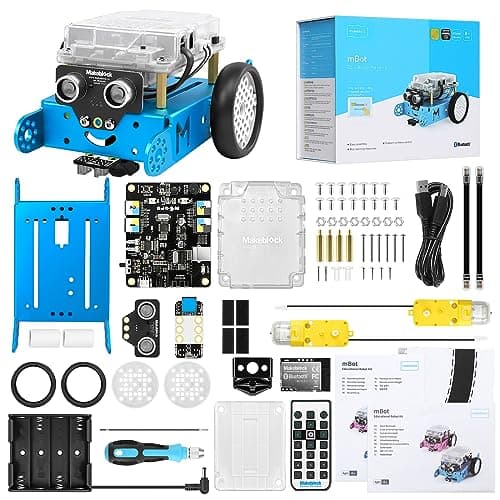
Around £90. Check the price of the Makeblock mBot on Amazon UK →
On a tighter budget, the Clementoni Science Museum Mio Robot 2.0 asks children aged eight and up to build and then code their own interactive robot, so the learning starts with a screwdriver rather than a screen.
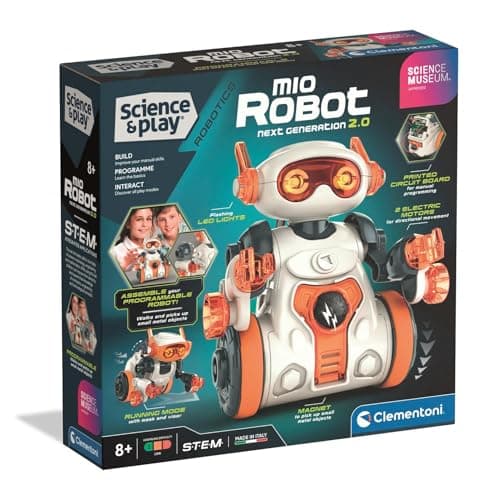
Around £27. Check the price of the Clementoni Mio Robot 2.0 on Amazon UK →
You can dig deeper in our guides to how AI toys are changing education and 10 ways AI toys teach coding.
This week's smart buys (in stock now)
| Toy | Best for | Age | Around |
|---|---|---|---|
| Code & Go Robot Mouse | Screen-free, no-data first coding | 4+ | £34 |
| Clementoni Mio Robot 2.0 | Budget build-and-code | 8+ | £27 |
| MatataStudio VinciBot | An "AI robot" the child programs | 8-12 | £100 |
| Makeblock mBot | Real Scratch coding | 8-12 | £90 |
Prices are correct at the time of writing (22 June 2026) and change often, so always check the live figure on Amazon before buying. As an Amazon Associate, AIToys.co.uk earns from qualifying purchases at no extra cost to you.
Frequently asked questions
Are AI chatbot toys about to be banned?
Not in the UK, at least not yet. The Government has warned technology firms to improve child protections or face new law, and Ofcom is studying "AI companions", but there is no ban in force. In the United States, lawmakers in New York and California have proposed a multi-year moratorium on chatbot toys, though those measures are still working their way through. For now the sensible course is to choose carefully rather than wait for the rules to catch up.
What is the safest type of AI toy for a young child?
For younger children, screen-free coding toys such as the Code & Go Robot Mouse are the easiest to recommend, because they teach the logic behind technology without a microphone, camera or cloud account. If you do want a connected toy, look for clear parental controls, transparent data practices and the option to switch any conversational AI off.
Do coding robots actually teach anything useful?
They can, when they make children do the thinking. Robots that children programme themselves, such as the mBot or VinciBot, build genuine problem-solving and sequencing skills, and the research is consistent that outcomes are far better when a parent or teacher stays involved rather than leaving the toy to do the work.
That is your lot for this week. We will be back next Monday with the latest launches, debates and deals. In the meantime, browse our Christmas 2026 AI toy gift guide for more in-depth picks.
More From AIToys
AI Toys Weekly: The Screen-Free Companion Boom, a Chatbot Crackdown & Smarter Learning
This week in AI toys: the screen-free companion boom, the chatbot-toy crackdown every UK parent should follow, what AI means for learning
AI Toys Weekly: New Companion Robots, the Safety Backlash & Smarter Learning
This week in AI toys: new companion robots, the safety backlash every parent should follow, what AI means for learning, and the best in-stock buys right now.
AI Toys Weekly: The Clip-On Companion Boom, Maryland's Safety Bill & the AI Homework Gap
This week in AI toys: the screen-free clip-on companion boom, Maryland's proposed AI toy safety bill, fresh research on AI and learning, and the best in-stock buys.