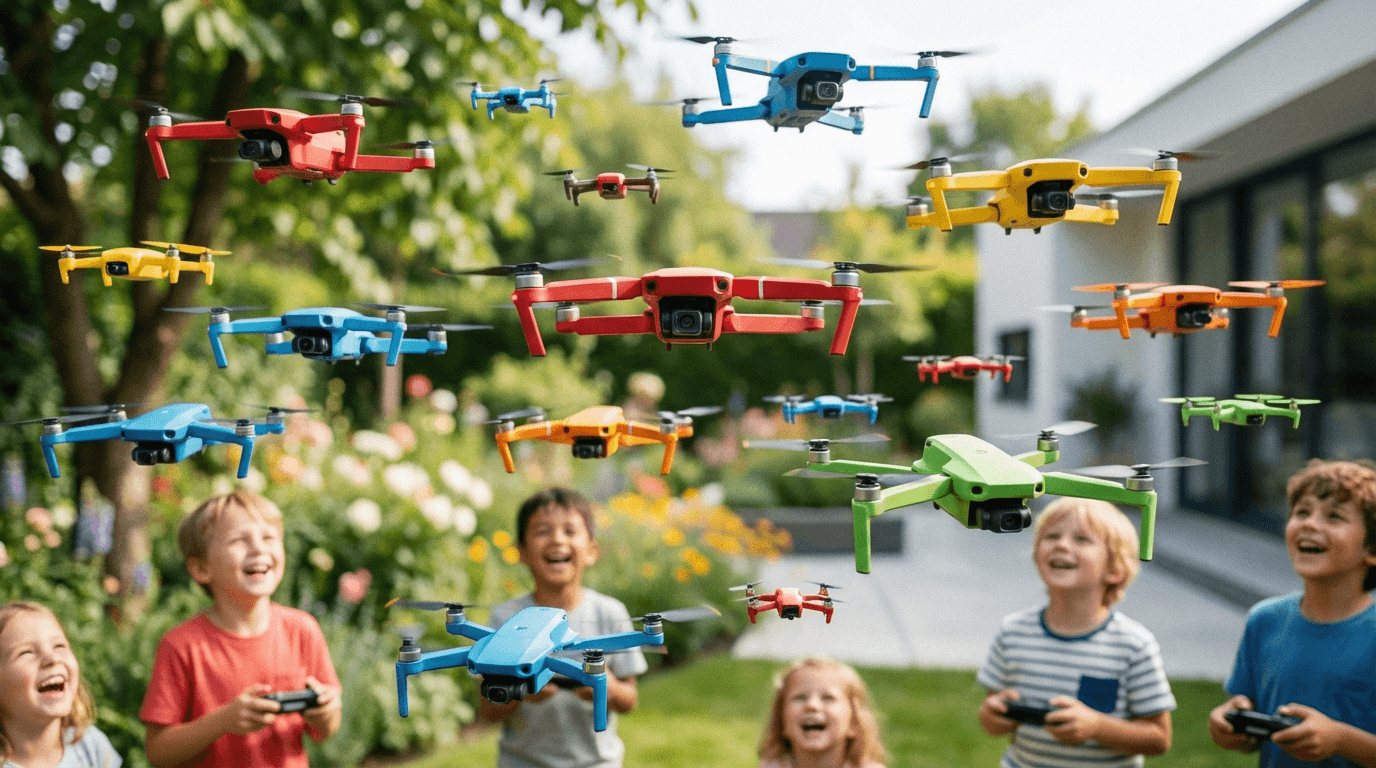
Drone Toys for Kids: Complete UK Buying Guide 2026
Complete guide to buying drone toys for kids in 2026. UK regulations, safety tips, age recommendations, and our top 8 picks from £25 to £200.
Welcome to the exciting world of drone toys for kids! Drones have become incredibly popular, offering a fantastic blend of technology, education, and pure fun. Far from being just a gadget, a child's first drone can spark an interest in engineering, physics, and even coding, all while providing hours of active play.
Choosing the right drone for your child, however, can be a little overwhelming. With so many options on the market, ranging from tiny indoor flyers to more advanced camera-equipped models, it's essential to consider factors like safety, ease of use, durability, and, of course, adherence to UK regulations.
This comprehensive guide from AIToys.co.uk is designed specifically for UK parents. We'll walk you through everything you need to know to make an informed decision in 2026, ensuring your child gets a drone that's not only fun but also safe and suitable for their age and skill level. We'll cover important topics like the relevant UK drone laws, what safety features to prioritise, the difference between indoor and outdoor models, and whether a camera is a good idea. Plus, we'll dive into detailed mini-reviews of our top 8 drone toy picks, suitable for various budgets and preferences.
Let's get ready to take flight!
UK CAA Drone Regulations for Toy Drones (Under 250g Rules)
Navigating drone regulations can seem daunting, but for toy drones aimed at children, the rules are thankfully much simpler, primarily thanks to the "under 250g" weight class. In the UK, drone laws are enforced by the Civil Aviation Authority (CAA).
The Golden Rule for Toy Drones: Under 250g
For drones weighing less than 250 grams (also often referred to as 'C0' or 'toy' drones), the regulations are significantly relaxed. Most starter and kids' drones fall into this category.
Here's what you need to know for drones under 250g:
- No Registration Required: You do not need to register yourself as an operator with the CAA, nor does your child need to obtain a flyer ID. This is a huge simplification compared to heavier drones.
- No Age Limit: While toy drones often have manufacturer-recommended age limits (e.g., 8+), there is no legal minimum age for flying a drone under 250g.
- Keep it Safe: Even without formal registration, you still have a responsibility to fly safely. This means:
- Stay within sight: Always keep the drone within your direct line of sight.
- Don't fly near aerodromes: Avoid airports, airfields, and other restricted airspace.
- Respect privacy: Don't fly over people's private property without permission.
- Don't endanger others: Ensure your flying doesn't create a hazard to people, property, or other aircraft.
- No Formal Training Needed: No mandatory training or online test is required for these lightweight drones.
What if it's 250g or more, or has a camera?
If a drone (even one marketed as a toy) weighs 250g or more, or if it has a camera and is not explicitly labelled as a "toy" (which nearly all <250g drones are), then the rules get stricter:
- Operator Registration: You (the parent/guardian) would need to register as a drone operator with the CAA and obtain an operator ID, which must be displayed on the drone.
- Flyer ID: The person flying (if over 12 years old) would need to pass an online theory test to obtain a flyer ID.
- A2 CofC/GVC: For heavier or more capable drones, further qualifications like the A2 Certificate of Competency (A2 CofC) or General Visual Line of Sight Certificate (GVC) might be required, but these are almost certainly not applicable to anything you'd consider a "toy" drone.
In summary for toy drones: Focus on models under 250g. For these, the rules are primarily about common sense and safe recreational flying, without the need for formal registration or licensing. Always double-check the drone's weight in its specifications.
Key Features to Look For in Kids' Drones
When picking out a drone for your child, it's not just about how cool it looks. Several practical features contribute to a safer, more enjoyable, and less frustrating experience for young pilots.
1. Safety Features: Protecting Little Fingers and Furniture
Safety should always be the top priority. Kids are naturally curious and sometimes a bit clumsy, so a drone with robust safety features is paramount.
- Propeller Guards: These are non-negotiable for kids' drones. Propeller guards prevent fingers from getting tangled in spinning blades and protect the propellers themselves from collisions with walls, furniture, or trees. Many toy drones come with integrated, non-removable guards, which is ideal.
- Emergency Stop Button: A dedicated button on the controller to instantly shut down the motors is incredibly useful. In a panic situation or if the drone is flying erratically, this allows for immediate control.
- Low Battery Warning: Drones should alert the pilot when the battery is running low, giving them time to land safely and avoid a sudden, uncontrolled descent.
- Durable Materials: Look for drones made from flexible, impact-resistant plastics. ABS plastic or similar composites can withstand bumps and minor crashes without shattering, extending the drone's lifespan and preventing sharp edges.
2. Durability: Built to Withstand Bumps and Crashes
Kids and crashes go hand-in-hand, especially when learning to fly. A durable drone means fewer tears and less money spent on replacements.
- Flexible Frame: A drone with a slightly flexible frame can absorb impact better than a rigid one.
- Modular Design: Some drones have modular parts (like easily replaceable motors or arms) which can be a plus for quick repairs after inevitable incidents.
- Protected Electronics: Ensure the internal components are well-protected within the casing, away from impacts and dirt.
3. Ease of Use: Getting Off the Ground Without Frustration
A complex drone will quickly gather dust. Beginners need features that simplify the flying experience.
- One-Key Take-off/Landing: This feature allows the drone to automatically ascend to a stable hover or descend gently with a single button press. It takes away much of the initial difficulty.
- Altitude Hold (Barometer Sensor): A fundamental feature for beginners, altitude hold uses a barometer to maintain a consistent height, allowing the pilot to focus on directional control without constantly adjusting the throttle.
- Headless Mode: This mode simplifies controls by orienting the drone's movements relative to the pilot, regardless of the drone's actual "front" or "back." Push forward on the stick, and the drone flies away from you; pull back, and it flies towards you. Great for avoiding disorientation.
- Multiple Speed Modes: Starting with a slow speed helps new pilots get accustomed to the controls before gradually increasing the pace as their confidence grows.
- Auto Hover: Similar to altitude hold, this means the drone will stay in place when controls are released.
4. Battery Life and Charging: Maximising Flight Time
Drone flight times are typically short, so understanding battery life and charging is important.
- Flight Time: Most toy drones offer 5-10 minutes of flight per battery. Some higher-end models might reach 12-15 minutes. Realistic expectations are key.
- Multiple Batteries: Many good kids' drone packages include two or three batteries, significantly extending play sessions. This is a huge bonus.
- Charging Time: USB charging is standard and convenient. Note the charging time, as it can vary.
- Swappable Batteries: Being able to quickly swap out a depleted battery for a fresh one is far more practical than waiting for hours for a single battery to recharge.
5. Controller Design: Comfort and Intuition
The controller is the child's direct interface with the drone, so it needs to be comfortable and intuitive.
- Size and Ergonomics: Ensure the controller is appropriately sized for small hands. Lightweight and comfortable grips are ideal.
- Clear Button Layout: Easily identifiable buttons for key functions like take-off, landing, and emergency stop are crucial.
- Responsive Joysticks: Smooth, responsive sticks make for a better flying experience.
By focusing on these key features, you can select a drone that will be a joy for your child to learn with, rather than a source of frustration.
Indoor vs. Outdoor Flying: Where Will the Adventures Happen?
One of the first decisions to make when buying a kids' drone is where it will primarily be flown. This hugely impacts the type of drone you should consider.
Indoor Drones: Perfect for Beginners and Small Spaces
Indoor drones are typically small, lightweight, and designed for tight spaces. They're excellent for learning the basics of flight in a controlled environment.
Pros:
- Safety: Less chance of losing the drone or it flying too far away. Reduced risk to people or property when supervised.
- Weather Independent: Rain, wind, or cold won't stop the fun.
- Learning Curve: Generally easier to control due to smaller size and reduced power, making them ideal for absolute beginners.
- Propeller Guards: Almost always come with robust propeller guards, essential for protecting walls, furniture, and little fingers.
- Cost-Effective: Often more affordable than outdoor models.
Cons:
- Limited Range: Usually have a shorter control range.
- Impact of Air Currents: Even small drafts from windows or air conditioning can affect their stability.
- Less Powerful: Can't handle any significant wind.
- Not for Larger Spaces: Can feel restrictive in bigger rooms or open-plan areas.
Best For: Younger children, first-time pilots, practice and skill development, playing in smaller homes or during bad weather.
Outdoor Drones: More Freedom, More Adventure
Outdoor drones are generally larger, more powerful, and can withstand light breezes. They offer a more expansive flying experience.
Pros:
- Greater Range and Speed: Can cover more ground and fly faster, offering a more exhilarating experience.
- Better Stability: Often equipped with GPS or more advanced stabilisation systems (in higher-end kids' models) to cope with outdoor conditions.
- Camera Potential: Many outdoor-focused drones come with cameras for aerial photography or videography.
- More Robust Build: Typically built to be a bit more rugged to handle outdoor impacts.
Cons:
- Weather Dependent: Wind and rain can quickly end a flight. Humidity can also damage electronics.
- Higher Risk of Loss/Damage: A lost signal or strong gust of wind can send an outdoor drone astray or into a tree.
- Requires More Space: Needs open areas like parks, large gardens, or sports fields: always away from people and buildings.
- Stricter Regulations: While <250g outdoor drones are still largely exempt, you need to be more mindful of public safety and privacy.
- Higher Price Point: Generally more expensive.
Best For: Older children with some flying experience, those who want to explore aerial photography, or children with access to safe, open outdoor spaces.
Recommendation: For a child's very first drone, an indoor-friendly model (that can also handle calm outdoor conditions) is often the best starting point. Once they master the controls and develop confidence, you can consider upgrading to a more powerful outdoor-specific model.
Camera vs. No Camera: Capturing Memories or Just Flying Fun?
One of the biggest differentiators in modern drones is the presence of a camera. For kids' drones, this choice comes with its own set of pros and cons.
Drones Without a Camera: Pure Flying Joy
These drones focus purely on the flight experience, making them excellent for learning the fundamentals of control and aerodynamics.
Pros:
- Simpler to Fly: Without the added complexity of a camera feed or recording, kids can concentrate solely on mastering flight.
- Often More Affordable: The absence of camera technology usually translates to a lower price point, making them great entry-level options.
- Longer Flight Times: No camera means less power drain, often leading to slightly longer battery life compared to camera-equipped counterparts of similar size.
- Durability Focus: Manufacturers can often put more emphasis on the drone's raw durability and crash resistance without needing to protect delicate camera modules.
- No Privacy Concerns: Eliminates any worry about inadvertently capturing images or videos of others.
Cons:
- No FPV (First-Person View): Can't offer the immersive experience of seeing what the drone sees in real-time.
- Limited Creative Play: Doesn't allow for aerial photography or videography, which some children might find appealing for storytelling or making short films.
- Less "High-Tech" Feel: Might not satisfy children who are looking for the latest gadgetry.
Best For: Younger children (under 8), absolute beginners who need to focus on flight basics, parents on a tighter budget, or those prioritising maximum crash resistance and simplicity.
Drones With a Camera: A Window to the Sky
Many kids' drones now come equipped with basic cameras, often allowing for still photos and short video clips, sometimes with FPV capabilities.
Pros:
- Enhanced Play Value: Adds an exciting dimension, allowing kids to see the world from a new perspective. They can take photos of their garden, "spy" on pets, or create small videos.
- Educational Potential: Introduces concepts of photography, videography, and even basic drone mapping.
- FPV Capability (on some models): FPV (First Person View) allows the child to see a live video feed from the drone on a connected smartphone. This is incredibly immersive and can feel like they're sitting in the cockpit.
- More Engaging for Older Kids: Older children (8+) might appreciate the added functionality and possibilities a camera offers.
Cons:
- Distraction: FPV or video recording can sometimes distract young pilots from focusing on safe flight.
- Shorter Battery Life: Cameras, especially those with live FPV feeds, consume more power, shortening flight times.
- Increased Complexity: Connecting to a smartphone for FPV or downloading media can add a layer of setup and troubleshooting.
- Privacy Concerns: Requires extra vigilance to ensure children are flying responsibly and not inadvertently filming neighbours or public spaces without permission.
- Higher Price: Generally more expensive than camera-less drones.
- Image Quality: Toy drone cameras are typically very basic. Don't expect professional-grade footage; think more along the lines of a low-megapixel smartphone camera.
Best For: Older children (8+), those with some flying experience or who learn quickly, kids interested in photography or videography, and those seeking a more immersive and interactive experience.
Consideration: If opting for a camera drone, choose one with decent Wi-Fi range for FPV if that's a key feature. Also, explain privacy and responsible drone use to your child.
Age Ranges and Skill Levels: Finding the Perfect Match
Matching the drone to your child's age and developmental stage is crucial for both enjoyment and safety. A drone that's too simple might quickly bore an older child, while one that's too complex can lead to frustration and potential damage.
4-6 Years Old: Simple, Durable, and Supervised Fun
At this age, children are developing fine motor skills and hand-eye coordination. The focus should be on pure enjoyment and very basic control.
- Drone Characteristics:
- Extremely Durable: Expect frequent crashes. Look for very robust designs, enclosed propellers, and flexible plastic.
- Simplified Controls: One-key take-off/landing, altitude hold, and headless mode are essential.
- No Camera: A camera would be a distraction and an unnecessary complexity.
- Indoor Focus: Small, lightweight, and easy to control indoors.
- Bright Colours: More engaging for younger children.
- Supervision Level: Constant, active adult supervision is a must.
- Examples: Many palm-sized mini-drones or even simple RC helicopters with altitude hold features fit this category.
7-9 Years Old: Developing Skills and Exploring Features
Children in this age group can grasp more complex instructions and are improving their coordination. They're ready for a bit more challenge and some introductory features.
- Drone Characteristics:
- Good Durability: Still prone to crashes, but can handle slightly less robust builds than for younger kids. Propeller guards are still highly recommended.
- Altitude Hold & Headless Mode: Still beneficial but they can start to experiment without them.
- Multiple Speed Modes: Allows them to gradually increase speed as they gain confidence.
- Optional Camera: A basic camera for simple photos or videos can be a fun addition, but keep FPV simple or optional.
- Indoor/Outdoor Capable: Can handle very light outdoor conditions.
- Supervision Level: Active supervision is still needed, but they can be given a bit more independence after initial training.
- Examples: Many of the mini-quadcopters with basic cameras fall into this range.
10-12+ Years Old: Advanced Features and More Independence
Pre-teens and teenagers often have well-developed motor skills and a greater capacity for understanding more nuanced controls and features. They might be looking for more performance or creative possibilities.
- Drone Characteristics:
- Enhanced Durability: While still important, they might be ready for drones with exposed propellers (though guards are still a good idea for learning).
- Better Performance: More powerful motors, longer flight times, and better responsiveness.
- Good Quality Camera with FPV: A decent camera for photography/videography and reliable FPV is a big draw.
- Beginner GPS (on some models): Some entry-level "hobby" drones might offer basic GPS for improved stability and return-to-home functions.
- Acrobatic Modes: Features like 360-degree flips can add to the fun.
- Outdoor Focus: Many drones in this category are designed primarily for outdoor use.
- Supervision Level: Can be given more independence, but adult presence is still advisable, especially for outdoor flying. Discussions about responsible flying, privacy, and regulations are crucial.
- Examples: Models like the DJI Tello or more advanced camera drones designed for enthusiasts, but still user-friendly.
Important Note: These are general guidelines. Every child is different. Observe your child's dexterity, patience, and interest levels. When in doubt, start with a simpler, more durable model. It's better to provide a positive first experience that builds confidence than to overwhelm them with a drone that's too advanced.
Our Top 8 Drone Toy Picks for Kids (UK 2026)
Now that you're armed with all the essential information, let's dive into our top recommendations for kids' drone toys. We've selected a range of models suitable for different ages, skill levels, and budgets, all available in the UK and generally falling under the <250g category, making them ideal for hassle-free flying.
Affiliate Disclosure: Please note that this guide contains affiliate links to Amazon UK. If you click on these links and make a purchase, AIToys.co.uk may earn a small commission at no extra cost to you. We only recommend products we genuinely believe in and research thoroughly.
1. Holy Stone HS210 Mini Drone

- Price: Around £29
- Age Recommendation: 6+
- Best For: First-time flyers, indoor fun, learning basics.
The Holy Stone HS210 is a fantastic entry point into the world of drones for younger children and absolute beginners. It's tiny, lightweight, and incredibly forgiving, making it perfect for indoor flights. It comes with three batteries, ensuring extended play sessions. Its robust propeller guards are built directly into the frame, providing excellent protection against bumps and drops.
Pros:
- Super Easy to Fly: Features like altitude hold, one-key take-off/landing, and headless mode simplify control significantly.
- Highly Durable: Can withstand numerous crashes, which is essential for beginners.
- Three Batteries Included: Great value, offering around 15-20 minutes of total flight time.
- Propeller Guards: Excellent built-in protection.
- Compact Size: Ideal for indoor flying without damaging furniture.
Cons:
- No Camera: Purely for flying, no aerial photography.
- Very Lightweight: Struggles against even a light breeze outdoors.
- Short Flight Time Per Battery: Each battery only lasts about 5-7 minutes.
🛒 Check Price on Amazon UKAs an Amazon Associate, AIToys.co.uk earns from qualifying purchases.
2. SNAPTAIN H823H Mini Drone

- Price: Around £25
- Age Recommendation: 6+
- Best For: Budget-conscious buyers, indoor learners, a child's very first drone.
The SNAPTAIN H823H is another excellent, budget-friendly option that's tailor-made for young beginners. It's incredibly similar to the Holy Stone HS210 in functionality and durability, often coming with multiple batteries as well. Its simplicity and crash-resistance make it a worry-free first drone.
Pros:
- Very Affordable: One of the cheapest quality options available.
- User-Friendly: Altitude hold, headless mode, and one-key functions for easy flying.
- Durable Design: Built to endure the inevitable knocks and bumps of learning.
- Multiple Batteries: Typically comes with 2 or 3 batteries for extended fun.
- Small and Safe: Integrated propeller guards protect everything around it.
Cons:
- No Camera: If aerial photos are desired, this isn't the one.
- Limited Outdoor Capability: Best kept indoors or in perfectly calm conditions.
- Basic Controller: Functional but not particularly ergonomic for longer sessions.
⚠️ Currently unavailable on Amazon
3. Potensic A20 Mini Drone
- Price: Around £39
- Age Recommendation: 7+
- Best For: Slightly older beginners, classrooms, extended indoor play.
The Potensic A20 offers a step up in terms of stability and features while remaining incredibly user-friendly and affordable. Its compact size and robust build with full propeller protection make it another indoor favourite. It often includes multiple batteries, a common and welcome feature in this category.
Pros:
- Stable Flight: Very good altitude hold and overall stability for its size, making it easy to control.
- Durable Frame: Well-protected propellers and strong casing for impact resistance.
- Three Speed Modes: Allows gentle progression from novice to more confident flyer.
- Multiple Batteries: Usually comes with additional batteries to prolong play.
- Easy Controls: One-key take-off/landing and headless mode are standard.
Cons:
- No Camera: Focuses solely on the flying experience.
- Limited Range: Best for indoor use or very small, sheltered outdoor spaces.
- Small Controller: May feel a bit cramped for older children or adults.
See our best kids drones for 2026
4. DEERC D20 Mini Drone with Camera
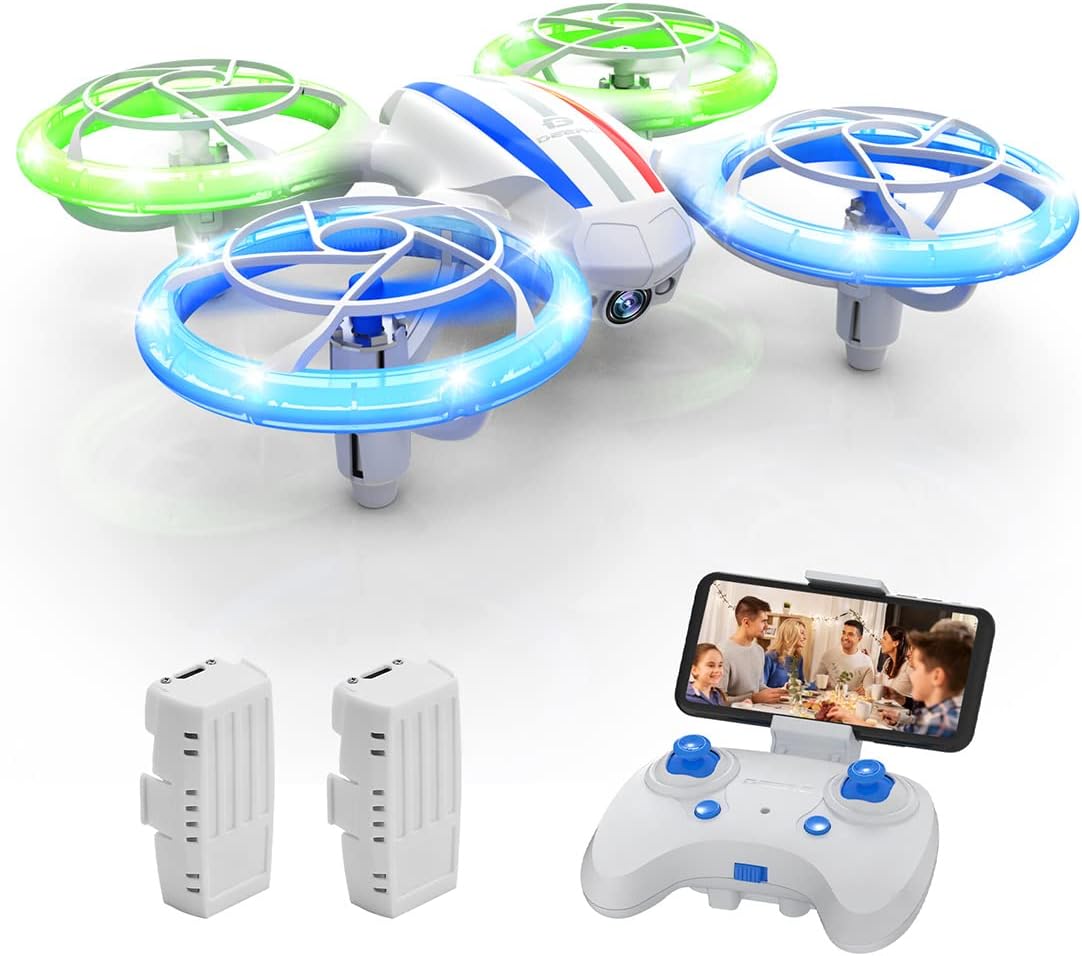
- Price: Around £49
- Age Recommendation: 8+
- Best For: Kids wanting their first camera drone, FPV beginners, a good balance of features and price.
The DEERC D20 strikes a great balance for kids who are ready to explore the world of aerial photography and First Person View (FPV). It's still lightweight and easy to control but includes a 720P HD camera that can stream live video to a smartphone app and record photos/videos. Its full propeller guards ensure safety during indoor or outdoor flights.
Pros:
- HD Camera (720P): Excellent for its price point, offering decent photos and videos for kids.
- FPV Capability: Live video feed to a smartphone adds an immersive dimension to flying.
- Easy to Fly: Altitude hold, headless mode, and one-key functions for beginners.
- Voice Control & Gesture Control: Fun, additional features that enhance the play experience.
- Durable with Propeller Guards: Good protection for components and surroundings.
- Two Batteries Included: Provides a decent total flight time.
Cons:
- FPV Range Limited: The Wi-Fi FPV can cut out over longer distances or with interference.
- Camera Quality is Basic: Don't expect professional-grade footage, but it's good for a toy.
- App Required for Camera Features: Needs a smartphone to fully utilise the camera.
5. Tomzon A31 Mini Drone
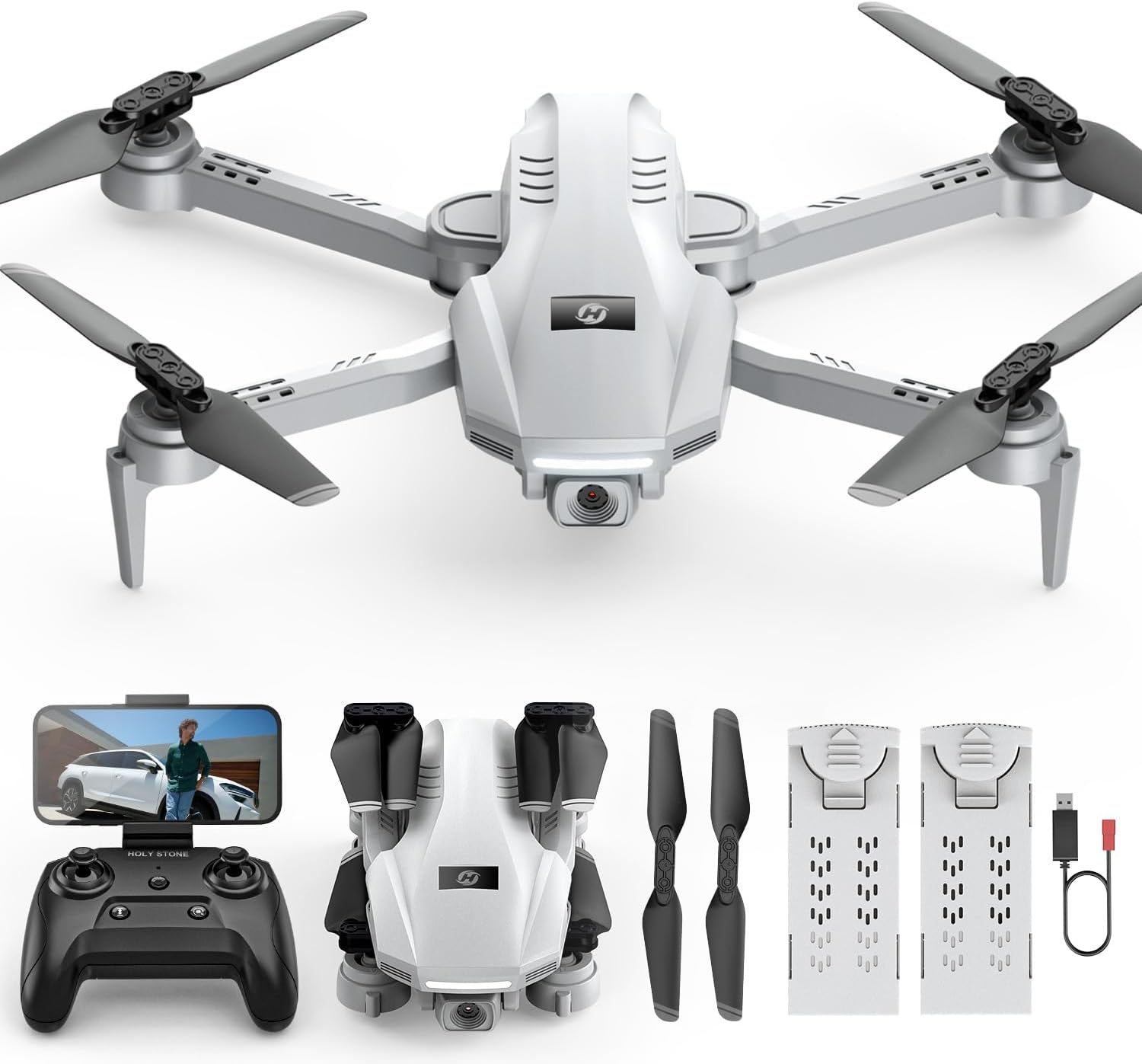
- Price: Around £35
- Age Recommendation: 7+
- Best For: Budget-friendly camera drone, basic FPV, small outdoor flights.
The Tomzon A31 is a compact and user-friendly mini-drone that manages to pack a basic camera into an affordable package. It's often compared to the DEERC D20 in terms of features and target audience, offering simple FPV and recording capabilities. Its small size makes it versatile for both indoor and light outdoor use.
Pros:
- Affordable Camera Drone: One of the most budget-friendly options to get FPV.
- Easy for Beginners: Features like altitude hold, headless mode, and one-key operations are standard.
- Foldable Design: Makes it easy to transport and store.
- Multiple Batteries: Often includes 2 or 3 batteries for more flight time.
- Propeller Protection: Integral guards protect the blades and obstacles.
Cons:
- Basic Camera Quality: The camera is not high-resolution, but acceptable for capturing quick snaps.
- Short FPV Range: Like many budget camera drones, the Wi-Fi range for live video can be limited.
- Lightweight for Outdoors: Can be easily affected by wind gusts, even light ones.
6. DJI Tello Drone

- Price: Around £89
- Age Recommendation: 10+
- Best For: Advanced beginners, educational coding via Scratch, excellent indoor/calm outdoor flight with a superior camera.
The DJI Tello is in a league of its own when it comes to kids' drones, sitting at the intersection of toy and serious photography drone. Developed by Ryze Technology with DJI flight tech, it offers an incredibly stable flight experience, a genuinely good 720p HD camera (for its size), and impressive smart features. Crucially, it's programmable with Scratch, making it a fantastic educational tool for older kids.
Pros:
- Exceptional Stability: DJI's flight technology provides a remarkably smooth and stable hover, making it easy to control and get great camera shots.
- High-Quality 720p HD Camera: Delivers much clearer and more stable images/videos than typical toy drone cameras.
- Educational Coding: Compatible with Scratch, allowing kids to program flight paths and stunts, fostering STEM skills.
- Intelligent Flight Modes: Features like Throw & Go, 8D Flips, and EZ Shots (short, coordinated videos) add high-tech fun.
- Vision Positioning System: Helps with precise indoor hovering.
- Can Add Controller: Compatible with third-party Bluetooth controllers (sold separately, like the GameSir T1d) for a more tactile experience.
Cons:
- Higher Price Point: Significantly more expensive than other "toy" drones on this list.
- Still Lightweight: Can be affected by strong winds outdoors, though it handles light breezes better than cheaper models.
- Software Dependent: Relies heavily on the Tello app for full functionality.
- Only One Battery Included: Recommend purchasing extra batteries for longer play.
7. Ryze Tello EDU Drone
- Price: Around £119
- Age Recommendation: 12+
- Best For: Educational institutions, serious STEM learners, advanced coding enthusiasts.
Building on the success of the standard Tello, the Tello EDU version focuses even more on educational applications. It offers the same great flight performance and camera as the Tello but expands its coding capabilities significantly. It supports more advanced programming languages like Python and includes mission pads for object recognition and more complex autonomous flight sequences.
Pros:
- Advanced Educational Platform: Ideal for learning Python and other coding languages for real-world drone control.
- Includes Mission Pads: Allows for interactive programming scenarios, object recognition, and multi-drone swarms.
- DJI Flight Tech: Inherits the excellent stability and reliable performance of the standard Tello.
- Good 720p HD Camera: Great for educational projects involving vision and data capture.
- Robust App & SDK Support: Strong support for developers and educators.
Cons:
- Premium Price: The most expensive "toy" drone on our list, justified by its advanced educational features.
- Niche Audience: Primarily suited for those explicitly interested in drone programming and STEM education.
- Same Connectivity as Tello: Wi-Fi range is still the primary limitation for FPV/control distance.
- Still Only One Battery Included: Factor in additional battery purchases.
See our best kids drones for 2026
8. Holy Stone HS720E Drone
- Price: Around £189
- Age Recommendation: 14+ or experienced younger pilots
- Best For: Older teens, ambitious beginners, serious aerial photography/videography for beginners, true outdoor flying.
The Holy Stone HS720E pushes the boundaries of what a "toy" drone can be, verging into the prosumer category. While it exceeds the <250g weight class (it's around 400g), we've included it for older, more serious teens due to its advanced features and excellent value. Important: As it's over 250g, a parent/guardian will need to register as a drone operator with the CAA and display their operator ID on the drone. The pilot (if over 12) will also need a Flyer ID.
This drone boasts a 4K UHD camera with electronic image stabilisation (EIS), GPS positioning for stable outdoor flight and intelligent return-to-home features, and a much longer flight time thanks to its larger battery. It's an ideal stepping stone for those interested in aerial photography or more serious drone piloting.
Pros:
- 4K UHD Camera with EIS: Captures significantly higher quality photos and videos compared to any other drone on this list, with improved stability.
- GPS Positioning: Provides robust outdoor stability, precise hovering, and intelligent flight modes like Follow Me, Circle Fly, and Tap Fly.
- Long Flight Time (23 Mins): One of the best flight times in its price range, much longer than mini-drones.
- Brushless Motors: More powerful, efficient, and durable than brushed motors found in smaller toy drones.
- Optical Flow Positioning: Aids in stable hovering even when GPS signal is weak indoors.
- Professional Controller: More robust and feature-rich controller.
Cons:
- Requires CAA Registration/Flyer ID: Due to being over 250g, this is a more regulated drone.
- Higher Price: The most expensive drone on this list.
- Larger and Heavier: Less suitable for indoor flying.
- Steeper Learning Curve: While user-friendly for its class, it's more complex than mini-drones.
- Only One Battery Included: Purchase an additional one for longer sessions.
See our best kids drones for 2026
Drone Comparison Table
| Drone Model | Price (approx.) | Age Rec. | Indoor/Outdoor | Camera | FPV | Propeller Guards | Batteries Inc. | Special Features |
|---|---|---|---|---|---|---|---|---|
| Holy Stone HS210 | £29 | 6+ | Indoor Best | No | No | Yes (Built-in) | 3 | Altitude Hold, Headless Mode |
| SNAPTAIN H823H | £25 | 6+ | Indoor Best | No | No | Yes (Built-in) | 2-3 | Altitude Hold, Headless Mode, One-Key Functions |
| Potensic A20 | £39 | 7+ | Indoor Best | No | No | Yes (Full) | 2-3 | Stable Flight, 3 Speed Modes |
| DEERC D20 | £49 | 8+ | Both | 720P HD | Yes (Wi-Fi) | Yes (Full) | 2 | FPV, Voice & Gesture Control, 3D Flips |
| Tomzon A31 | £35 | 7+ | Both | Basic | Yes (Wi-Fi) | Yes (Integral) | 2-3 | Foldable, Headless Mode, 3D Flips |
| DJI Tello | £89 | 10+ | Both (Calm Outdoor) | 720P HD | Yes (Wi-Fi) | Optional | 1 | Exceptional Stability, Scratch Coding, Vision |
| Ryze Tello EDU | £119 | 12+ | Both (Calm Outdoor) | 720P HD | Yes (Wi-Fi) | Optional | 1 | Python/Scratch Coding, Mission Pads, Multi-Drone |
| Holy Stone HS720E | £189 | 14+ | Outdoor Best | 4K UHD | Yes (Wi-Fi) | No (Optional) | 1 | GPS, EIS, Brushless Motors, Longer Flight |
Frequently Asked Questions (FAQ)
Q1: Is it hard for a child to fly a drone?
A: Not with the right drone! Many kids' drones come with beginner-friendly features like one-key take-off/landing, altitude hold, and headless mode, which significantly simplify the learning process. Patience and practice are key, but most children pick up the basics surprisingly quickly.
Q2: How long do the batteries last on kids' drones?
A: Typical flight times for toy drones range from 5 to 10 minutes per battery. Higher-end models might offer 12-15 minutes. Many packages include multiple batteries (2-3) to extend play sessions, as charging can take 30-90 minutes.
Q3: What happens if a drone crashes?
A: Kids' drones are generally designed to be highly durable and can withstand numerous crashes. Look for models with propeller guards and made from flexible, impact-resistant materials. Minor crashes are part of the learning process. If a part breaks, many common parts (like propellers) are easily replaceable.
Q4: Do children need to register their drone with the CAA in the UK?
A: For most toy drones weighing under 250 grams (the vast majority on our list), no registration with the CAA is required for the child or parent, and no Flyer ID is needed. However, for drones over 250g (like the Holy Stone HS720E) or those with certain characteristics, the parent/guardian must register as a drone operator and obtain an operator ID, and the pilot (if over 12) will need a Flyer ID. Always check the drone's specifications and the latest CAA guidelines.
Q5: Can these drones be flown indoors and outdoors?
A: Many mini-drones are best suited for indoor flying due to their lightweight design. Some can be flown outdoors in very calm conditions. Larger or more powerful drones, especially those with GPS, are designed for outdoor use but will struggle in windy or rainy weather. Always consider the weather conditions and choose an open, safe space away from people and obstacles for outdoor flying.
Q6: Are camera drones suitable for young children?
A: For very young children (under 7-8), a camera-less drone is often better as it reduces distraction, simplifies control, and avoids potential privacy issues. For older children (8+), a drone with a camera can add an exciting dimension, fostering creativity. If choosing a camera drone, discuss responsible flying and privacy with your child.
Q7: What's the benefit of a drone like the DJI Tello / Tello EDU?
A: The DJI Tello and Tello EDU are unique because they combine excellent flight stability and a decent camera with strong educational capabilities, particularly coding (via Scratch or Python). This makes them ideal for older children interested in STEM subjects, offering both entertainment and a valuable learning experience beyond just flying.
Q8: Should I buy extra batteries?
A: Absolutely! Drone flight times are relatively short. Having two or three extra batteries will significantly extend play sessions and reduce downtime while waiting for batteries to recharge, dramatically improving the overall experience.
Conclusion: Take Flight with Confidence!
Choosing the perfect drone toy for your child in 2026 doesn't have to be a daunting task. By considering their age, skill level, and where they'll primarily be flying, along with understanding the key features and UK regulations, you can make an informed decision.
Whether you opt for a simple, ultra-durable mini-drone for indoor learning or a more advanced camera-equipped model for outdoor adventures and STEM exploration, the joy and educational benefits a drone can bring are immense. Remember to always prioritise safety, encourage responsible flying, and most importantly, prepare for endless hours of airborne fun!
Happy flying!
*Affiliate Disclosure: AIToys.co.uk is a participant in the Amazon Services LLC Associates Programme, an affiliate advertising programme designed to provide a means for sites to earn advertising fees by advertising and linking to Amazon.co.uk. This means that when you click on links to Amazon.co.uk products on our site and make a purchase, we may receive a commission. This comes at no extra cost to you and helps support our mission to bring you the best AI and tech toy reviews and guides.
Amazon Affiliate Tag used: aitoys-21*
Related Articles
Read next
Best Drones for Kids UK 2026: Our Top 10 Picks for Every Age and Budget
The best drones for kids in the UK for 2026-10 top picks from £29 to £169, chosen for safety, ease of use and fun. Every ASIN checked in stock on Amazon UK.
DJI Ryze Tello EDU Review UK 2026: The Best Coding Drone for Kids?
Full independent review of the DJI Ryze Tello EDU programmable drone. UK pricing, coding features, flight time, and verdict. Is it the best coding drone for kids?
RC Cars with AI Features: Self-Driving Tech for Kids UK 2026
Explore RC cars with real AI features: obstacle avoidance, self-driving modes and smart sensors. Best options for UK kids in 2026 explained.