Are Robot Lawnmowers Worth It in the UK? 2026 Buying Guide
Honest guide to robot lawnmowers for UK gardens. Pros, cons, lawn size requirements, top picks and price ranges explained for 2026.
Are Robot Lawnmowers Worth It in the UK? 2026 Buying Guide
The UK lawn is a serious business. We spend more time and money on our gardens than almost any other nation, and the idea of a small robot quietly maintaining a perfect lawn while you have your Saturday morning coffee is undeniably appealing. But robot lawnmowers come with significant price tags and a real learning curve. Are they actually worth it for UK homeowners in 2026?
This guide cuts through the marketing to give you an honest assessment.
How Robot Lawnmowers Work
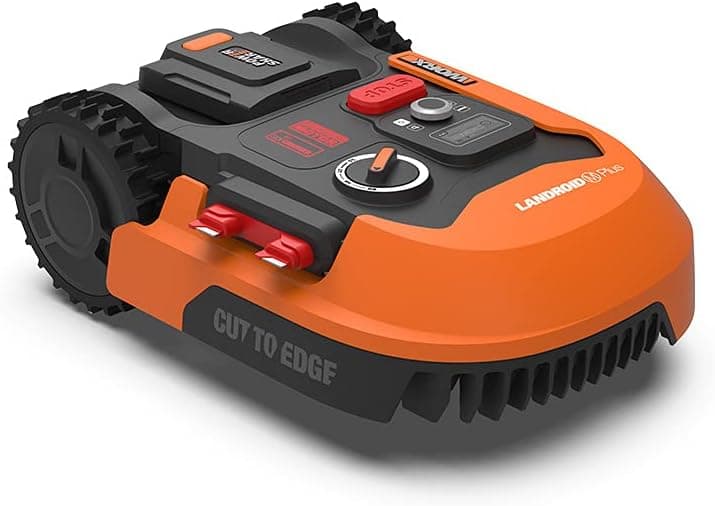
Robot lawnmowers are autonomous cutting devices that navigate your lawn independently, cutting grass in small increments on a regular schedule. Unlike traditional lawnmowers that cut once a week or fortnight, robot mowers typically operate daily or every other day, removing only a small amount of grass each time: a process called mulch mowing.
The cut clippings are tiny and fall back into the lawn as a natural fertiliser, which can actually improve lawn health over time. There's no need to collect grass cuttings.
Most robot lawnmowers use one of two navigation approaches:
Perimeter wire systems: A thin boundary wire is buried or pegged around the edge of your lawn. The robot uses this wire as its guide, staying inside the boundary and using random or systematic patterns to cover the area. This is the most established and reliable technology, used by market leaders like Husqvarna and Gardena.
GPS/camera-based systems (wire-free): Newer robots use GPS, cameras, or a combination to map and navigate without a perimeter wire. These are more expensive and still developing in reliability, but installation is far simpler.
What Types of UK Garden Suit Robot Mowers?
Robot mowers work best in certain garden configurations. Understanding whether your garden is suitable is the most important first step.
Ideal Gardens
- Simple, single-area lawns with a clear perimeter
- Lawns of at least 50-100 sq metres (smaller lawns rarely justify the cost)
- Reasonably flat or gently sloping terrain (most robots handle slopes up to around 35-40%)
- Gardens without complex obstacles like many trees, raised beds, or tight corners
Challenging Gardens
- Multi-section lawns connected by narrow passages (e.g., front and back garden): possible but require additional setup
- Steep slopes over 40%. Check specification carefully
- Gardens with lots of trees: fallen sticks can jam cutting blades; fallen apples and conkers are a common UK problem
- Lawns with edges adjacent to flower beds: the robot won't edge, so you'll still need a strimmer for borders
- Shaded lawns where grass grows unevenly
The Honest Pros and Cons
Pros
Consistent lawn quality: Because they mow little and often, robot mowers produce a genuinely better quality finish than weekly manual mowing. Grass stays shorter, denser, and healthier.
Time saving: For anyone who finds mowing a chore (or who pays someone to do it), a robot mower pays back its cost in time or money over several seasons.
Quiet operation: Modern robot mowers are significantly quieter than petrol or electric rotary mowers. Many are quiet enough to run in the early morning without disturbing neighbours.
Eco-friendly: Electric operation, minimal noise, and no grass clippings to collect or dispose of.
Set and forget: Once installed and configured, good robots require minimal intervention beyond occasional cleaning and blade changes.
Cons
Installation complexity: Wire-based systems require laying a perimeter wire around your entire lawn. This typically takes 2-6 hours and needs doing carefully. Some homeowners pay a professional to install.
Upfront cost: Entry-level robot mowers start at around £300-£400 for small lawns. A reliable system for a medium UK garden (200-500 sq m) typically costs £600-£1,200. High-end models for large gardens or wire-free operation cost £1,500-£3,000+.
They don't edge: Robot mowers won't cut the edges of your lawn against paths, patios, or flower beds. You'll still need a manual edger or strimmer for a truly neat finish.
Rain and mud: Most robot mowers return to their docking station in heavy rain. In a wet UK summer, they can struggle to maintain consistent performance.
Leaves, sticks, and autumn debris: UK gardens generate a lot of debris, particularly in autumn. Robot mowers aren't designed to handle heavy leaf fall and may need to be paused during autumn months.
Security: Robot mowers can be stolen. Most quality models have PIN codes and immobilisers, but they remain a target. Some have GPS tracking.
Key Specifications to Check
When comparing robot mowers, focus on:
- Maximum lawn area: Manufacturers provide area ratings: always buy for more capacity than your actual lawn size for better performance and longevity
- Slope rating: Expressed as a percentage or degrees: UK gardens with any significant slope need 35%+ capability
- Cutting height range: UK lawns are typically kept at 30-50mm. Check the range is appropriate
- Installation type: Wire or wire-free
- App connectivity: Most modern models have smartphone apps for scheduling and monitoring
- Rain sensor: Standard on most quality models
- Blade replacement cost: Blades need replacing every 1-3 months; check costs before buying
Top Robot Lawnmower Options for UK Gardens
Budget: £300-£600 (Small Lawns up to 200 sq m)
Entry-level models from Worx Landroid and Gardena Sileno cover this segment. These require perimeter wire installation but are reliable and well-reviewed. Suitable for straightforward small lawns.
Mid-Range: £600-£1,200 (Medium Lawns 200-600 sq m)
Husqvarna Automower 305E and Gardena Sileno City offer reliable wire-based navigation with good app connectivity. Husqvarna is the market leader and has a strong UK service network. This is where most UK homeowners with a typical garden (150-400 sq m) should be looking.
Premium: £1,200-£2,500+ (Large Lawns or Wire-Free)
Husqvarna Automower 450X and Mammotion LUBA 2 cover large areas and complex gardens. Wire-free models like the Mammotion LUBA are increasingly competitive but require clear GPS signal, which can be challenging in enclosed UK gardens.
Real Cost Over Time
To assess true value, consider total cost of ownership over five years:
| Cost | Wire-based (mid-range) |
|---|---|
| Purchase price | £800 |
| Installation (DIY or professional) | £0-£200 |
| Annual blade replacement | £20-£40/year (£100-£200 total) |
| Electricity | £5-£15/year |
| 5-year total | £1,000-£1,200 |
Compare this to alternatives:
- Regular gardener: £25-£40 per visit, fortnightly = £650-£1,040/year
- Buying and running a quality rotary mower: £200-£500 purchase + your time
For anyone currently paying a gardener even occasionally, the payback period is typically 2-4 years.
Is a Robot Mower Right for You?
Yes, if: You have a reasonably simple lawn of 100+ sq metres, you currently pay someone to mow or find it a genuine chore, and you're prepared to invest in proper installation and a quality model.
No, if: Your garden is highly complex, heavily shaded, or very steep. Also think carefully if you're expecting wire-free plug-and-play convenience: most reliable systems still require setup effort.
Our Recommendation
For typical UK gardens with a relatively straightforward lawn, a mid-range wire-based robot mower from an established brand like Husqvarna or Gardena represents genuinely good long-term value. Set your budget at £600-£1,000 for a reliable system, factor in a few hours of installation time or a one-off professional setup cost, and you'll have a consistently excellent lawn with minimal ongoing effort.
The key is buying the right specification for your lawn size and not trying to save money with an underpowered model. A robot mower that struggles is far less satisfying than one that handles your garden comfortably.
Related reading
- Husqvarna Automower 430XH Review UK 2026: Is It Worth the Investment?
- Eufy Indoor Cam 2K Review UK 2026: No Subscription, No Compromises?
- Govee Smart LED Strip Lights Review UK 2026: Affordable Ambiance for Every Room
- Ring Video Doorbell 4 Review UK 2026: Smart Security for Your Front Door
- Roborock Q Revo MaxV Review UK 2026: Mid-Range Robot Vacuum With Premium Features
Read next
Husqvarna Automower 430XH Review UK 2026: Is It Worth the Investment?
Husqvarna Automower 430XH review for UK gardens. GPS navigation, handles slopes up to 45%, covers 3,200m². Is this premium robot lawnmower worth the price?
How to Choose a Robot Vacuum UK 2026: The Complete Buyer's Guide
Everything UK buyers need to know before purchasing a robot vacuum in 2026. Floor types, suction power, mopping, mapping, and our top picks from £200-£1,500.
Roborock S8 Pro Ultra Review UK 2026: Flagship Spec, Live UK Listing
UK review of the Roborock S8 Pro Ultra: 6000Pa suction, RockDock Ultra dock, and today's scarce Amazon UK listing. Price correct as of 9 September 2026.