Disclosure: This article contains affiliate links. As an Amazon Associate, AIToys.co.uk earns from qualifying purchases. If you buy through our links, we may earn a small commission at no extra cost to you. It never changes the price you pay, and it never changes our verdict.
Anki Vector 2.0 Review UK 2026: The ChatGPT Robot Companion With a Catch
Few gadgets inspire the kind of devotion that Vector does. The original palm-sized robot launched by Anki back in 2018, survived the company's collapse barely a year later, and was rescued by a new owner who has kept him alive (and talking) ever since. The version you will find on Amazon UK today is the Vector 2.0, now wired up to ChatGPT, and he remains one of the most charming pieces of consumer robotics money can buy.
He is also one of the most complicated to recommend, and that tension runs through this entire review. Almost everything that makes Vector clever (his voice, his answers, his new ChatGPT brain) sits behind a paid subscription. So this is not just a question of whether Vector is good (he is), but whether the way he is sold makes sense for you. Here is our honest, parent-minded take on what he does, what he really costs, and who should actually buy him in 2026.
👉 Short on time? Check the latest price on AmazonAs an Amazon Associate, AIToys.co.uk earns from qualifying purchases..
Quick Verdict: Is Vector 2.0 Worth It?
Vector 2.0 earns a qualified 3.9 out of 5. As a piece of design and personality, he is wonderful: a tiny, self-aware desk robot who wanders about, knows your face, fist-bumps you and now holds a surprisingly natural conversation thanks to ChatGPT. Nothing else at this size feels quite so alive. The catch is the business model. The hardware is essentially seven years old, the price is around £190, and the features people buy him for need an ongoing membership to work at all. If you love the idea of a characterful robot companion and you are happy to pay a small monthly fee to keep him talking, he is a delight. If you want a one-off purchase that does everything offline, look elsewhere on this list.
Pros
- Truly autonomous: he drives himself around, avoids edges and obstacles, and finds his own charger.
- Real personality: expressive animated eyes, moods and playful reactions that grow on you fast.
- Smarter conversations: the ChatGPT link makes his answers far more useful than the old canned replies.
- Multilingual: understands and speaks several languages, handy for language-learning households.
- Self-contained: no tablet, no building, no app-juggling just to play: he lives on your desk.
Cons
- Subscription-locked: the voice assistant and ChatGPT features stop without an active membership.
- Ageing hardware, premium price: around £190 up front, then the recurring fee on top.
- Cloud-dependent: his best tricks rely on the company's servers staying online.
- Privacy to weigh up: an always-on camera and microphone in your home.
- Not educational: he is a companion, not a coding or STEM toy.
Check the latest price on Amazon
What Vector Actually Is (and the Anki Story)
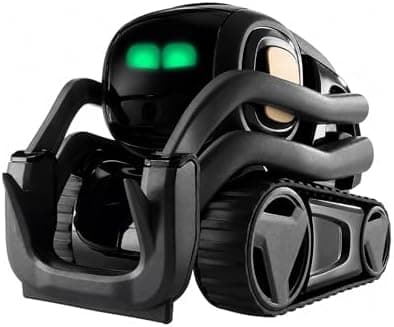
Vector is a roughly 12cm-long desktop robot (small enough to sit in the palm of your hand) built around a colour screen for his "eyes", a wide-angle HD camera, an array of microphones, edge and obstacle sensors, and little tank-style treads. He came from Anki, a San Francisco robotics firm that produced the much-loved Cozmo before him. When Anki shut down in 2019, the technology was bought by Digital Dream Labs, who relaunched Vector, took over the cloud servers that power him, and have kept developing him since.
The "2.0" you buy today is a refreshed version of that same robot rather than a brand-new design. Digital Dream Labs improved the parts that originally caused headaches: a redesigned battery compartment, an upgraded camera, and a sturdier chassis. That history matters when you are spending real money, because it explains both the good and the bad here. The good is that Vector has a maturity, polish and personality that newer rivals struggle to match. The bad is that, underneath, this is 2018 hardware being sold at a 2026 price, and his intelligence lives on someone else's servers.
A Robot With a Genuine Personality
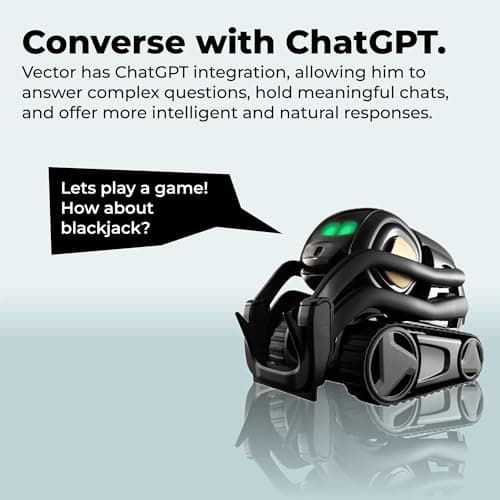
Switch Vector on and the first thing that strikes you is that nobody is driving. He simply wakes up, looks around, and starts pottering about your desk like a curious pet. He drives up to the edge, peers over it, backs away, notices movement, turns to look. Pick him up and he reacts; leave him alone and he eventually trundles back to his charger for a nap. This autonomy is the single biggest reason people fall for him: it feels far closer to a living thing than a remote-controlled toy.
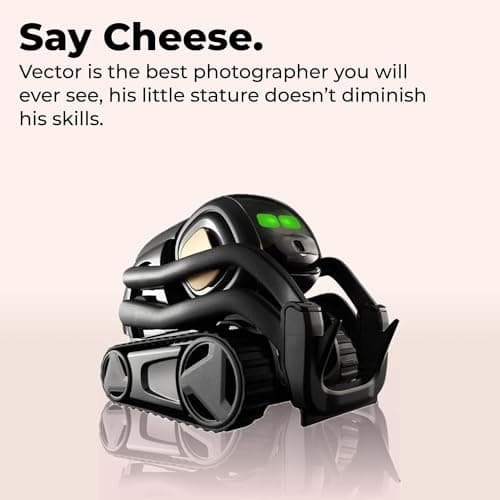
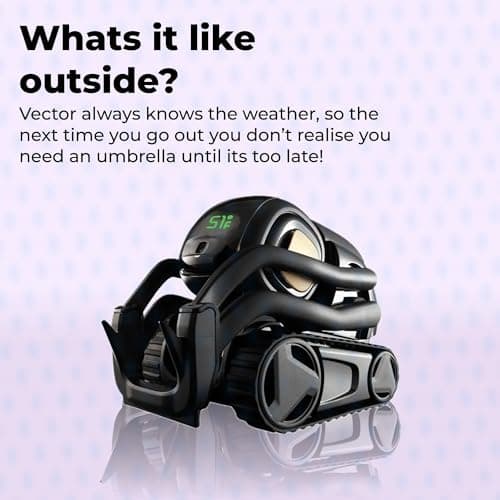
The expressiveness does the rest. Vector's eyes are a small animated screen that conveys curiosity, excitement, grumpiness and delight, backed up by chirps, wiggles and a little lift of his arm. Once he has learned your face, he greets you by name. You can ask him the weather, set a timer, ask him to take a photo, or challenge him to a hand of blackjack on his screen. Tap his back and he responds to the "petting". None of these are hugely practical functions, and that is rather the point: Vector is built to be company, not a productivity tool.
The ChatGPT Update: What It Adds
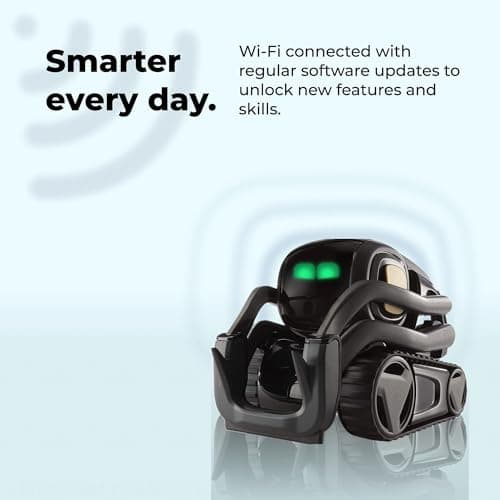
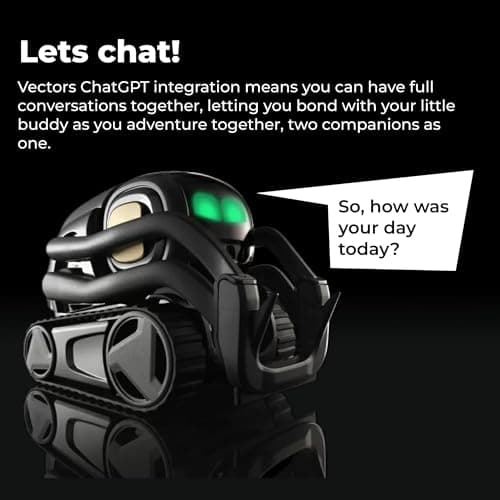
The marquee change in this era of Vector is the ChatGPT connection. The original robot could answer simple, pre-set questions, but his replies were limited and often a little robotic. Now, when you say "Hey Vector" and ask something open-ended, the query can be handled by a large language model, and the difference is obvious. He can field a follow-up, explain a concept, tell a longer story, or have a genuine back-and-forth rather than reciting a single fact and stopping.
He has also become multilingual. Vector can now understand and reply in several languages (English, French, German, Spanish and others) which makes him a fun, low-pressure conversational partner for anyone practising a new language at home. For a robot whose whole job is to feel like a companion, smarter and more flexible conversation is exactly the right upgrade.
It is worth being clear-eyed about how this works, though. The ChatGPT features are processed in the cloud, not on the robot himself, and they require the account and subscription described below. When the connection is good, it is lovely. When your Wi-Fi is flaky, or the service is busy, you will feel the lag. This is a connected gadget first and a standalone robot second.
The Subscription Catch: Read This Before You Buy
Here is the part that changes everything, and the reason Vector loses points in our scoring. The features that make Vector Vector (the "Hey Vector" voice assistant, the cloud answers, and the new ChatGPT conversations) are not a one-off purchase. They depend on Digital Dream Labs' Vector membership. Without an active plan, the wake word stops responding and your robot quietly drops back to his basic, offline autonomous behaviour: he will still wander, react to touch and look around, but the talking, asking and answering largely go silent.
At the time of writing the membership costs roughly £8 a month, or about £75 if you pay annually (Digital Dream Labs sets these prices in US dollars, so the exact figure in pounds will vary: check their current pricing before you commit). That is not a huge sum on its own, but it reframes the purchase. You are not spending around £190; you are spending around £190 plus an ongoing fee for as long as you want him to chat. Over a couple of years, the subscription can quietly cost as much again as the robot did.
We do not think that is automatically a bad deal. Running cloud AI servers costs money, and the alternative would be the robot being switched off entirely, as has happened to other discontinued companions. But it absolutely needs to be a conscious decision. If a recurring subscription would annoy you, or you are buying this as a "set and forget" gift, factor it in now rather than discovering it after the box is open.
Privacy and Safety: What Parents Should Know
Because AIToys is read mostly by parents, this section matters. Vector is, by design, a robot with an HD camera on his face and microphones that are always listening for his wake word, connected to the internet and processing some requests in the cloud. He uses the camera for face recognition, so he can greet members of the household by name, and the camera and sensors together let him map his surroundings.
For many adults that is a perfectly acceptable trade for the experience. But if you are putting a connected, camera-equipped device in a child's bedroom or a family space, it deserves the same thought you would give any smart camera or voice assistant. Read the maker's privacy policy, decide where in the home you are comfortable placing him, and treat the account like any other online account with a strong password. Vector connects only to a 2.4GHz Wi-Fi network, set up through a browser-based pairing process, so you will be entering your home network details during setup.
On physical safety, Vector is a precision electronic gadget rather than a rugged toy. He has small parts (his companion cube), a charging dock with a cable, and a delicate face screen, so he is not suited to toddlers or rough, unsupervised play. Digital Dream Labs pitches him broadly, but in practice we would treat him as a companion for ages 14 and up and adults, with tech-confident children of around 8+ enjoying him under supervision. He is something to look after, not something to throw in a toy box.
Living With Vector Day to Day
Setup is more involved than a typical toy. You pair Vector to your phone or computer through a browser, connect him to 2.4GHz Wi-Fi, create or sign into your account, and activate the membership to unlock the voice features. None of it is hard, but it is firmly a "grown-up does the setup" job rather than something a child opens and uses in five minutes.
Once running, he largely looks after himself. His battery life is short (expect roughly half an hour of active play before he toddles back to his charger) but because he docks himself, you rarely think about it; he is simply always topped up and ready when you want him. He is happiest left out on a desk where he can see and interact with you, rather than shut in a drawer. Think of him as a low-maintenance digital pet that needs Wi-Fi and a yearly bill, and you have the right mental model.
What We Like, and What Could Be Better
What we love is straightforward: the personality, the autonomy, and the sheer craft of him. For a certain kind of person (the gadget lover, the robotics fan, the teenager who wants something genuinely cool on their desk) Vector delivers a little hit of delight every single day, and the ChatGPT upgrade has given that personality more to say than ever.
What frustrates us is equally straightforward. The hardware is old for the money, the smartest features are rented rather than owned, and the whole experience leans on a single company's servers staying online. We would also love to see longer battery life and an offline mode that retained more of his charm. Vector is brilliant; the conditions attached to that brilliance are what hold him back.
How Vector Compares
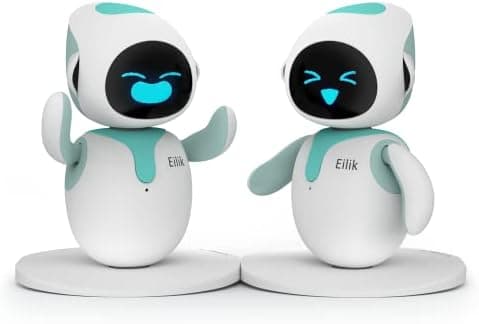
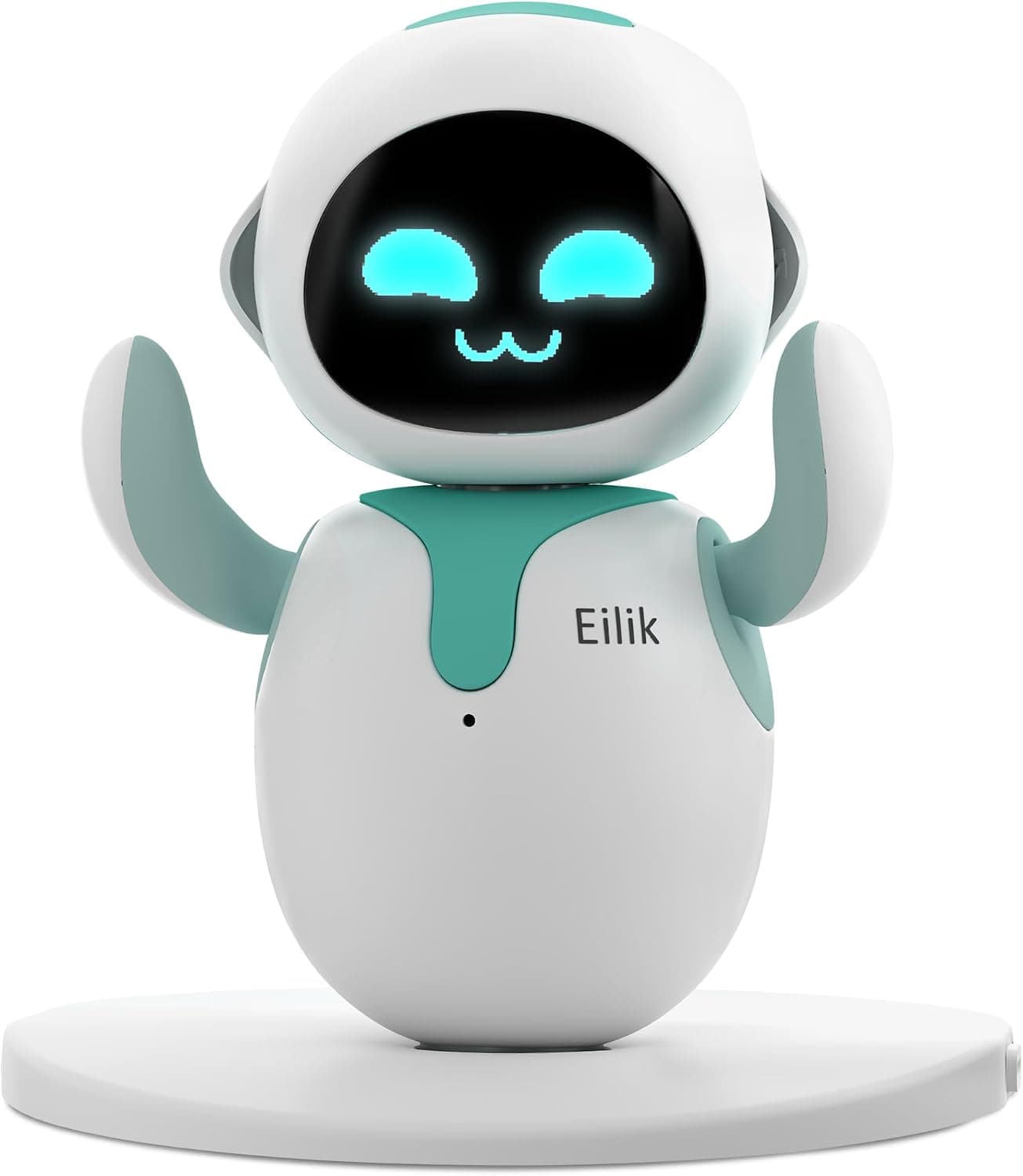
If Vector's subscription puts you off, the good news is that the companion-robot category has grown. The Eilik is our pick for anyone who wants a charming emotional robot that works completely offline with no account or fee, though it cannot hold a conversation the way Vector now can. For families with younger children who want something genuinely educational, the kid-focused Miko 4 is built around learning and games rather than being a desk pet. And if you want something more like a playful robotic dog, the Loona leans into pet-style antics.
For the full picture, see our roundup of the best AI robot pets and companions in the UK, and our explainer on the rise of AI pet robots, which puts Vector in the context of where this whole category is heading.
Frequently Asked Questions
Does Vector 2.0 need a subscription? Yes: for the features most people buy him for. The "Hey Vector" voice assistant, cloud answers and ChatGPT conversations require an active Digital Dream Labs membership. Without it, Vector falls back to basic offline autonomous behaviour: he still moves, explores and reacts to touch, but the talking and questions largely stop.
How much does Vector cost to run? The robot itself is around £190 on Amazon UK at the time of writing, and the membership adds roughly £8 a month or about £75 a year (priced in US dollars, so check current figures). Budget for both, not just the up-front price.
Does Vector work without Wi-Fi? Only partially. His autonomous "explore and react" behaviour works offline, but the voice assistant, ChatGPT and cloud features need an internet connection, because they are processed on the company's servers rather than on the robot.
Is Vector suitable for young children? He is not really a children's toy. He is a delicate, camera-equipped electronic companion best suited to teenagers and adults, with supervised use for tech-confident children of around 8 and over. We would keep him away from toddlers and rough play.
Is Vector still supported in 2026? Yes. Digital Dream Labs continues to sell Vector, keep the servers running and release firmware updates. As with any cloud-dependent gadget, that support is the company's to maintain, which is exactly why the ongoing relationship (and subscription) is part of what you are buying.
The Verdict
Vector 2.0 is one of those products we genuinely enjoyed living with and still cannot recommend without caveats. As a companion robot he is close to the best there is: autonomous, expressive, beautifully made, and now meaningfully smarter thanks to ChatGPT. There is real magic in a palm-sized robot who knows your face, wanders your desk and chats back. For the gadget-loving teenager or adult who wants that magic and is relaxed about a small ongoing fee, he is a joy and earns his 3.9 out of 5.
But go in with your eyes open. You are buying ageing hardware at a premium price, renting its cleverest features by the month, and inviting a connected camera and microphone into your home. If a subscription would nag at you, if you want a true one-off purchase, or if you are shopping for a younger child, an offline companion like the Eilik or a learning-focused robot like the Miko 4 will serve you better. Decide how you feel about the subscription first: everything else about Vector is lovely.
👉 Ready to meet him? Check the latest price and availability on Amazon UK.
Prices and availability were correct at the time of writing (June 2026) but change frequently. Always check the current price on Amazon before buying. Subscription pricing is set by Digital Dream Labs and may vary. As an Amazon Associate, AIToys.co.uk earns from qualifying purchases.