Affiliate disclosure: AIToys.co.uk earns a commission on qualifying purchases made through our Amazon links, at no extra cost to you. As an Amazon Associate, AIToys.co.uk earns from qualifying purchases.
DJI Osmo Pocket 3 Review: A Tiny Camera With Properly Big Ambitions
There is something quietly extraordinary about the DJI Osmo Pocket 3. It looks like a chunky chocolate bar, weighs less than an apple, and yet it has comprehensively reset expectations of what a pocket-sized camera can produce. After more than two years on the market it remains, in September 2026, the camera that vloggers, travel creators and family videographers keep recommending to one another, and it has earned that reputation the hard way.
Where the original Pocket and Pocket 2 were charming-but-niche curiosities, the Pocket 3 swapped the cramped sensor for a proper 1-inch CMOS, glued on a rotatable 2-inch OLED touchscreen, and added AI-powered subject tracking that genuinely works. The result is the rare gadget that you actually use, rather than the one you leave at home because the phone is easier.
Owner reports and manufacturer specifications we researched point to a largely positive picture, with a couple of caveats parents and travellers will want to know about before pressing buy.
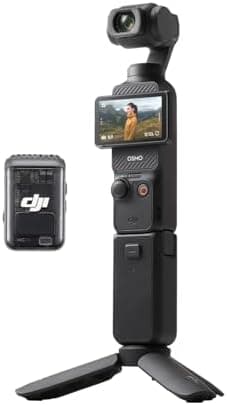
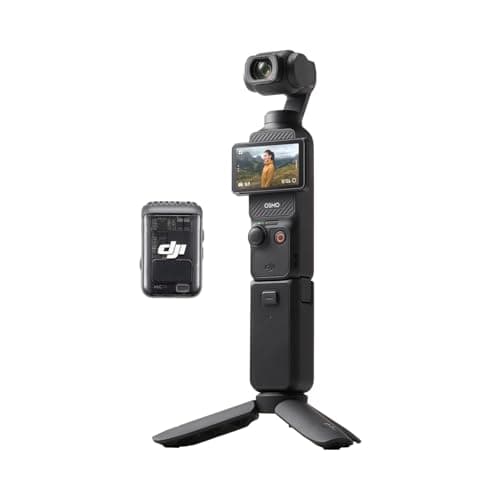
The Amazon UK listing we link throughout this review is the Creator Combo, not the bare camera. That box includes the Osmo Pocket 3 starting set, a DJI Mic 2 transmitter, a battery handle, the Osmo mini tripod and more.
Check the Latest Price on Amazon UK →As an Amazon Associate, AIToys.co.uk earns from qualifying purchases.
Also consider: a Renewed Creator Combo (ASIN B0DFMXZRSL) was in stock at around £349 from Camera Centre UK as of 19 September 2026. It is a Renewed unit, not new stock, so condition, warranty and returns will not match a new Amazon purchase. Check the live Renewed listing if you are considering it.
Quick Verdict
| Rating | ⭐⭐⭐⭐½ 4.7/5 |
| Listing | Creator Combo: DJI Mic 2 transmitter, battery handle, Osmo mini tripod and starting-set extras |
| Best for | Solo vloggers, travel creators, parents, content creators on the move |
| Sensor | 1-inch CMOS, 9.4MP effective |
| Max video | 4K at 120fps (Slow Motion); 4K at 60fps standard |
| Stabilisation | Three-axis mechanical gimbal |
| Weight | 179g |
| Battery | ~166 minutes (1080p); ~60-80 minutes (4K + ActiveTrack) |
| Verdict | The most versatile pocket vlogging camera on sale in 2026, and the easiest to actually carry around. |
What Is the DJI Osmo Pocket 3?
The Pocket 3 is a handheld gimbal camera: a tiny stabilised camera on a stick, designed to be pulled out of a pocket and shoot broadcast-quality footage with a single button press. Unlike a smartphone, where stabilisation is done with software (and a bit of clever cropping), the Pocket 3 uses a genuine three-axis mechanical gimbal that physically counteracts your hand movements. The result is the kind of glassy-smooth footage that used to require either a hefty rig or a steady-handed stranger.
Video: Thomas Heaton - useful review (not filmed by AIToys).
That alone is not new. DJI's Pocket and Pocket 2 did broadly the same thing. What separates the Pocket 3 from its predecessors and from rivals such as the Insta360 Go Ultra or GoPro Hero series is the combination of three things:
- A proper 1-inch CMOS sensor with an f/2.0 lens, giving it dynamic range and low-light performance that smaller cameras simply cannot touch
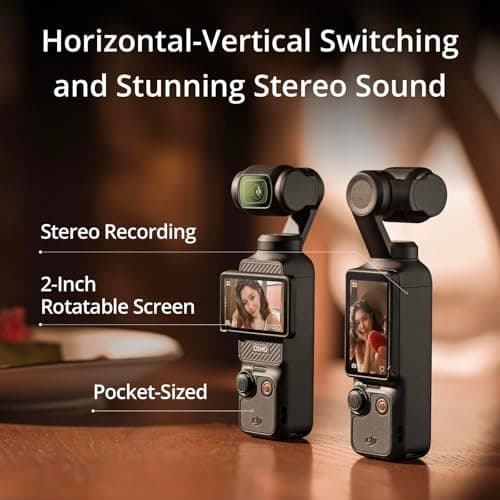
- A rotatable 2-inch OLED touchscreen that turns the camera on (and switches to vertical mode) when you twist it 90 degrees
- ActiveTrack 6.0, a genuinely smart AI subject-tracking system that can lock on to a face, a body, a pet or even an aeroplane and follow it across the frame
Add omnidirectional stereo audio, native compatibility with two DJI Mic 2 wireless transmitters, USB-C fast charging and 4K/120fps slow-motion, and you have a tool that looks more like a tiny TV studio than a holiday gadget.
Who Is the Pocket 3 For?
This is a camera with surprisingly broad appeal. It is best suited to:
- Solo vloggers who want to film themselves without a tripod, a phone holder or a long-suffering partner behind the lens
- Travel creators who want footage that looks expensive without lugging a mirrorless body, three lenses and a stabiliser
- Parents who want lovely, smooth video of children's sports days, family walks and birthdays without committing to a full camera rig
- Real-estate, behind-the-scenes and walkthrough creators who need run-and-gun cinematic footage
- TikTokers and YouTube Shorts creators who want a camera with proper vertical-shooting credentials rather than a clumsily cropped horizontal sensor
It is less ideal for anyone who needs rugged weatherproofing (look at a GoPro Hero or DJI Osmo Action), stills photography (any half-decent smartphone is better), or 360-degree capture (the Insta360 X4 is built for that).
Design and Build: A Tiny Tool With Real Engineering
The Pocket 3 weighs 179g, measures roughly 140mm tall, and is built around a magnesium-alloy chassis with a soft matte finish. Pulled out of its protective cover, it boots up in around two seconds: twist the screen 90 degrees and it powers on automatically, which sounds gimmicky until you realise that you can go from "in pocket" to "filming" in roughly four seconds.
There is a single record button, a thumbstick for gimbal control, and the touchscreen handles everything else. Menus are sensibly laid out, and there are properly thoughtful touches: tap the screen to pull focus, double-tap a subject to start ActiveTrack, swipe down for settings. Compared with the menu labyrinths some action cameras impose, the Pocket 3 feels like a phone, which, given how comfortable most of us are with phones, is exactly the point.
Build quality is specified around a magnesium-alloy chassis, and owner reports generally describe it as pocket-durable. The Achilles heel, as we mention below, is the lack of any IP rating; this is not a camera you can take swimming or even comfortably leave out in heavy rain.
The 1-Inch Sensor: This Is Where the Magic Happens
If you read just one section of this review, make it this one. The reason the Pocket 3 matters (and the reason it commands a premium over the much cheaper DJI Osmo Action 5 or GoPro Hero 13) is the 1-inch CMOS sensor.
A 1-inch sensor is, broadly, about four times larger than the sensor in a modern flagship phone, and roughly six times larger than the sensor in a typical action camera. That extra surface area means more light per pixel, which translates directly into:
- Better low-light performance: usable footage at ISO 1600 and beyond, where smaller sensors collapse into noise
- Real dynamic range: bright skies and shadowed faces can coexist in the same frame without one being blown out
- Shallower depth of field: close-up shots have a pleasing background blur that smartphones can only fake with software
- Cleaner colour: skin tones look natural rather than processed, particularly in mixed indoor lighting
In practice, the difference is not subtle. Manufacturer sensor-size comparisons and owner reports consistently describe phones holding up well in bright daylight, then the Pocket 3 pulling ahead once light drops: pub interiors, dusk, underground carriages. Colours are described as staying natural, with shadows holding detail and skin tones less prone to looking waxy.
For UK creators in particular (where overcast skies, indoor shoots and short winter days are unavoidable) this matters more than spec sheets suggest.

ActiveTrack 6.0: The AI That Actually Works
A great many gadgets claim to have "AI". Most of them do not really. ActiveTrack 6.0 is one of the rare features that earns the label, and for solo creators, it is genuinely transformative.
Double-tap a subject on the touchscreen and the gimbal physically rotates and tilts to keep that subject centred in the frame. As you (or it) move, the camera moves with you. The system handles:
- Face Auto-Detect: automatically recognises and locks on to a face that walks into frame, particularly useful for talking-to-camera vlogs where you do not want to stop to set up tracking
- Dynamic Framing: instead of dead-centring the subject, you can ask the camera to keep them in the left or right third of the frame, which looks far more cinematic
- Object and animal tracking: DJI says it will lock on to dogs, cats, vehicles, even aeroplanes; owner reports of object tracking are generally positive, though we have not verified the aeroplane claim first-hand
- Re-acquisition: if a subject briefly leaves the frame, the Pocket 3 will hold its position and resume tracking when they return
Owner reports describe this as the feature that changes how they film. Setting up a shot, walking away from the camera, doing your thing and walking back is a workflow that previously required either a dedicated camera operator or a £200 phone gimbal with mixed results. The Pocket 3 makes it feel ordinary.
Video Quality and Shooting Modes
The Pocket 3 records:
- 4K up to 120fps in Slow Motion mode (uncropped, on the full sensor)
- 4K up to 60fps in standard mode
- 1080p up to 240fps for proper 8x slow motion
- 3K vertical video when you twist the screen: note that this crops the sensor rather than rotating it
Bitrate maxes out at 130 Mbps in H.265, with H.264 also available. Colour profiles include standard (vibrant and ready-to-share), D-Log M (a flatter 10-bit profile designed for colour grading), and HLG for HDR delivery. For most casual users, standard is the right answer; for anyone editing seriously, D-Log M gives you the grading flexibility usually reserved for cinema cameras.
Slow motion at 4K/120fps is the headline feature, and it is genuinely lovely: beautifully smooth, with no obvious cropping or quality drop. Combined with the gimbal, you get a buttery-smooth slow-motion shot that would have required a £2,000+ camera setup five years ago.
Audio: Better Than You Would Expect From Something This Small
Built-in microphones rarely impress on small cameras, but DJI has put genuine effort into the Pocket 3's audio. The three internal microphones capture omnidirectional stereo with surprisingly clean results: perfectly usable for casual vlogs, holiday clips and family videos.
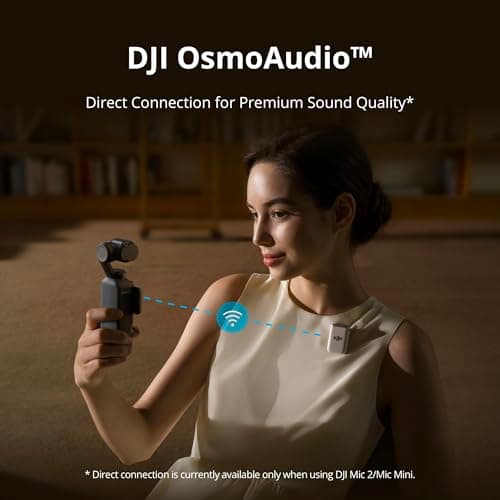
For anything more serious you will want to pair it with DJI Mic 2 or the cheaper DJI Mic Mini, both of which connect directly to the Pocket 3 without dongles thanks to DJI's OsmoAudio system. Pair up two transmitters and you have a wireless two-person interview rig that costs a fraction of a comparable setup from a traditional camera brand.
The featured listing is the Creator Combo, so the DJI Mic 2 transmitter is already in the box alongside the battery handle and Osmo mini tripod. For everyday vlogging the built-in mics will still surprise you, but the included transmitter is there when you want cleaner speech.
Battery, Charging and Storage
DJI quotes 166 minutes of operation at 1080p with the screen on, and owner reports roughly match that figure under benign conditions. The number drops meaningfully when you push the camera harder: expect:
- ~120 minutes at 4K/30fps with ActiveTrack off
- ~60-80 minutes at 4K/30fps with ActiveTrack on and screen at full brightness
- Significant additional drop in cold weather (owner reports commonly describe a meaningful extra drain in single-digit temperatures)
Charging is via USB-C and is genuinely quick: 80% in 16 minutes, 100% in around 32 minutes from a reasonable PD power adapter. The Battery Handle included in the Creator Combo extends shooting time substantially and is recommended for travel.
Storage is microSD. The Pocket 3 takes cards up to 1TB, and DJI publishes a sensible list of compatible cards in its FAQ. We would suggest a UHS-I V30 card as the minimum, with a UHS-II V60+ if you plan to shoot 4K/120fps regularly.
What We Like
- The combination of 1-inch sensor and mechanical gimbal in something this small still feels close to witchcraft
- ActiveTrack 6.0 is the single best AI tracking implementation on any consumer camera
- Going from pocket to recording in under five seconds means you actually capture moments, rather than missing them
- Audio quality from the built-in mics is good enough that most users will not need an external mic
- The screen rotation trick for vertical video is an elegant solution to the social-media-vs-traditional-video problem
- D-Log M means your footage will still look great when you upgrade to a better edit later
What Could Be Better
- No weatherproofing is the standout flaw. A GoPro will laugh off a downpour; the Pocket 3 needs protection. Because there is no IP rating, even light rain is a risk: owner reports treat this as the main limitation
- Battery life with ActiveTrack on is unimpressive: pack the Battery Handle if you plan on a full day of filming
- Only 9MP stills mean this is not a serious photo camera; your phone is better
- The DJI Mimo app is the weakest link in the ecosystem: it works, but it has a habit of disconnecting and asking for re-pairing at the worst moments
- The gimbal can drift during sustained vehicle motion (in a car going round a long bend, the horizon can list slightly): a tiny niggle but worth noting for travel creators
Who Is It For?
The Pocket 3 sits in a very specific sweet spot:
- If you already own a mirrorless camera and a phone gimbal, this slots in as the "always with you" camera that captures the moments you would otherwise miss
- If you are starting out as a vlogger or content creator, this is the camera most professionals would recommend as a one-and-done first purchase
- If you have a young family and want better-than-phone video of your kids growing up, this is a strong buy on a camera that does not require a degree to operate
- If you want a single travel camera that does everything you need at broadcast quality, this is it
It is less suitable for: rugged outdoor activities (look at the DJI Mini 4 Pro for aerial shots, or a GoPro Hero for action), 360-degree creators (the Insta360 X4 is built for that), or serious stills photographers.
Value for Money: Is the Pocket 3 Worth It in 2026?
The Creator Combo was around £399 on Amazon UK as of 19 September 2026, in stock from Amazon. Prices move, so treat that as a snapshot rather than a guarantee. It is not cheap (you could pick up a DJI Mini 4K drone instead, or a GoPro Hero 13) but it is also nothing like the £1,500+ you would spend on a mirrorless body, lens and gimbal that could deliver comparable footage.
The competition has not stood still: DJI's own Osmo Pocket 4 is rumoured for late 2026, and Insta360's Luna is positioning itself as a direct challenger. But as we write in September 2026, nothing on sale beats the Pocket 3 on the combination of size, image quality, stabilisation and intelligent tracking. Even at the current Creator Combo price, it is excellent value for what it delivers.
We would call it a particularly strong buy for parents who want lovely video memories of their children without committing to a serious camera workflow, and for any solo creator who has ever wished for a second pair of hands behind the camera.
Verdict: The Pocket Camera That Finally Justifies the Hype
After more than two years on sale, the DJI Osmo Pocket 3 has earned its reputation as the best pocket-sized vlogging camera money can buy. The 1-inch sensor delivers genuinely cinematic image quality, the three-axis gimbal produces footage no smartphone can match, and ActiveTrack 6.0 is the rare "AI" feature that actually changes how you shoot.
It is not perfect. The lack of weatherproofing is a real and ongoing irritation, and battery life with ActiveTrack on is shorter than DJI's marketing suggests. But these are caveats rather than dealbreakers, and the camera delivers on its core promise: broadcast-quality video, in your pocket, with no fuss.
For solo vloggers, travel creators, content makers and parents who want lovely video without lugging a rig around, the Pocket 3 remains the right answer in 2026. It is the camera we would select and recommend.
⭐⭐⭐⭐½ 4.7/5
Check the Latest Price on Amazon UK →
Price correct as of 19 September 2026. Amazon prices fluctuate. Always check the current listing for the most up-to-date price and availability.
Related Reviews
If you are weighing the Pocket 3 against the rest of DJI's lineup, or against the broader action-camera market, these will help:
- Insta360 X4 Review: the 8K 360-degree alternative for creators who want capture-everything-then-reframe workflows
- GoPro Hero 12 Black Review: the rugged, waterproof rival when you need to film in the wet
- DJI Mini 4 Pro Review: DJI's flagship pocket drone, for when you want aerial footage to pair with your handheld shots
- DJI Mini 4K Review: the cheaper drone in DJI's lineup if you want to dip a toe into aerial creation
- Apple Watch Ultra 2 Review: the natural companion for travel creators who want activity tracking and notifications without pulling out a phone
Affiliate disclosure: AIToys.co.uk earns a commission on qualifying purchases made through our Amazon links, at no extra cost to you. As an Amazon Associate, AIToys.co.uk earns from qualifying purchases.