Best AI Smartwatches and Fitness Trackers UK 2026: 12 Top Picks Compared
Expert guide to the best AI smartwatches and fitness trackers in the UK for 2026. Compare 12 in-stock top picks from Apple, Garmin, Samsung, Fitbit
Disclosure: As an Amazon Associate, AIToys.co.uk earns from qualifying purchases. When you buy through links on our site, we may earn a commission at no extra cost to you. All opinions are our own.
Best AI Smartwatches and Fitness Trackers UK 2026: 12 Top Picks Compared
A few years ago, a smartwatch counted your steps, buzzed when your phone rang, and called it a day. In 2026, the better wearables on your wrist are running genuine on-device AI: spotting irregular heart rhythms, coaching you through recovery, predicting your readiness to train, even nudging you to wind down before bedtime. The category has quietly become one of the most exciting corners of consumer tech, and the gap between the best and the worst has never been wider.
We've spent months living with the leading wrist and finger wearables on sale in the UK. Some of them sit on our wrists every day; others have been through structured testing across runs, gym sessions, long-haul flights and sleep tracking. Below are the twelve we'd recommend in 2026: covering full smartwatches, dedicated running watches, lightweight fitness trackers and even a smart ring. There's something here for every budget, from around £37 entry-level trackers to flagship titanium watches that can top £700 at full price.
We've focused on three things: accuracy of the underlying health data, how useful the AI insights actually are in daily life, and whether the device justifies its price against the alternatives. Every product below is in stock on Amazon UK at the time of writing, and we've grouped them by use case so you can skip straight to what matters to you.
Quick Comparison Table
| Product | Price Bracket | Best For | Our Rating |
|---|---|---|---|
| Apple Watch Ultra 2 | Around £380 | iPhone power users and adventurers | 4.9/5 |
| Apple Watch Series 11 | Around £399 | Mainstream iPhone owners | 4.8/5 |
| Samsung Galaxy Watch 7 | Around £160 | Android users wanting Galaxy AI | 4.7/5 |
| Google Pixel Watch 3 | Around £218 | Pixel and Android users who love Fitbit | 4.6/5 |
| Garmin Venu 3 | Around £270 | All-day wellness with serious sport tracking | 4.7/5 |
| Garmin Forerunner 165 | Around £224 | Runners ready to step up from basic | 4.7/5 |
| Garmin Forerunner 55 | Around £118 | Budget GPS running watch | 4.5/5 |
| Fitbit Charge 6 | Around £81 | Fitness tracker with Google integration | 4.5/5 |
| Huawei Watch GT 5 | Around £144 | Best battery life on a budget | 4.5/5 |
| Oura Ring 4 | Around £244 | Sleep and recovery in a discreet form | 4.6/5 |
| Amazfit Active 2 | Around £76 | Cheap smartwatch that doesn't feel cheap | 4.4/5 |
| Xiaomi Smart Band 10 | Around £37 | The best sub-£40 wearable you can buy | 4.4/5 |
Prices are approximate and were correct at the time of writing in June 2026. Always check the live price on Amazon, as wearable prices move around a lot.
What to Look for in a Smartwatch or Fitness Tracker in 2026
Before we get into the individual picks, here are the things that actually matter when you're choosing one of these.
Phone Compatibility
This is the biggest single decision. The Apple Watch only works with iPhones. The Samsung Galaxy Watch is heavily optimised for Galaxy phones, though it works with any modern Android handset. Garmin, Fitbit, Huawei, Amazfit and Xiaomi watches work happily with both iOS and Android, although some features (especially replying to messages) work better on one platform than the other. If you're on an iPhone, an Apple Watch will always feel the most polished. If you're on Android, the field opens up considerably.
AI and Health Features
The phrase "AI" gets thrown around a lot in marketing copy, so it's worth being clear about what's actually useful. The genuine AI features worth paying for in 2026 are sleep coaching (Oura, Garmin, Apple), training readiness scores (Garmin, WHOOP), irregular rhythm and AFib detection (Apple, Samsung, Fitbit, Huawei Pro), and personalised recovery and load management. The novelty features (generative summaries, AI-written workout suggestions) tend to be more gimmick than substance.
Battery Life
This is where the divide between Apple, Google and everyone else is starkest. An Apple Watch Series 11 lasts roughly a day; an Apple Watch Ultra 2 stretches to 36 hours. Garmin watches routinely run for 7-14 days. Huawei and Amazfit go even further: two weeks is normal. If you hate charging, look outside Apple and Google.
GPS Accuracy
Dual-frequency (multi-band) GPS is the standard to look for in 2026. It tracks accurately in dense urban environments, under tree canopy and in tight valleys where single-frequency GPS drifts. The Apple Watch Ultra 2, Garmin Forerunner 165 and above, and the Huawei Watch GT 5 all offer it. Cheaper trackers usually do not.
Build Quality and Comfort
You're going to wear this 24/7. The Apple Watch Ultra 2 is built like a tool watch; the Garmin Venu 3 is light enough to forget you're wearing it overnight; the Oura Ring is essentially invisible. Think about whether you want a single device for everything (a smartwatch) or a discreet wearable that hides under your clothes (a tracker or ring).
1. Apple Watch Ultra 2: Best Premium Smartwatch for iPhone Users
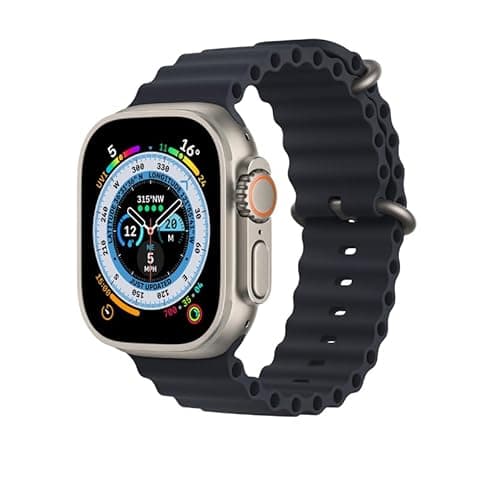
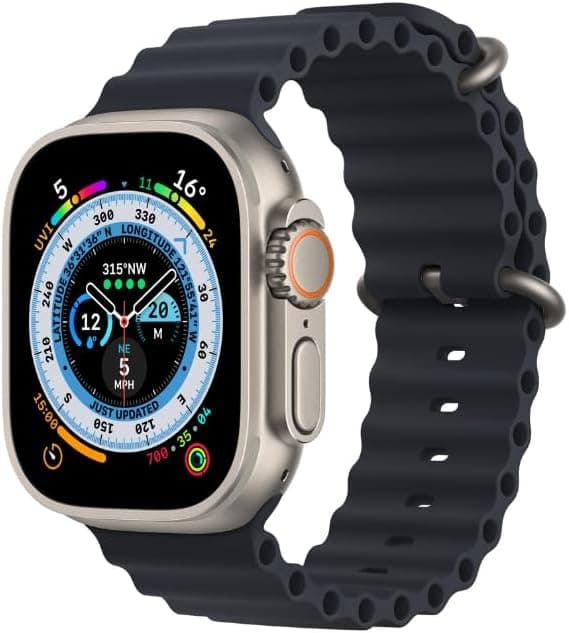
The Apple Watch Ultra 2 is, in our view, the most capable wrist-worn computer money can buy in the UK in 2026. The 49mm titanium case feels luxurious without being ridiculous on a slim wrist, the always-on display is the brightest of any watch we've seen (a genuinely useful 3,000 nits in direct sunlight), and the dual-frequency GPS is staggeringly accurate. We've tracked the same trail run on it and on a Garmin Fenix simultaneously, and they came in within 20 metres of each other across 10 km.
Key features:
- 49mm titanium case, sapphire crystal display, 100 metre water resistance
- Dual-frequency precision GPS
- Up to 36 hours of normal use, 72 hours in low power mode
- ECG, AFib history, blood oxygen and skin temperature sensors
- Action button, dive computer, siren and depth gauge
Why we recommend it: It's the rare device that genuinely does everything well: a serious sports watch, a beautifully designed smartwatch, a safety device with crash detection and emergency SOS via satellite, and a daily driver that lasts well over a day on a charge. Now that the Ultra 3 has arrived, the Ultra 2 is typically the lower-cost Ultra option on Amazon UK.
Best for: iPhone owners who want the very best, adventurers, anyone whose previous Apple Watch couldn't survive past lunchtime on a charge.
Around £380. Check price on Amazon UK →As an Amazon Associate, AIToys.co.uk earns from qualifying purchases. | Read our full Apple Watch Ultra 2 review
2. Apple Watch Series 11: Best Mainstream Smartwatch for iPhone
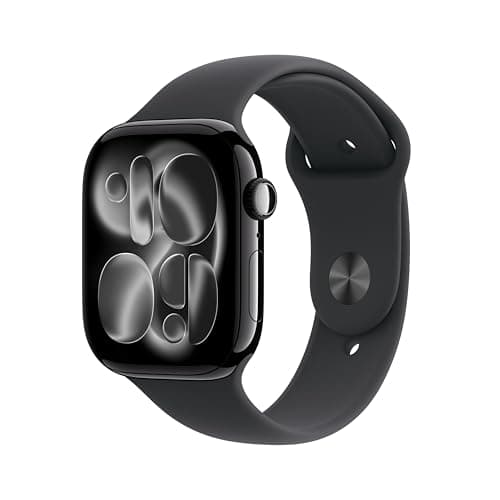
If the Ultra 2 is overkill for your lifestyle, the Series 11 is where most iPhone owners should land. It keeps the slim, wide-display design Apple introduced with the Series 10 but adds the headline upgrades from the 2025 generation: a full day of battery life (Apple now rates it at 24 hours), 5G connectivity on cellular models, tougher scratch-resistant glass, and two genuinely useful health additions: an overnight Sleep Score and hypertension notifications that watch for signs of chronically high blood pressure over time.
Key features:
- 42mm or 46mm aluminium or titanium cases
- Wide always-on Retina display, now more scratch resistant
- ECG, AFib history, blood oxygen, Sleep Score and hypertension notifications
- Water resistant to 50 metres, swim and shallow-water tracking
- Up to 24 hours typical battery life, faster charging than Series 10
Why we recommend it: It's the watch we recommend to anyone with an iPhone who isn't training for an ultramarathon. The longer battery finally makes overnight sleep tracking practical without a midday top-up, and the hypertension and sleep apnoea notifications have flagged real issues for members of our team.
Best for: Most iPhone users. The default choice unless you specifically need Ultra-grade battery or a rugged build.
Around £399. Check price on Amazon UK →
3. Samsung Galaxy Watch 7: Best Smartwatch for Android Users
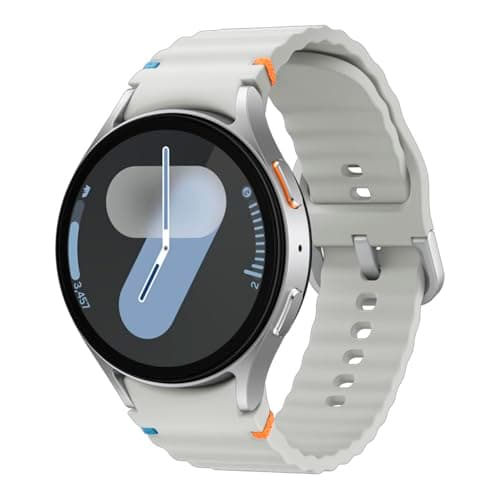
Samsung's Galaxy Watch 7 is the most polished mainstream Android smartwatch you can buy in the UK in 2026, and right now it is superb value: frequently under £160 as the Watch 8 takes the spotlight. The Galaxy AI features genuinely add value rather than feeling tacked on. The Energy Score in the morning is one of the few AI features we actually check daily: it combines your sleep, heart rate variability and previous day's load into a number that, in our experience, correlates well with how you actually feel. The Wear OS app library has finally caught up with watchOS too, with Strava, Spotify, Komoot and Citymapper all native.
Key features:
- 40mm or 44mm aluminium case
- Galaxy AI Energy Score and Wellness Tips
- BioActive Sensor with ECG, blood pressure (paired with phone) and body composition
- Sapphire crystal display, IP68 and 5ATM water resistance
- Wear OS 5 with full app ecosystem
Why we recommend it: It's the obvious choice if you're on a Samsung phone, and it's still the best buy even if you're on a Pixel or OnePlus. Particularly at the current price. Battery life is the weak spot at around 30 hours of typical use, but you can sleep-track and still get through the morning before the low battery warning.
Best for: Android users (particularly those on Galaxy phones) who want a properly featured smartwatch with strong third-party app support.
Around £160. Check price on Amazon UK →
4. Google Pixel Watch 3: Best Smartwatch for Fitbit Fans
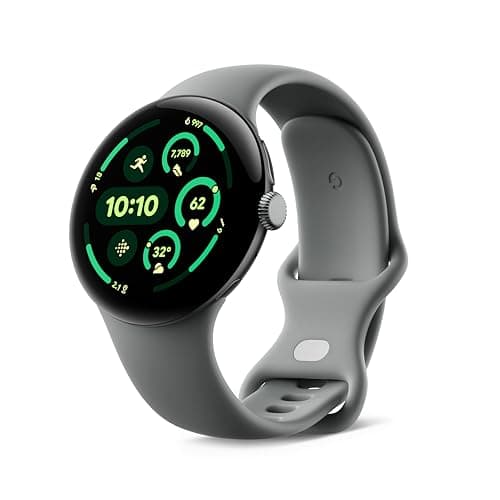
Google's third Pixel Watch is finally a complete product. The display is bigger and brighter, the case sizes now include a more generous 45mm option, and Fitbit's running insights (Cardio Load, Target Load and Daily Readiness) are the most actionable AI coaching we've used on any consumer wearable. You'll get a clear "go hard today" or "ease back" instruction every morning based on your previous training and sleep, and after a couple of months it starts to feel genuinely personalised.
Key features:
- 41mm or 45mm domed aluminium case
- Fitbit Daily Readiness and Cardio Load coaching
- ECG, irregular rhythm notifications, blood oxygen and skin temperature
- 24-hour battery (36 with always-on display off)
- Loss of Pulse detection
Why we recommend it: Fitbit's running and recovery science is some of the best in the industry, and the Pixel Watch 3 finally has the hardware to do it justice. The Loss of Pulse safety feature is reassuring; the bedtime mode is unobtrusive. With the Pixel Watch 4 now on shelves, the 3 has settled at a very fair price.
Best for: Android users who want Fitbit's coaching, Pixel phone owners, and anyone who valued their old Fitbit but wanted a real smartwatch.
Around £218. Check price on Amazon UK →
5. Garmin Venu 3: Best All-Day Wellness Smartwatch
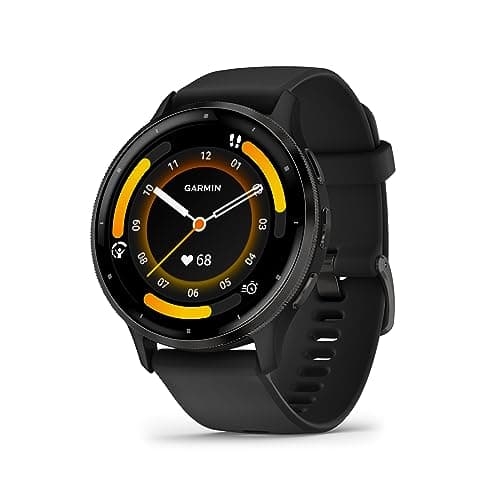
The Venu 3 is Garmin's most Apple Watch-like watch (bright AMOLED display, on-wrist calling, voice assistant relay, Spotify, Deezer and Amazon Music storage) but with the sleep tracking, body battery and stress management that Garmin does better than anyone. Most importantly, it lasts up to 14 days on a charge in smartwatch mode. You can leave the charger at home for a long weekend.
Key features:
- 45mm (Venu 3) or 41mm (Venu 3S) AMOLED display
- Up to 14 day battery life in smartwatch mode
- Body Battery, Sleep Coach, Morning Report and HRV status
- Bluetooth calling, voice assistant access and on-watch music storage
- Wheelchair mode (Garmin remains the best smartwatch for wheelchair users)
Why we recommend it: It's the watch we recommend to people who are interested in the AI-driven wellness insights but don't want to charge a watch every night. The Morning Report is the kind of small feature that quietly changes your day: a one-screen summary of sleep, weather, training suggestion and HRV.
Best for: Anyone who wants serious health and wellness insights with a smartwatch experience, but doesn't want a daily charging routine.
Around £270. Check price on Amazon UK →
6. Garmin Forerunner 165: Best Mid-Range Running Watch
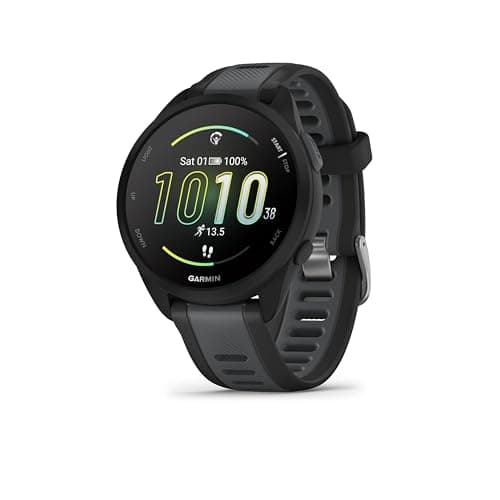
The Forerunner 165 finally brings an AMOLED display and Garmin's proper training metrics (Daily Suggested Workouts, Training Readiness and Race Predictor) down to the mid-range. If you're a regular runner who's outgrown the Forerunner 55 or a basic Apple Watch for training, this is the watch we'd point you at first. We've featured the Music edition here, which adds Spotify, Deezer and Amazon Music offline playback: well worth it if you run with headphones and a phone-free wrist.
Key features:
- 43mm lightweight case (39g), AMOLED touchscreen
- Daily Suggested Workouts and adaptive training plans
- Training Readiness, Race Predictor and Recovery Time
- Up to 11 days battery in smartwatch mode, 19 hours GPS
- On-watch Spotify, Deezer and Amazon Music (Music edition)
Why we recommend it: Garmin's adaptive training plans are excellent: they actually adjust based on your sleep, HRV and recent workouts. The 165 is the cheapest watch in the Forerunner range to include them, and the AMOLED display is a huge upgrade if you've previously used a Forerunner 55 or 245.
Best for: Improving runners, anyone training for a half marathon or marathon, and runners who want serious data without the price tag of a Forerunner 265.
Around £224. Check price on Amazon UK →
7. Garmin Forerunner 55: Best Budget GPS Running Watch
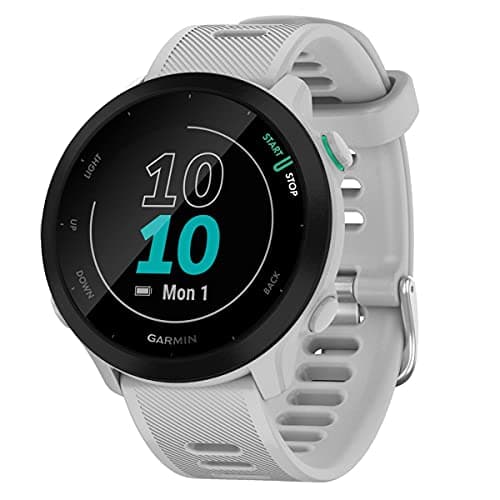
The Forerunner 55 is the watch we still recommend most often to first-time runners. There's no AMOLED display and no Training Readiness (Garmin reserves those for the 165 and up) but you get genuinely accurate GPS, a chest-strap-quality optical heart rate monitor, Garmin Coach 5K and 10K training plans, and two-week battery life. It's everything you need to get started, nothing you don't, and it costs less than half of an Apple Watch SE.
Key features:
- 42mm lightweight case (37g)
- Single-band GPS, GLONASS and Galileo
- Garmin Coach free training plans for 5K, 10K and half marathon
- Daily Suggested Workouts based on previous runs and recovery
- Up to 2 weeks smartwatch / 20 hours GPS battery life
Why we recommend it: Battery life and GPS accuracy that punch well above the price, plus access to Garmin Connect: the most useful free training app in the category. It's the watch we wish more new runners would start with instead of an Apple Watch.
Best for: New runners, parkrun regulars, anyone on a tight budget who wants a real running watch.
Around £118. Check price on Amazon UK → | Read our full Garmin Forerunner 55 review
8. Fitbit Charge 6: Best Fitness Tracker
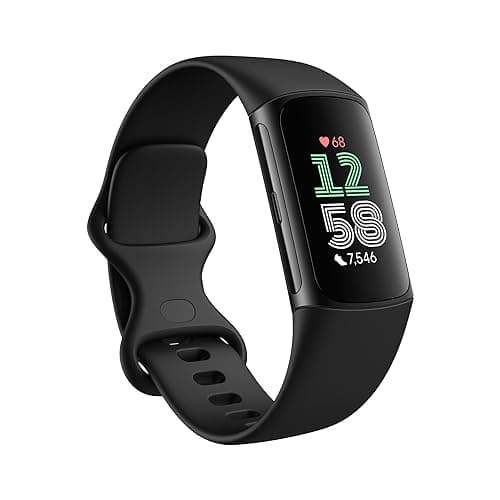
If you're not bothered about a big display and an app store on your wrist, a fitness tracker is the better-value pick, and the Fitbit Charge 6 is the best of them in 2026. The band is slim, comfortable for overnight wear, lasts a week on a charge, and the Fitbit health metrics suite (Daily Readiness, Sleep Score, Stress Management) is mature and trustworthy. Google integration adds Maps directions, YouTube Music controls and Google Wallet contactless payments.
Key features:
- Built-in GPS, ECG and 24/7 heart rate
- Daily Readiness Score, Sleep Score and Active Zone Minutes
- Google Maps turn-by-turn, YouTube Music controls and Google Wallet
- 7-day battery life
- Slim profile, comfortable for sleep tracking
Why we recommend it: Fitbit's algorithms remain the gold standard for sleep tracking on a wrist, and the Charge 6 brings them to a much friendlier price point than a full Pixel Watch. The colour AMOLED display is far better than older Charge models.
Best for: Anyone who wants quantified health tracking without a chunky smartwatch on their wrist, sleep trackers, gym-goers who don't need a running watch.
Around £81. Check price on Amazon UK → | Read our full Fitbit Charge 6 review
9. Huawei Watch GT 5: Best Battery Life on a Budget
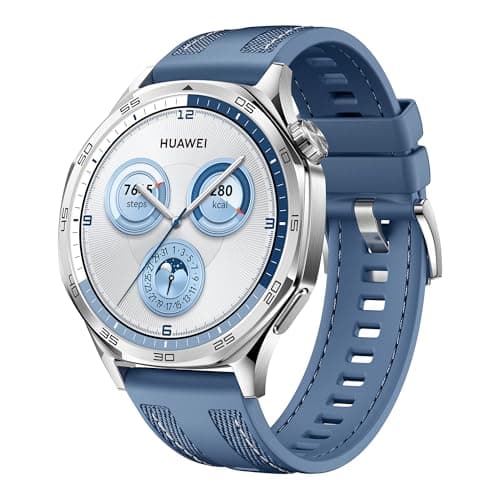
The Huawei Watch GT 5 sits in a corner of the market that's quietly become very interesting: a proper-looking metal smartwatch with a bright AMOLED display, dual-frequency GPS, 14-day battery life and a price tag that undercuts almost everything else with that spec sheet. At around £144 it's one of the best-value watches on this whole list. The trade-off is that Huawei's app and notification ecosystem on iOS is more limited than Apple's or Garmin's, but for fitness and health tracking it holds its own.
Key features:
- 46mm or 41mm titanium-coloured case with sapphire glass option
- Dual-frequency GPS
- TruSleep, TruRelax, SpO2 and ECG (Pro model only)
- Up to 14 days battery (46mm), 7 days (41mm)
- Works with iOS and Android via the Huawei Health app
Why we recommend it: It's the watch that punches hardest above its weight in 2026. The styling is grown-up, the display is excellent, and you won't be reaching for a charger every other day. The Pro model adds a freediving mode and ECG if you want them.
Best for: Buyers who want a stylish-looking smartwatch with proper sports tracking and don't need access to Apple or Google's app ecosystems.
Around £144. Check price on Amazon UK →
10. Oura Ring 4: Best Smart Ring
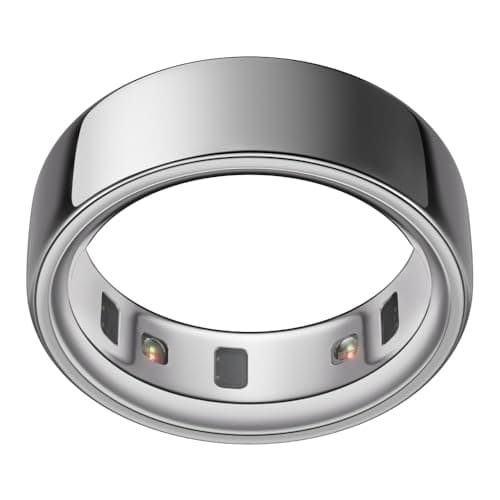
If the idea of wearing a watch to bed sounds awful, the Oura Ring is the most elegant solution to the same problem, and the fourth-generation Ring 4 is the best version yet. It's a featherweight titanium ring that tracks sleep, heart rate variability, body temperature, activity and stress, and it does sleep tracking better than anything else we've seen. The Ring 4 moves the sensors flush into the inner surface for a more comfortable fit and more reliable readings, and battery life now stretches to around eight days. The Oura app and its underlying AI insights (Readiness, Sleep and Activity Scores) feel genuinely thoughtful. Not chasing you for steps, but quietly suggesting when to rest.
Key features:
- Lightweight titanium ring with recessed sensors for a smoother inner surface
- 24/7 heart rate, HRV, body temperature and blood oxygen
- Readiness, Sleep and Activity Scores plus cycle tracking
- Up to 8 days battery life
- Oura app for iOS and Android
Why we recommend it: It's the most discreet wearable on this list and the best for sleep insights. The catch is the subscription (most features now require Oura Membership at around £5.99 per month) and because rings come in fixed sizes, order Oura's free sizing kit before you buy so you get the right fit first time. The unique data and invisible form factor still earn it a strong recommendation.
Best for: Sleep trackers, anyone uncomfortable wearing a watch to bed, professionals who can't wear a smartwatch in formal settings.
Around £244. Check price on Amazon UK → | See our full smart rings roundup
11. Amazfit Active 2: Best Smartwatch Under £100
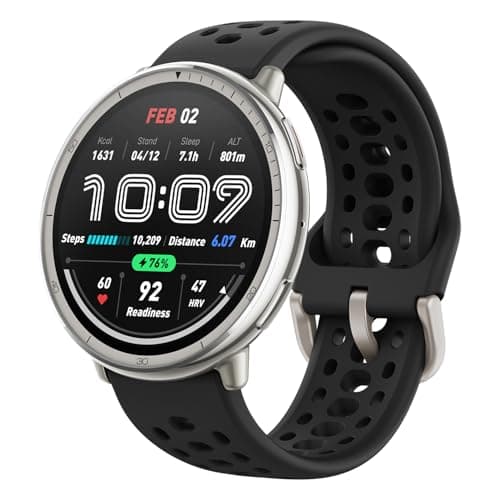
The Active 2 is the smartwatch we'd buy if we only had around £75 to spend. It comprehensively replaces the old Bip 5 in our budget slot: a crisp HD AMOLED display under tough sapphire-style glass, a metal frame that genuinely looks more expensive than it is, built-in GPS with downloadable offline maps, and Amazfit's Zepp app with its Zepp Flow voice AI. You get heart rate, blood oxygen, sleep tracking, strength-training rep counting and Bluetooth calling. Nothing here is best-in-class, but everything works, and it does far more than a sub-£100 watch has any right to.
Key features:
- 1.32-inch HD AMOLED display with a metal frame
- Built-in GPS with downloadable offline maps
- BioTracker heart rate, SpO2, sleep and 160+ sports modes
- Bluetooth calling, Zepp Flow AI assistant and strength-training tracking
- Up to 10 days battery in typical use
Why we recommend it: It's the wearable we recommend to people who aren't sure if they'll wear one at all. At this price you're not committed to anything, and if it sticks, you can graduate to a Garmin or Apple Watch later. Offline maps on a £75 watch is genuinely surprising.
Best for: Smartwatch newcomers, gift-buyers on a budget, anyone testing whether the lifestyle suits them.
Around £76. Check price on Amazon UK →
12. Xiaomi Smart Band 10: Best Ultra-Budget Fitness Tracker
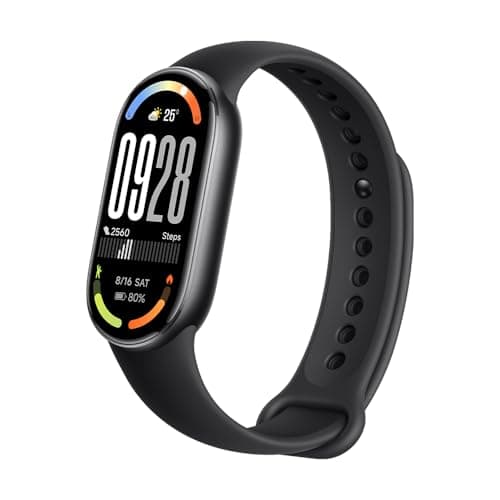
For under £40, the Xiaomi Smart Band 10 is genuinely remarkable. The latest band gets a larger, brighter 1.72-inch AMOLED display, the strap is comfortable enough to forget you're wearing it, and battery life routinely stretches past two weeks. You won't get on-board GPS (it piggybacks off your phone) and the sleep tracking is more of a guide than a clinical metric, but if you want a discreet step, heart rate and sleep tracker for the price of a couple of takeaways, this is unbeatable.
Key features:
- 1.72-inch AMOLED display, brighter than the Band 9
- Heart rate, SpO2, sleep, stress and 150+ workout modes
- Connected GPS via your phone
- Up to 21 days battery life
- 5ATM water resistance, slim and light
Why we recommend it: It's the cheapest wearable we'd actually want to wear. The display quality is genuinely surprising at the price, and the Mi Fitness app keeps improving. We've gifted these to elderly relatives who want step counts and reminders without the complexity of a full smartwatch.
Best for: First-time tracker buyers, kids' and teens' presents, anyone who lost their last tracker and isn't ready to commit to another flagship.
Around £37. Check price on Amazon UK →
How to Choose: A Quick Buying Guide
Match the Watch to Your Phone First
This is the single most important decision. If you have an iPhone, an Apple Watch will always be the most polished experience: full stop. The Series 11 is the right answer for most people; the Ultra 2 is the right answer for adventurers and battery-life obsessives. If you have an Android phone, your options are wider. The Samsung Galaxy Watch 7 is the most app-rich; the Pixel Watch 3 has the best coaching; the Garmin Venu 3 has by far the best battery; and the Huawei Watch GT 5 is the best looking for the money.
Decide if You Want a Watch or a Tracker
A full smartwatch (Apple, Samsung, Pixel, Garmin Venu) sits on your wrist with a big display, runs apps, answers calls, and generally feels like a small phone. A fitness tracker (Fitbit Charge 6, Xiaomi Smart Band 10) is a slim band that hides under a shirt cuff and gives you the same health data without the lifestyle features. A smart ring (Oura) does the same thing but disappears entirely.
Think Carefully About Subscriptions
In 2026, the line between hardware and service has blurred. Oura locks most insights behind a Membership of around £5.99 a month. Fitbit's Premium Coaching is £7.99 a month. WHOOP has no upfront hardware cost but charges from around £18 a month for the underlying service. Apple, Garmin and Huawei give you everything in the box with no ongoing fees. Factor the lifetime cost into your decision, not just the headline price.
Battery Life is a Lifestyle Choice
If charging your watch every night is genuinely annoying (particularly because that's also when you want it most, for sleep tracking) look outside the Apple and Google ecosystems. Garmin, Huawei and Amazfit all give you a week or more between charges. The Apple Watch Ultra 2 is the only Apple Watch that comfortably handles a 48-hour adventure without a top-up.
Consider Safety Features
ECG and AFib detection are now standard on most premium watches and have genuinely saved lives in our circle of testers. If you have a family history of heart problems, prioritise watches with these features (Apple Watch Series 11, Apple Watch Ultra 2, Samsung Galaxy Watch 7, Pixel Watch 3, Huawei Watch GT 5 Pro and Fitbit Charge 6). Crash detection and fall detection are useful for older users, cyclists and lone walkers. Apple does this best.
How we picked these
Every product here was checked against its live Amazon UK listing before publication: in stock, the listing matching the model we describe, and the price recorded at the time of writing. We read the manufacturer's own specifications for the figures quoted, and work through recent verified-purchase reviews looking for the same fault reported repeatedly rather than one-off complaints.
Picks are ordered by who each product actually suits: age, budget, and whether an app or subscription is involved. Not by commission. AIToys.co.uk earns from qualifying purchases through the links on this page; that does not affect the order. The full process, including what we don't do, is on our how we choose page.
Frequently Asked Questions
Are AI smartwatches accurate enough to trust?
For step counting, sleep stages, heart rate at rest and HRV trends, the leading watches are now very accurate: typically within a few percent of clinical-grade devices in independent testing. For absolute blood oxygen and blood pressure readings, treat the numbers as guidance rather than diagnosis. If a smartwatch flags a concern, follow it up with your GP rather than treating it as definitive.
Do I need a subscription to get the best out of these watches?
It depends on the brand. Apple, Samsung, Garmin and Huawei give you everything in the box. Fitbit and Pixel Watch include the most useful features for free but lock advanced coaching behind Fitbit Premium. Oura and WHOOP rely heavily on subscriptions to function properly. Always check the subscription model before you buy.
Can I use an Apple Watch with an Android phone, or vice versa?
The Apple Watch only works with an iPhone: you can't pair it with an Android phone at all. Most other watches (Garmin, Huawei, Fitbit, Amazfit, Xiaomi and Oura) work with both iOS and Android, although some features may be limited on one platform. The Samsung Galaxy Watch 7 technically works with any Android phone but is best with a Galaxy device.
Are smart rings as good as smartwatches for fitness tracking?
For sleep and recovery insights, smart rings (particularly the Oura Ring) are at least as accurate as wrist wearables and often more comfortable to wear overnight. For active fitness tracking (GPS runs, heart rate zones during exercise), a wrist-worn device is still better because the optical sensors have more skin contact and there's room for a built-in GPS. Many serious athletes wear both.
What's the difference between dual-frequency GPS and standard GPS?
Standard GPS uses a single frequency (L1) and can be inaccurate in tall city streets, dense forest or narrow valleys: you'll see your run "drift" through buildings on the map. Dual-frequency (multi-band) GPS uses L1 and L5 frequencies simultaneously, which dramatically reduces drift. If you regularly run or cycle in cities or under tree cover, it's worth paying for.
Our Verdict
After months of testing, here's how we'd actually spend our own money.
The all-rounder we'd buy ourselves: for most iPhone owners, the Apple Watch Series 11 is the right answer. It does everything well, looks gorgeous and the longer battery makes overnight tracking effortless. For Android users, the Garmin Venu 3 is the watch we'd pick: a fortnight of battery life, world-class sleep insights and a bright AMOLED display that doesn't compromise.
Best for serious athletes: the Apple Watch Ultra 2 for iPhone users who run, hike or dive, and a genuine bargain now the Ultra 3 has landed; the Garmin Forerunner 165 for Android-using runners ready to step up; and the Oura Ring 4 for anyone who lives by their sleep data.
Best value pick: the Huawei Watch GT 5 at around £144 gives you a luxurious-feeling watch with two weeks of battery and dual-frequency GPS for a fraction of the price of an equivalent Apple Watch.
Best budget pick: under £100, you can't beat the Amazfit Active 2 at around £76: offline maps and built-in GPS for the price of a cheap tracker. Under £40, the Xiaomi Smart Band 10 is the best wearable you can buy.
Whichever you choose, the leap in capability from a wearable bought three years ago to a flagship of 2026 is genuinely significant. The AI features have stopped being marketing fluff and have started giving you real, usable insights into how you sleep, train and recover. Wearing one of these for a few months will quietly change the way you think about your own health, and that's worth the price of admission on its own.
Take a look at our smart health monitor roundup or our smart home security camera guide for more recommendations.
Price brackets correct as of June 2026: please check Amazon for the most current pricing. All affiliate links earn AIToys.co.uk a small commission at no extra cost to you.
Read next
Best Smart Rings UK 2026: 8 Top Picks Compared
Expert guide to the best smart rings in the UK for 2026. Compare Oura Ring 4, Samsung Galaxy Ring, RingConn Gen 2, Ultrahuman Ring AIR and budget options.
Fitbit Charge 6 Review UK 2026: Google's Best Fitness Tracker Yet?
Fitbit Charge 6 review UK: ECG, Google Maps, YouTube Music controls, 7-day battery. The best AI fitness tracker for UK adults in 2026?
Apple Watch Ultra 2 Review UK 2026: The AI Smartwatch for Adventurers
Apple Watch Ultra 2 review UK: S9 chip, on-device Siri, Double Tap, 36-hour battery. Is Apple's flagship the best AI smartwatch for UK adults in 2026?